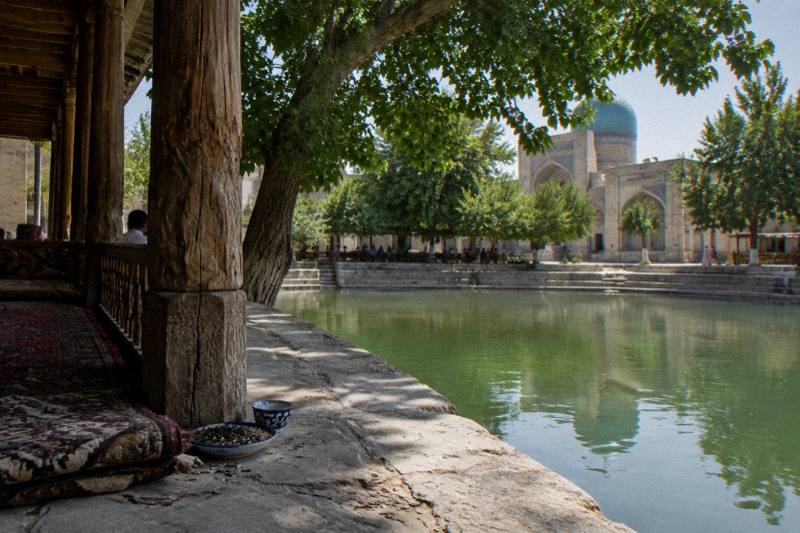
Is 2 Days In Bukhara Enough?
Two days covers Bukhara's old town, the Ark and the trading domes at a steady pace. Here is what fits, what gets cut, and how to compare one, two and three day plans.
Is 2 Days In Bukhara Enough?
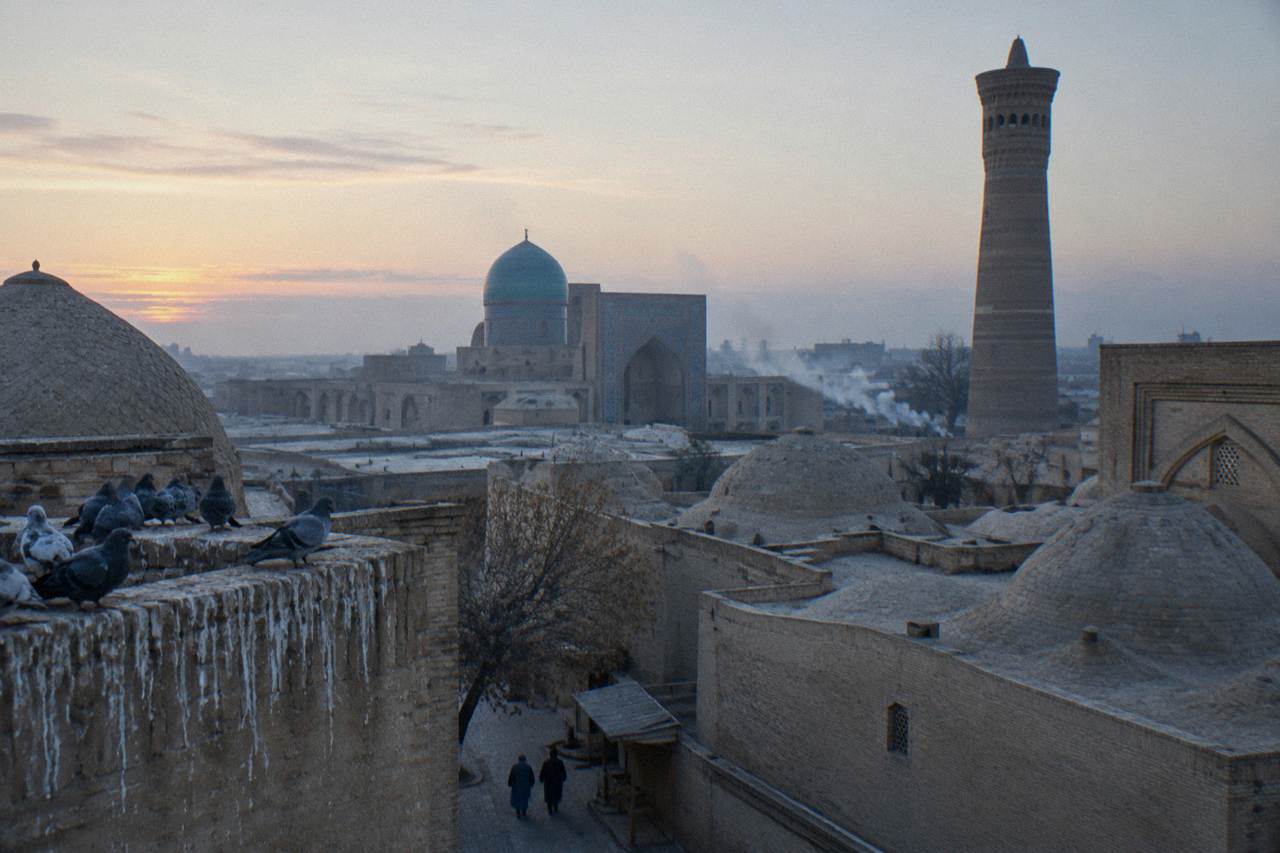
Yes, two days is enough for most travelers to see Bukhara's old town properly: the Ark fortress, the Poi Kalon complex, the trading domes and the Labi Hovuz pool area all sit within a 20-minute walk of each other. What two days does not cover is the city's workshop scene, a relaxed third evening, or side trips beyond the old center.
That verdict surprises people who expect Bukhara to demand three or four days like some of the bigger Silk Road stops. It does not, and the reason is geography. The historic core is small. Almost everything a first-time visitor wants sits inside a rectangle you can cross on foot in under half an hour, which means the constraint in Bukhara is not distance but stamina and opening hours.
Compare that with the guidebook fantasy of "one day in Bukhara," which exists but is punishing. You spend the day sprinting between monuments, you lose the evening atmosphere that makes the old town special, and you leave with photos but no sense of the place. Two days is the first length where the city stops being a checklist. For readers weighing a packaged route, this decision has a knock-on effect: it decides how many nights a multi-city itinerary needs to spend here, which is why we treat it as a planning question rather than a taste question.
There is also a seasonal angle that most quick answers ignore. Bukhara sits in a hot, dry climate zone where summer afternoons regularly exceed 35 degrees Celsius and winter nights fall below freezing. In July, a two-day plan is not just sufficient, it is close to the physical maximum, because midday sightseeing becomes unpleasant and you will retreat indoors for two or three hours regardless. In April or October, the same two days hold far more walking. The verdict "two days is enough" is therefore seasonally stable, but the density of those two days is not.
A word on pacing, because it changes the math. Travelers arriving off an overnight flight, or straight off a train from Tashkent the same morning, effectively lose half of day one to fatigue. If your arrival is rough, the honest read is that two days gives you one and a half usable days, and you should plan day one as a light orientation walk rather than a monuments assault. Arriving the evening before changes everything, and it is the single cheapest upgrade to any Bukhara plan.
If you are building a full-country route, our 7-day Tashkent, Samarkand, Bukhara and Khiva itinerary already builds in the two-night Bukhara stay this article recommends, so the two documents work together.
For travelers who want the two-day verdict handled for them, the packaged options below cover the three realistic formats: a two-day train tour from Tashkent, a small-group walking tour of the old city, and a one-day Bukhara option for anyone truly squeezed.
What Can You Realistically See In Two Days In Bukhara?
A two-day plan can cover the Ark, Poi Kalon, the trading domes, Bolo Hauz mosque, the Labi Hovuz plaza, the Zindon prison and the Ismail Samani mausoleum park, with time left for a leather or suzani workshop visit and unhurried meals. That is a full but not frantic program, and it is the realistic ceiling for a first visit.
Day one should be the monuments day. Start at the Ark, the fortified citadel whose walls dominate the western edge of the old town, and work outward. Entry to the Ark runs about 60,000 som for foreign adults, though monument prices rise often, so treat that as a planning figure rather than a promise. From there the walk east past Bolo Hauz mosque to Poi Kalon takes minutes, and the Poi Kalon complex, with its minaret and adjoining madrasahs, is the single most photographed ensemble in the city.
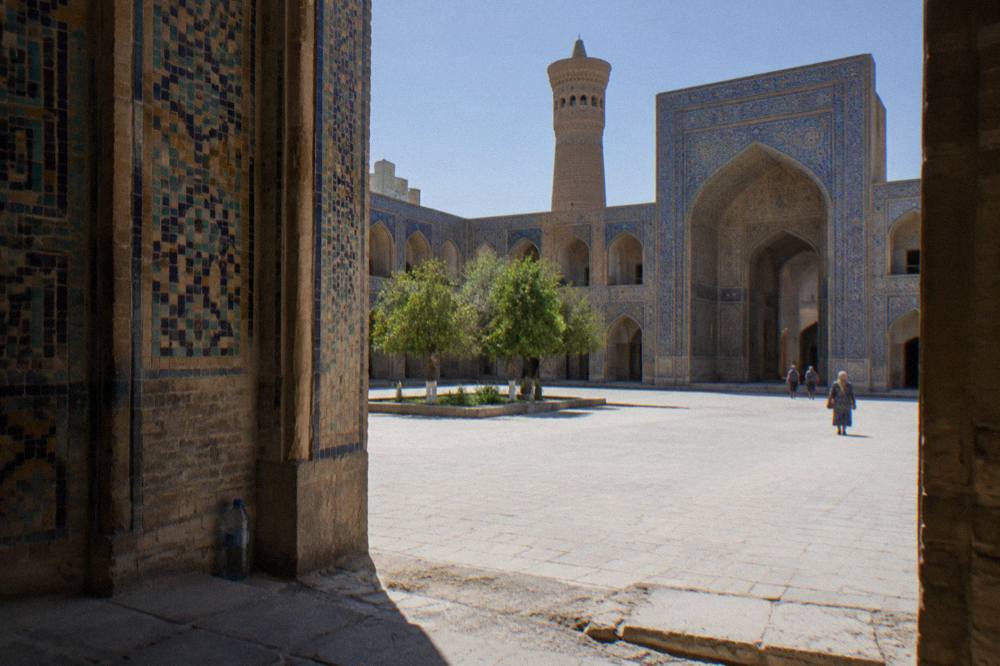
After Poi Kalon, the natural line runs north through the trading domes to the Zindon, the old prison complex, and then out to the park where the Ismail Samani mausoleum sits among mulberry trees. Done in that order, with a long lunch in the middle, the whole chain is a five to six hour day with real stops rather than drive-bys. Trying to add Ulugh Beg and Abdulaziz madrasahs on the same afternoon is possible but starts to blur; you will remember the courtyards you sat in, not the ones you filed past.
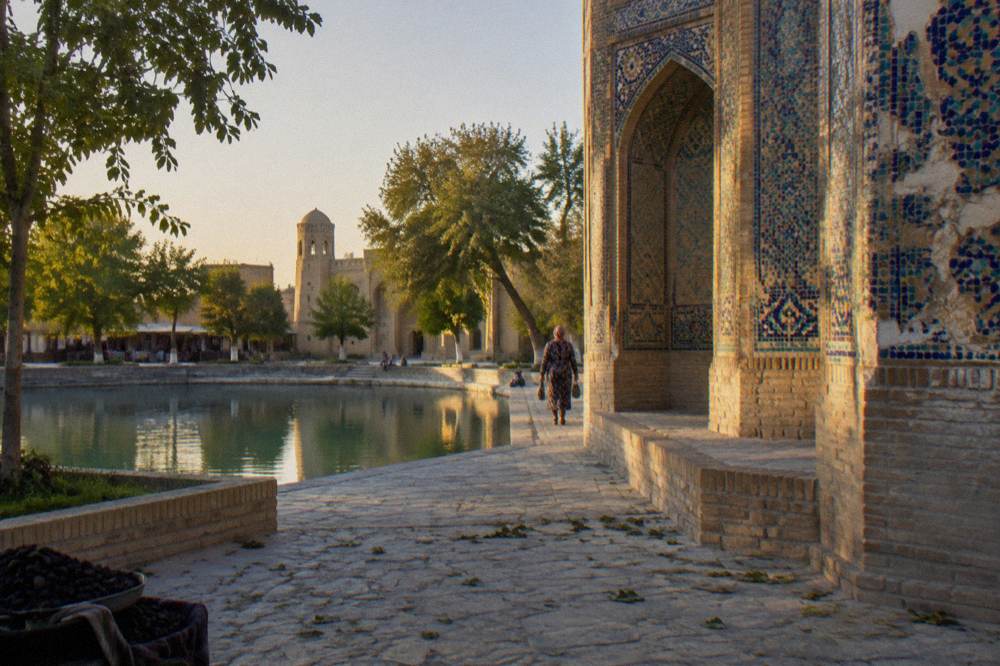
Day two is the texture day, and it is what separates a two-day visit from a one-day dash. The trading domes, the covered bazaar crossroads where silk, jewelry and spices were sold for centuries, reward a slow morning. The Labi Hovuz pool plaza is the evening center of gravity, and the park around the Ismail Samani mausoleum is at its best early, before tour groups arrive. Add a workshop, a longer lunch, and the second evening you simply could not have on a one-day plan.
The workshop half-day deserves its own paragraph, because it is the most commonly cut item and the one travelers most often regret cutting. Bukhara has a living craft tradition around metal chasing, suzani embroidery and leather, and the artisans working inside the old town sell directly from their studios. A workshop visit costs a fraction of a monument ticket, takes an hour or two, and gives you the single most durable souvenir of the trip: an object plus the person who made it. If your second morning can hold only one extra thing, make it this rather than a fourth madrasah.
Food deserves a sentence or two of planning, too. Bukhara's old town restaurants cluster around Labi Hovuz and the domes, meals are inexpensive by international standards, and plov, the rice and meat dish that anchors Uzbek cooking, is done differently here than in Samarkand or Tashkent. Budget travelers eat well in the $25 to $50 per day range in this country, mid-range travelers on $60 to $120, and Bukhara sits comfortably at the cheap end of that spectrum for food specifically.
Two practical constraints shape all of this. First, entry fees are per monument here rather than one city-wide ticket, so a full two-day sightseeing program adds up; the cost guide for 7, 10 and 14 day tours puts those fees in the context of a whole trip budget. Second, Bukhara's sights keep generous summer hours but shorter winter ones, which matters if you are traveling in the cold months described in our month-by-month guide to Uzbekistan.
Cash is the third constraint, and travelers get caught by it. Cards work at mid-range and upper hotels and in malls, but monument ticket desks, bazaars, small eateries and taxis in Bukhara remain cash-first, so plan to withdraw som rather than assume tap-and-go. The exchange rate runs about 11,900 som per US dollar, and ATMs in the historic center are scarcer than in Tashkent, so arriving with som already in hand saves your first morning.
One, Two, Or Three Days In Bukhara: Which Should You Choose?
Choose one day only if Bukhara is a stop you cannot extend; choose two days for the standard satisfying visit; choose three days if you want workshops, a fortress day trip, or a real rest day in the middle of a long itinerary. Two days is the value sweet spot because most of the headline sights cluster together.
The table below compares the three plans honestly, including what each one sacrifices.
| Plan | What it covers | What it cuts | Who it suits |
|---|---|---|---|
| 1 day | Ark, Poi Kalon, one or two trading domes, a quick old-town loop | Workshops, Ismail Samani park at leisure, evening atmosphere, any side trip | Travelers locked into a tight Tashkent-based schedule |
| 2 days | All headline monuments, trading domes at leisure, Labi Hovuz evenings, one workshop or cooking visit | Day trips out of the city, multiple workshops, a rest morning | Most first-time visitors on a classic route |
| 3 days | Everything above plus a fortress day trip or extra workshop time, and a slow final morning | Nothing significant | Craft-focused travelers, photographers, anyone escaping a rushed group pace |
The jump from one day to two is dramatic. The jump from two to three is modest, and that asymmetry is the whole argument. If a package offers a third Bukhara night for a large price difference, it needs to be buying you something specific, like a fortress excursion or dedicated craft time, not just another night in the same hotel.
The fortress option is worth naming, because it is the most common reason travelers add a day in this part of the country. Between Bukhara and Khiva lie dozens of ruined desert fortresses from the Silk Road era, and the transfer between the two cities can be turned into a full-day sightseeing run instead of a plain drive. The Khiva to Bukhara transfer with fortress stops runs 10 to 12 hours, rates 5.0 from 111 reviews, and starts from $220 per person with price varying by group size, with pickup and free cancellation listed. If your route runs westward after Bukhara anyway, that tour effectively gives you a third day of sightseeing for the price of a transfer day you were already going to spend on the road.
One caution about the one-day option: it exists in packaged form and it works, but only as a guided sprint. The one-day Bukhara tour from Tashkent runs 12 to 16 hours door to door, from $299 per person with price varying by group size, and it is rated 4.7 from 50 reviews. That is a legitimate product for a squeezed schedule, and a poor substitute for two days if you have any flexibility at all.
For travelers already in the city rather than arriving from Tashkent, the small-group walking format is the cheapest way to get the orientation done fast.
How Many Days Are Enough In Samarkand?
Most travelers need two full days for Samarkand: one for the Registan ensemble, Bibi Khanym and the Shah-i Zinda necropolis, and one for the bazaar, the paper-making workshops and the city's quieter corners. Unlike Bukhara, Samarkand's sights are spread across a wider area, which is why a single day there feels thinner than a single day in Bukhara.
The contrast between the two cities explains why so many itineraries give them equal time even though Bukhara is more compact. Samarkand's Registan sits at one end of the practical sightseeing zone, Shah-i Zinda at another, and the connections between them are long walks or short drives. Registan entry runs roughly 70,000 to 100,000 som for the ensemble and prices have been rising, so budget accordingly and check current rates on arrival.
Pairing the two cities is where the packaged two-day train format shines, because it solves the geometry problem. Travelers who want the full breakdown of the two-city pairing can read our guide to the Samarkand tour and its three headline sites, which goes deeper on how to split the days. The short version: two days per city, four days total, is the classic Uzbekistan core, and anything less forces real cuts.
The train makes the pairing painless. High-speed services run the Tashkent to Samarkand leg in about two to two and a half hours and Samarkand to Bukhara in about an hour and a quarter to an hour and 50 minutes, with several departures a day on the corridor. Tickets and timetables are best checked on the official railway booking site, eticket.railway.uz, which accepts foreign passport details and opens sales roughly 30 to 45 days ahead. Our guide to Uzbekistan by train covers the classes and the new Khiva line in detail.
A quick comparison of the two cities side by side makes the pacing logic obvious:
| Factor | Bukhara | Samarkand |
|---|---|---|
| Core sightseeing zone | Compact old town, all walks under 20 minutes | Spread out, several zones linked by longer walks or short drives |
| Realistic minimum visit | 2 days for the core, 1 day for a sprint | 2 days, 1 day feels thin |
| Signature experience | Trading domes and evening pool plazas | The Registan ensemble and Shah-i Zinda |
| Extra day buys | Workshops, fortress day trip | Bazaar, craft workshops, slower rhythm |
| Best packaged format | Walking tour or stop on a multi-day route | Day trip from Tashkent or stop on a multi-day route |
Notice that neither city rewards a third day as much as travelers fear they will miss something. The anxiety usually comes from guidebooks listing forty sights when a visitor's actual attention span holds ten. Two days per city, chosen honestly, beats three days performed for the itinerary's sake.
How Many Days In Uzbekistan Is Enough?
Seven days is enough for the classic Tashkent, Samarkand, Bukhara and Khiva circuit at a steady pace, with two nights in Bukhara as the comfortable default. Ten to 14 days allow the Aral Sea, Nukus or the Fergana Valley. Anything under six days forces you to drop a city entirely.
The national question inherits the city question. If Bukhara deserves two days, and Samarkand deserves two, and Khiva deserves at least one full day plus travel, the arithmetic writes itself: four city days plus arrival and transfer time lands you at seven. That is why our guide to how many days and which route treats seven days as the baseline and everything else as a variation on it.
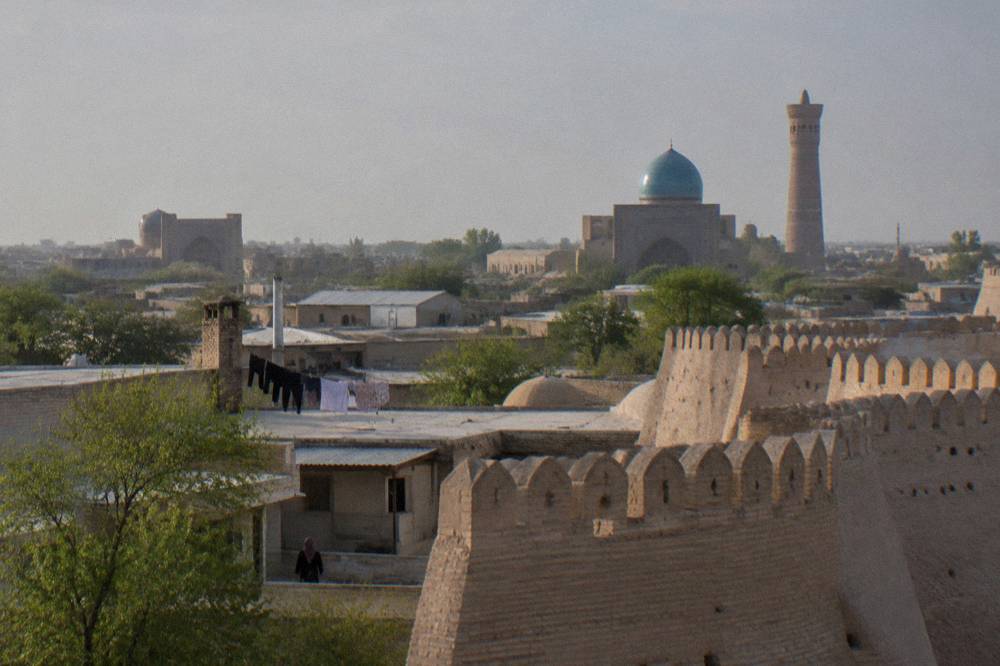
Package lengths on the market reflect this. Confirmed multi-day tours run 2, 3, 5, 6, 7, 8 and 11 days, and there is no confirmed 10 or 14 day listing in the roster, so travelers wanting those longer routes should expect a custom quote or should check each listing's itinerary carefully. The table below shows how the confirmed package lengths map onto what you can actually see.
| Package length | Route it supports | Bukhara nights in practice | Confirmed roster examples |
|---|---|---|---|
| 2 days | Tashkent plus Bukhara and Samarkand by train | Half a day to one day, compressed | 2-day Bukhara and Samarkand train tour, from $499, 4.9 from 57 reviews |
| 3 days | Tashkent, Bukhara, Samarkand | About one day | 3-day private tour with bullet train, from $505, 4.7 from 29 reviews |
| 5 to 6 days | Full four-city core at a push, or three cities comfortably | One to two nights | 6-day private tour with meals, from $800, 4.9 from 48 reviews |
| 7 to 8 days | Full four-city core at a steady pace | Two nights | 8-day private train tour, from $1,035, 4.7 from 40 reviews |
| 11 days | Four cities plus side trips and rest days | Two to three nights | 11-day Magical Cities tour with meals, from $1,600 |
Read down the Bukhara column and the pattern is clear: the packaged market converges on roughly two nights in Bukhara once the itinerary passes six days. Tour operators who plan this route professionally have run the same arithmetic this article walks through, and their itineraries land where ours does. The 11-day Magical Cities tour from $1,600 per person with meals exists precisely for travelers who found seven days too tight.
For the entry side of planning, the same government portal that announced the visa-free change, gov.uz, is the primary source, and hotels register you automatically so the old paperwork worry is mostly gone. The US travel advisory for Uzbekistan stands at Level 1, Exercise Normal Precautions, as of January 2026. Check the current entry rules before you book, since advisory and visa pages can change between planning and travel.
How The Two-Day Bukhara And Samarkand Train Tour Works
The 2-day train tour from Tashkent bundles both cities into one weekend-shaped package: rail between Tashkent, Samarkand and Bukhara, hotel pickup, meals, and guiding, from $499 per person. It rates 4.9 from 57 reviews, which makes it one of the strongest-reviewed listings on this site's roster.
This is the product that turns the two-day Bukhara verdict into a booking decision. If two days in Bukhara is enough, and two in Samarkand is enough, then a packaged two-day sprint is the compressed version for travelers who cannot spare four. You trade depth for coverage, and the reviews suggest the trade is handled well: the listing includes pickup, meals and free cancellation, and the price is firm at $499 per person rather than group-size dependent.
The shape of the tour matters for setting expectations. Because it runs Tashkent to Samarkand to Bukhara by rail and back, each city gets roughly a half-day-plus of attention rather than the full two days each city would get on an independent four-day plan. That is a fair trade for a weekend, but go in knowing it is a highlight reel, not a deep dive. Travelers who later return for a full trip often say the compressed version worked as a sampler that told them where to slow down next time.
Who should take it? Travelers based in Tashkent for work, visitors with a short stopover, and anyone who wants the two headline cities without managing train tickets, transfers and guides in two languages. Who should skip it? Anyone with five or more free days, because the same rail corridor run at your own pace, with a night or two more in each city, is a better trip. The choice between packaged and independent travel has its own comparison guide for readers who want the fuller argument.
The alternative compressed format is the one-day Bukhara-only tour from Tashkent, a private 12 to 16 hour day from $299 per person, rated 4.7 from 50 reviews. It is the right product for a single-city focus, and the wrong one for travelers who will realistically never return to Uzbekistan and want Samarkand too. There is also a middle option for Samarkand-focused travelers: the all-inclusive Samarkand day tour from Tashkent, rated 5.0 from 60 reviews, from $180 per person with price varying by group size, which includes a meal and runs about 12 hours.
Whichever format you lean toward, the underlying advice holds: give Bukhara its two days if you possibly can. The city's value is not in any single monument, it is in the cumulative effect of slow mornings, domed bazaars and evenings around the pool plazas, and none of that survives compression into a single day. This site, Uzbekistan Tour Packages, exists to help you match the length of the trip to the pace you actually travel at, and Bukhara is the city where that match matters most.
Before you commit to any specific length, here again are the three formats that answer the two-day question in practice.
Common Questions About Two Days In Bukhara
Is 2 Days In Bukhara Enough?
Yes, for a first visit focused on the old town. Two days covers the Ark, Poi Kalon, the trading domes and the evening plazas at a comfortable pace, with room for one workshop. You would want a third day only for fortress day trips or deep craft time.
How many days are enough in Samarkand?
Two full days. Samarkand's headline sights are more spread out than Bukhara's, so one day there is thinner than one day in Bukhara. Two days covers the Registan, Shah-i Zinda, Bibi Khanym and the bazaar without rushing.
How many days in Uzbekistan is enough?
Seven days for the classic Tashkent, Samarkand, Bukhara and Khiva circuit, with two nights in Bukhara. Ten to 14 days open up the Aral Sea, Nukus or the Fergana Valley. Under six days and you will have to drop a city.
is 2 days enough for samarkand?
Yes, two days is enough for Samarkand's core sights, and it is the recommended minimum. One day covers the Registan and one or two more ensembles but cuts the bazaar, the workshops and any leisure time.
Can you visit Bukhara and Samarkand in one trip from Tashkent?
Yes. A 2-day train tour from Tashkent covers both cities with meals and hotel pickup, from $499 per person, rated 4.9 from 57 reviews. It is compressed but well reviewed, and free cancellation is listed on the tour's page.