Best Time To Visit Uzbekistan: Month By Month For Tour Dates
Spring and autumn own the calendar in Uzbekistan, but the month you pick changes everything: crowds, train seats, tour prices and which Silk Road cities feel pleasant at all. Here is the full month by month breakdown.
Short answer
The best time to visit Uzbekistan is April to May and September to early October, when daytime highs run roughly 21 to 29 degrees C in Samarkand and Tashkent. July and August push past 35 degrees. Winter is cold but quiet, and tour prices soften outside the spring and autumn peaks.
Spring and autumn are the seasons Uzbekistan was built for, at least as far as a visitor is concerned. The continental climate means hot, dry summers, cold winters and two short, mild windows in between, and almost every tour operator, guidebook and local will point you to April, May, September and early October. That is the short answer. The longer answer is that the month you choose shapes the whole trip: which cities are comfortable to walk, how crowded the Registan gets, whether mountain day trips run, and what a package costs.
This guide walks the calendar month by month, using long-term climate normals for Samarkand and Tashkent, the two cities with reliable published averages, plus the festival calendar and the practical tour-date realities. If you are still deciding how long to go for, the 7-day Silk Road itinerary guide is the companion piece to this one.
When Is The Best Time To Visit Uzbekistan?
The best months are April, May, September and the first half of October, when Samarkand averages daytime highs of about 21 to 29 degrees C and Tashkent about 22 to 29. These windows combine sightseeing-friendly temperatures with the longest daylight, and they are also when tour departures are most plentiful and most crowded. June and late August work in a pinch, July is genuinely hot, and winter is quiet, cold and cheap.
The reason the answer is so consistent comes down to geography. Uzbekistan sits deep inside Central Asia, far from any ocean, so its climate swings hard between seasons rather than easing between them. Summers are dry desert heat, often exceeding 35 degrees C and in the hottest zones pushing toward 40. Winters bring freezing nights inland. The transitions between them are brief, which is exactly why the shoulder months are prized.
There is a trade-off in those shoulder months, and it matters for tour planning. April to May and September to October are the peak visitor windows at the major Silk Road sites, so hotel rates and package prices sit at their highest and high-speed train seats sell out furthest in advance. Travelers who can tolerate summer heat, or who pack properly for winter, routinely pay less and share the monuments with far fewer people. The month by month table below shows where those compromises fall.
If your dates are flexible but your comfort is not, aim for late April to mid May or mid September to early October. If your budget is fixed but your dates are flexible, look at March, June or late October, each of which keeps most of the comfort at a lower price point.
What Is The Weather Like In Uzbekistan Month By Month?
Samarkand runs from average highs of about 7 to 8 degrees C in January to about 34 to 35 in July, with nights below freezing in deep winter. Tashkent is slightly milder, from about 7 to 8 in January to about 36 in July. Rain is modest year-round and falls mostly outside summer, when the weather is hot, dry and reliably sunny across the whole country.
The table below uses long-term climate normals for the two cities with published averages, the same data series maintained by climate aggregators covering 1991 to 2020. Treat the figures as planning ranges rather than forecasts: any given day can run several degrees either side, and heat around the Registan's tiled stone feels stronger than the shade temperature suggests. Bukhara and Khiva, further west and lower, generally run a little hotter in summer and a touch colder on winter nights, but Bukhara and Khiva, lower out on the open plain, tend to run hotter in summer than the numbers above.
| Month | Samarkand high / low (C) | Tashkent high / low (C) | What it means for visitors |
|---|---|---|---|
| January | 7 to 8 / -1 to -3 | 7 to 8 / -1 to -3 | Cold, quiet, low prices |
| February | 9 to 10 / -1 to 0 | 9 to 10 / 0 to 1 | Still winter, slightly longer days |
| March | 15 to 16 / 3 to 5 | 16 / 4 to 5 | Warming fast, Navruz late in the month |
| April | 21 to 22 / 8 to 10 | 22 to 23 / 9 to 10 | Prime shoulder season |
| May | 27 to 28 / 12 to 14 | 28 to 29 / 13 to 14 | Warm, blooming, peak crowds |
| June | 32 to 33 / 16 to 18 | 33 to 34 / 17 to 18 | Hot but usually before the worst |
| July | 34 to 35 / 18 to 20 | 36 / 19 to 20 | Peak heat, thinnest crowds |
| August | 33 / 17 to 18 | 34 to 35 / 18 | Hot, melon season |
| September | 28 to 29 / 12 to 14 | 29 to 30 / 13 to 14 | Prime shoulder season again |
| October | 22 / 7 to 8 | 22 / 8 | Pleasant, cooling evenings |
| November | 14 to 15 / 2 to 4 | 14 / 3 to 4 | Quiet, chilly, cheap |
| December | 9 / -1 to 0 | 9 / around 0 | Winter returns |
A few patterns in that table are worth pulling out. Spring warms quickly: March is a jacket month, April is a light-layer month and May is short sleeves. Autumn cools on almost the same slope in reverse, which is why early October feels like a second April. The summer plateau is long, running from mid June through August, and the winter trough runs from late November into February. Precipitation is not a major factor in any month; this is a dry country, and rain rarely rearranges an itinerary.
For the underlying data, the Samarkand normals are published at climatestotravel.com's Samarkand climate page, which maintains the 1991 to 2020 averages used here. For seasonal planning beyond temperature, the month-by-month breakdown continues below.
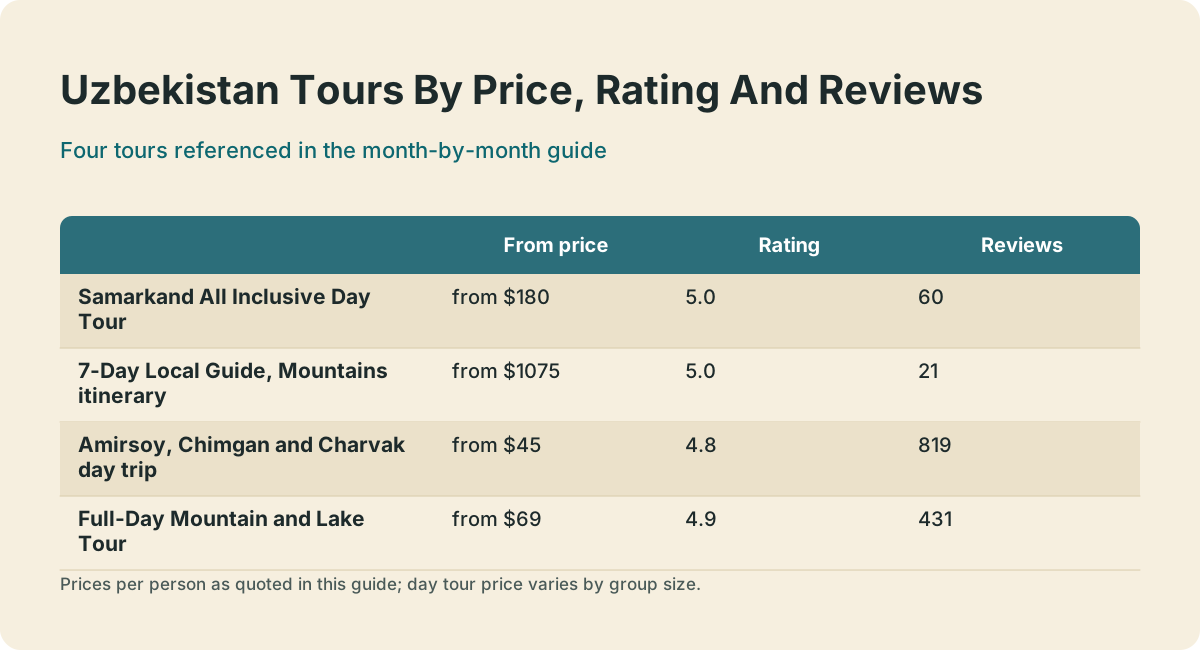
That day trip from the capital is a good example of how the calendar and the itinerary interact. The Samarkand All Inclusive Day Tour runs about 12 hours from Tashkent, from $180 per person with the price varying by group size, and it holds a 5.0 rating from 60 reviews. In April or October that is a full, comfortable day. Book the same itinerary in July and you are walking tiled courtyards in the hottest hours, so if summer is your window, pick a departure date where the sightseeing starts early.
Which Months Are Peak Season For Uzbekistan Tours?
Peak season runs from early April through late May and again from early September to mid October, matching the mild-temperature windows in the month table. In these months the classic Silk Road route is at its busiest, hotel rates in Samarkand and Bukhara are at their highest, and Afrosiyob train seats on the Tashkent to Samarkand corridor sell out furthest ahead. Tour departures are also most numerous then.
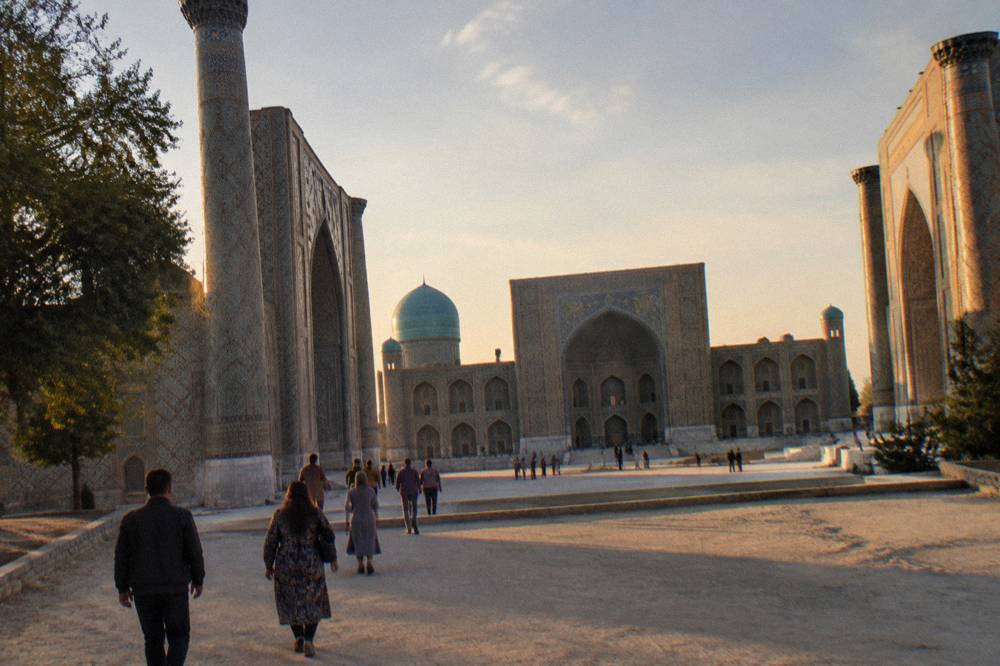
Peak season is not a single block; it has a shape. Within the spring window, the stretch around the Navruz holiday in late March and the first half of May tends to be the most requested for guided groups, and late September edges out early September because it pairs warm days with harvest markets. If you want shoulder-season comfort without shoulder-season crowds, the two best-kept windows are late March to mid April and the last week of September into October's first ten days.
The practical consequence of traveling in peak is that you should book earlier. Multi-day packages on this site list free cancellation on nearly every itinerary, including the featured 7-Day Local Guide, Mountains itinerary, from $1075 per person with a 5.0 rating from 21 reviews, so reserving a spring date in winter costs you nothing if plans change. Train tickets are a different matter: booking on the national railway site typically opens about 30 to 45 days ahead, and the popular morning departures go first. For a deeper look at how the rail calendar interacts with tour dates, see the guide to Uzbekistan's trains and the Khiva line.
How Hot Does Uzbekistan Get In Summer?
July is the hottest month, averaging about 34 to 35 degrees C by day in Samarkand and about 36 in Tashkent, with highs often exceeding 35 and sometimes pushing toward 40 in the country's hotter western zones. June and August are only slightly cooler. Humidity stays low, so the heat is dry, but midday sightseeing is genuinely draining and shade is scarce on the open plazas.
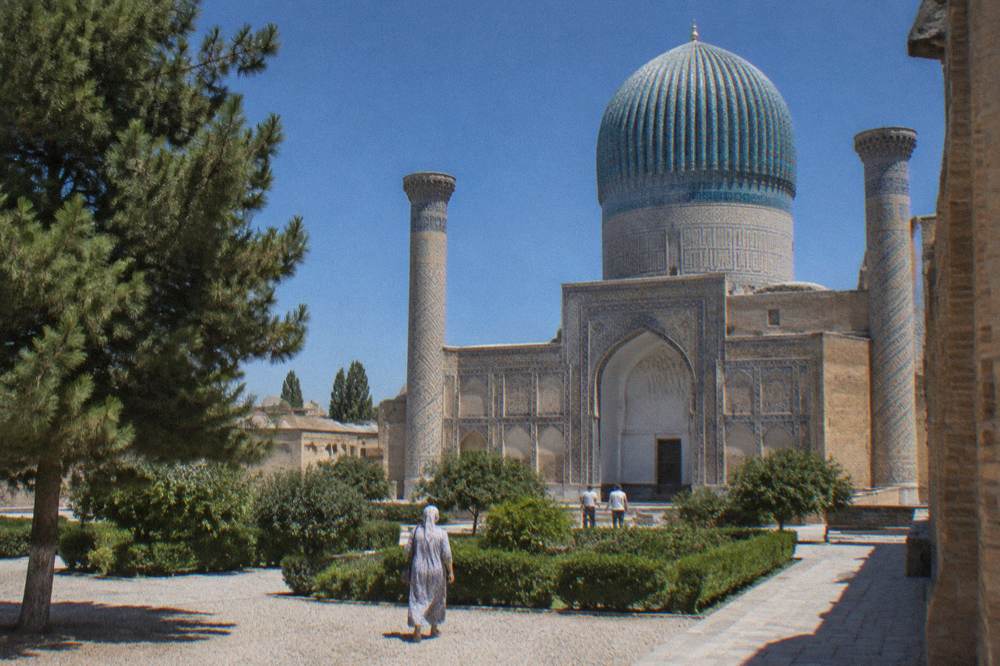
Summer travel is workable with the right structure, and it has real rewards: fewer tour groups, softer hotel rates and long evenings when the monuments are beautifully lit and cool. The tactics that matter are simple. Front-load your sightseeing before 11 a.m. and after 4 p.m., build a midday break into the itinerary the way locals do, carry more water than feels reasonable and treat a mountain day trip as your heat valve. The hills outside Tashkent run noticeably cooler than the cities, which is why summer is their season.
The Amirsoy, Chimgan and Charvak mountain day trip from Tashkent, from $45 per person with a 4.8 rating from 819 reviews, is the roster's most reviewed escape from the summer plain, and a fuller private version, the Full-Day Mountain and Lake Tour from $69, 4.9 from 431 reviews, does the same circuit at a slower pace. Either one turns a 36-degree city day into a lake-and-cable-car afternoon. A comparison of the two formats sits in our private versus small group tours guide.
August has one consolation the thermometer does not show: it is melon season, and markets across the country stack them by the hundreds. The Melon Festival, held in August in some years around Khiva or Samarkand's agricultural areas, celebrates exactly that harvest. If you go in summer, go for the evenings, the melons and the emptiness, not the midday tiles.
Is Winter A Good Time To Visit Samarkand And Tashkent?
Winter is the quietest and cheapest time to visit, with January highs of only about 7 to 8 degrees C and nights a few degrees below freezing in both cities, but no deep snowpack and little rain. The monuments stay open, crowds vanish, and hotel and tour pricing softens. The trade-off is short daylight, cold evenings and a landscape of bare trees and grey light.
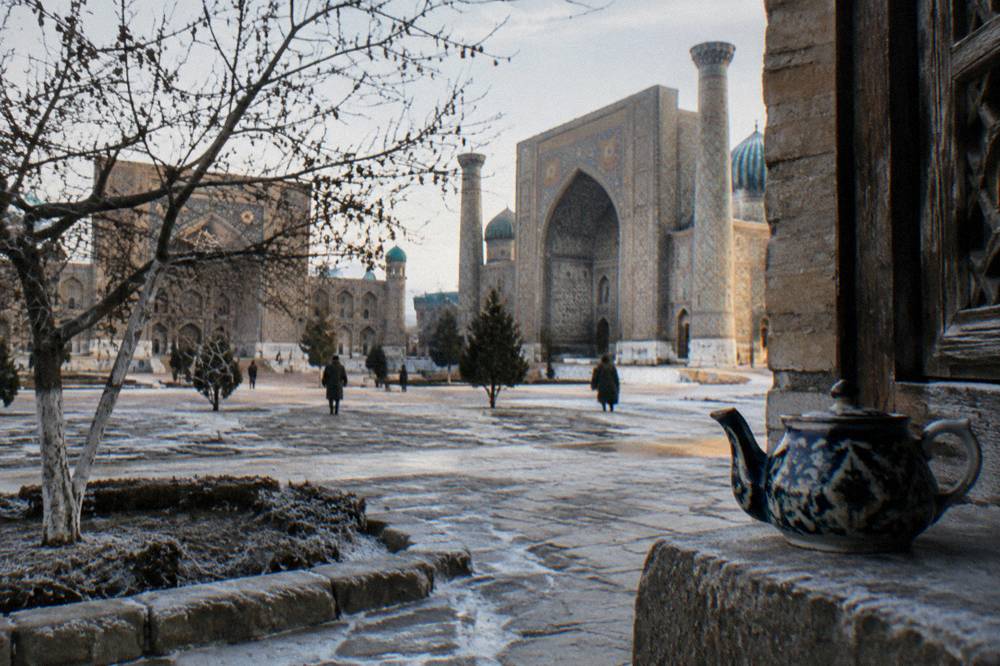
For travelers whose priority is photography without people in the frame, or simply a low budget, December through February delivers. The Registan and Bukhara's old town are dramatically quieter, guides have open calendars, and you can walk Itchan Kala's lanes almost alone. Pack for it properly: thermal layers, a real winter coat, hat and gloves, because the old cities are built for shade and the wind funnels down their corridors. Indoor museums and craft workshops, like the Khiva woodcarving masterclass, from $20 per person and rated 5.0 from 61 reviews, are ideal winter anchors.
Late winter carries one planning wrinkle for 2027: Ramadan is expected to begin around February 8, 2027 and run roughly a month, with dates dependent on moon sighting. Uzbekistan is a secular state and tourist services continue through the month, but cafe hours in conservative neighborhoods can shift, and the festival of Eid at its close is a public holiday. Check the current situation closer to travel rather than assuming closures. More of these guides are collected on Uzbekistan Tour Packages.
March is the month winter trips turn into spring trips. The first half can still feel wintry, but by late March the city is warming toward 16 degrees and Navruz, the Persian new year celebrated on March 21, fills squares with music, dancing and sumalak, the slow-cooked wheat dish made for the holiday. It is one of the best-value cultural moments of the year and almost no international tours are built around it, so independent travelers get it largely to themselves.
That 7-day itinerary pairs the classic blue-domed cities with time in the mountains, which makes it unusually season-tolerant: in spring the hills are green, in autumn the Chimgan slopes color up, and even a warm-shoulder departure has a cooler escape built in. Its listing notes free cancellation and a meal plan, from $1075 per person.
What Events And Festivals Shape The Uzbekistan Calendar?
Three events anchor the year for visitors: Navruz on March 21, the Silk and Spices Festival in Bukhara in late May or early June in odd years, and the Sharq Taronalari music festival in Samarkand, whose next edition date is unconfirmed. Beyond these, Independence Day on September 1 and the Tashkent International Tourism Fair on November 25 to 27, 2026 fill the professional calendar.
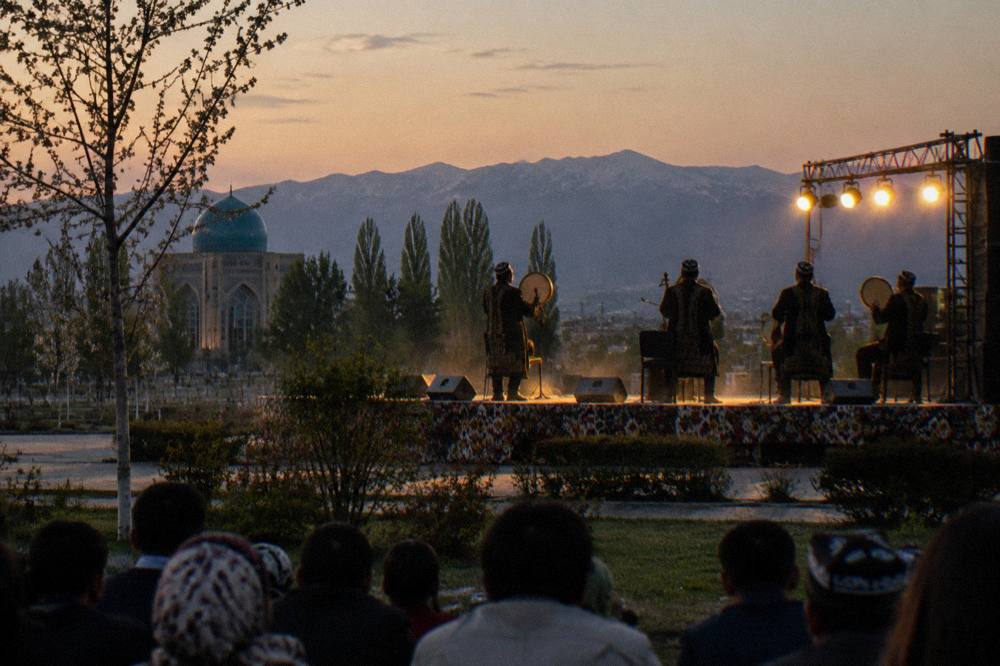
Festivals rarely close anything, but they change the feel of a city and the price of a bed in it, so they belong in date planning alongside the temperature table. The confirmed and expected events:
| Event | When | Where | Why it matters for planning |
|---|---|---|---|
| Navruz | March 21 annually | Nationwide, biggest in Tashkent, Samarkand, Bukhara | Public holiday, parades and food, lively squares |
| Silk and Spices Festival | Late May or early June, odd years recently | Bukhara historic center | Crafts markets and performances, hotels fill |
| Independence Day | September 1 annually | Nationwide | Public holiday, celebrations, busy transport |
| Melon Festival | August in some years | Khiva or Samarkand areas | Harvest celebration, informal |
| Tashkent International Tourism Fair | November 25 to 27, 2026 | Tashkent | Trade fair, minor visitor impact |
| Ramadan | From about February 8, 2027 | Nationwide | Service hours can shift, dates moon-dependent |
Two honest caveats. Sharq Taronalari, the international music festival held at or near the Registan, runs in late August or early September in its biennial rhythm, but reports conflict on whether its next edition lands in 2026 or shifts to odd years from 2027, so treat it as unconfirmed and watch for announcements. And festival dates in Uzbekistan generally firm up only weeks or a few months ahead, so if an event is the reason for your dates, verify it through official tourism channels before booking flights. No major closures of the Registan, Bukhara's old city or Itchan Kala have been reported for 2026.
One more calendar note for American readers: the United States rates Uzbekistan at Level 1, Exercise Normal Precautions, as of January 2026, and entry is visa-free for US citizens for up to 30 days under the policy announced by the government's tourism portal, published on gov.uz. Neither depends on season, but both are worth confirming on the State Department's Uzbekistan advisory page before you commit to dates.
How Does The Season Affect Tour Prices And Departures?
Package prices are highest and departures most numerous in the April to May and September to October peaks, and softest from late October through March. On this site's roster, multi-day private packages span from $632 to $1,600 per person year-round, with the listing's own dates and group-size pricing determining the final figure. Day tours and city tours run daily in every season, so only the multi-day calendar is truly seasonal.
The price mechanics are worth understanding before you pick a month. Most private packages on the roster price per person with the rate varying by group size, and operators load their calendar around the shoulder peaks because that is when travelers book. In the shoulder months you get the most departure choice and the highest certainty that a given date runs; in the off-season you get lower quotes and more flexibility, but sometimes a solo-departure surcharge or a date that needs confirming. Since nearly every roster listing shows free cancellation, the cheapest strategy is usually to reserve a shoulder-peak date early and watch for price movement, rather than gambling on an off-peak quote that arrives late.
| Season | Months | Tour calendar | Typical trade-off |
|---|---|---|---|
| Spring peak | April to May | Most departures, earliest sellouts | Highest prices, biggest crowds |
| Early summer | June | Good availability | Heat builds toward month's end |
| High summer | July to August | Reduced group tours, day tours run daily | Heat, but empty sites and low rates |
| Autumn peak | September to mid October | Most departures again | Prices and crowds back at peak |
| Shoulder | Late March, late October | Good availability | Cooler evenings, some rain chance |
| Winter | November to February | Fewest departures, best quotes | Cold nights, short daylight |
Day tours behave differently, and that matters if you are building a trip from city bases rather than one package. The Samarkand walking tour of historical monuments, from $15 per person with a 4.9 rating from 1,104 reviews, departs year-round, and so do the Bukhara old-town walks and the one-day Samarkand trips from Tashkent, such as the One-Day Samarkand tour with hotel pickup, from $229 with a 4.7 rating from 355 reviews. Winter travelers can therefore assemble a full itinerary from daily departures even when multi-day group calendars thin out. If you are weighing the formats against each other, the cost comparison for 7, 10 and 14-day tours breaks the numbers down by length.
One planning habit ties the whole seasonal picture together: match your month to your route. Hot months favor itineraries with mountain time and early starts, cold months favor the craft workshops and covered bazaars, and the shoulder peaks are when the full four-city classic, Tashkent, Samarkand, Bukhara and Khiva, is at its best. Our route and trip-length guide covers that sequencing in detail, and the choice of what each season does to a fixed route is exactly what the next section packs for.
What Should You Pack For Each Season In Uzbekistan?
Pack for a swing of 20 degrees C or more between day and night in spring and autumn, serious sun protection in summer, and real winter layers from November to March. Layers are the single strategy that works across all four seasons, because clear Uzbek skies heat the afternoon and cool the evening fast, and modest dress norms apply at religious sites in every month.
The table keeps it practical. Nothing here is exotic: the packing problem in Uzbekistan is almost always temperature swing plus sun, not specialized gear.
| Season | Daytime essentials | Evening essentials | Notes |
|---|---|---|---|
| Spring (March to May) | Light layers, sun hat, sunscreen | Warm jacket, closed shoes | Late March still needs a winter coat |
| Summer (June to August) | Breathable cotton, high-SPF sunscreen, refillable water | Light layer for air-conditioning | Scarf for sun and mosque entry |
| Autumn (September to November) | Layers, comfortable walking shoes | Warm jacket by October | Early September still summer-warm |
| Winter (December to February) | Winter coat, hat, gloves | Thermals for old-city evenings | Pavements can be icy in patches |
A note on dress that crosses seasons: Uzbekistan is a secular Muslim-majority country, and in practice the cities are relaxed, but religious sites ask for covered shoulders and knees, and a scarf for women at active mosques. Our detailed answer on the question, what to wear in Uzbekistan, covers it month by month. Beyond clothing, two season-proof items earn their space: a refillable water bottle, because summer tap-side heat is real, and cash in local som, since monument tickets, bazaars and small cafes take cards rarely if at all.
The last word on packing goes to your feet. Every Uzbekistan itinerary is a walking itinerary: Samarkand's ensembles alone involve kilometers of plaza, and Bukhara and Khiva are entirely pedestrian old towns. Whatever month you choose, broken-in shoes matter more than any other single item on the list.
To pull it all together, the month you pick sets the frame, and the tour you pick fills it. These three itineraries cover the main formats across the seasonal windows:
Common Questions About The Best Time To Visit Uzbekistan
When is the best time to visit Uzbekistan?
April to May and September to early October. Samarkand averages highs of about 21 to 29 degrees C in those windows and Tashkent about 22 to 29, with long daylight and the fullest tour calendars. The trade-off is peak crowds and peak pricing at the major Silk Road sites.
What is the hottest month in Uzbekistan?
July, when Samarkand averages about 34 to 35 degrees C by day and Tashkent about 36, with highs often exceeding 35. June and August are only a little cooler. The heat is dry, but midday sightseeing on open plazas is draining, so summer itineraries should start early and break at midday.
Is Uzbekistan worth visiting in winter?
Yes, if you pack for it. January highs sit around 7 to 8 degrees C with nights below freezing, but snow is limited, the monuments stay open and crowds almost disappear. Hotel and tour pricing softens noticeably. Expect short daylight, cold evenings and a grey, bare landscape.
When is the rainy season in Uzbekistan?
There is no real rainy season. The climate is continental and semi-arid, precipitation is modest in every month, and it falls mostly outside summer. Rain rarely rearranges an itinerary; sun and temperature are what should drive your date choice.
Do tours run year-round in Uzbekistan?
Day tours and city walking tours run daily in every season, including winter. Multi-day packages are concentrated in the spring and autumn peaks, when departures are most numerous, and thin out in the off-season, though private itineraries can usually be arranged on request with more notice.
Which festivals should I plan a trip around?
Navruz on March 21 is the biggest annual celebration, with parades, music and sumalak nationwide. The Silk and Spices Festival fills Bukhara's old town in late May or early June in recent odd years, and the Sharq Taronalari music festival takes place at or near the Registan in late August or early September, though its next edition date is unconfirmed. Verify dates close to travel, since announcements come late.