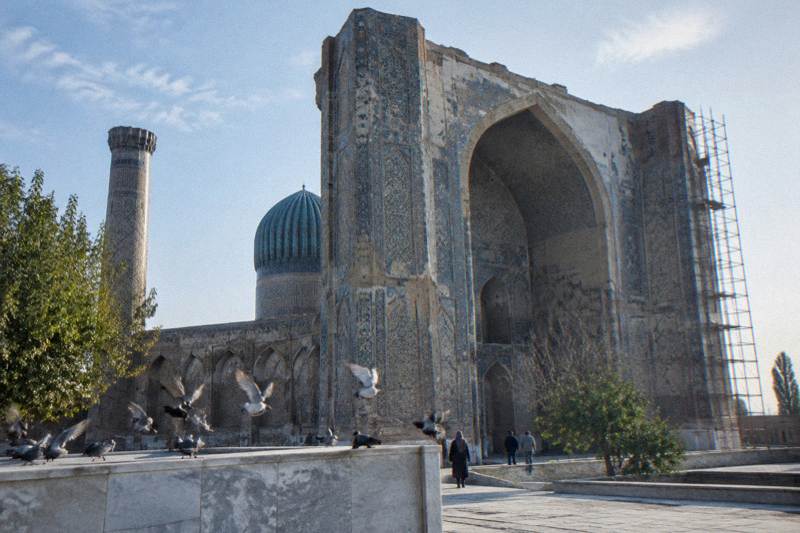
Uzbekistan By Train: Afrosiyob, Sharq And The New Khiva Line
Uzbekistan is one of the few Central Asian countries where the train genuinely competes with the car: a high-speed Spanish-built rail fleet links the big Silk Road cities, a new service reached Khiva in May 2026, and most multi-day packages quietly build their itineraries around it.
Short answer
Afrosiyob high-speed trains cover Tashkent to Samarkand in about 2 to 2.5 hours and Tashkent to Bukhara in about 3h50 to 4h20, with economy fares from about $25 to $40 on the Samarkand leg. Sharq trains are slower but cheaper. A new Tashkent to Khiva service launched in May 2026, reported at about 7.5 hours.
Uzbekistan runs the most modern passenger rail network in Central Asia. The flagship is Afrosiyob, a Spanish Talgo trainset that glides between Tashkent, Samarkand and Bukhara at speeds that make the drive look slow, and in May 2026 a new Hyundai Rotem service finally put Khiva on a high-speed line too. For a visitor, this matters more than it might first appear: the distances between the Silk Road cities are long, the roads are flat and straight but monotonous, and a train seat turns a five-hour drive into a two-hour ride with a table and a power socket. This guide lays out every line a tourist actually uses, what the fares look like, how to buy tickets from abroad, and which packaged tours already build their itineraries around the rails. Timetables and seat availability change, so confirm train times on the live booking page before you lock in your days., with the approximate figures flagged as approximate, because Uzbek rail fares shift with the season.
What Trains Run Between Tashkent, Samarkand, Bukhara And Khiva?
Three families of train cover the tourist corridor: Afrosiyob, the flagship high-speed Talgo service linking Tashkent, Samarkand and Bukhara with several departures a day; Sharq, a slower classic train on the same corridor at lower fares; and the new Jaloliddin Manguberdi service to Khiva, launched in May 2026. A few overnight and regional trains fill the gaps.
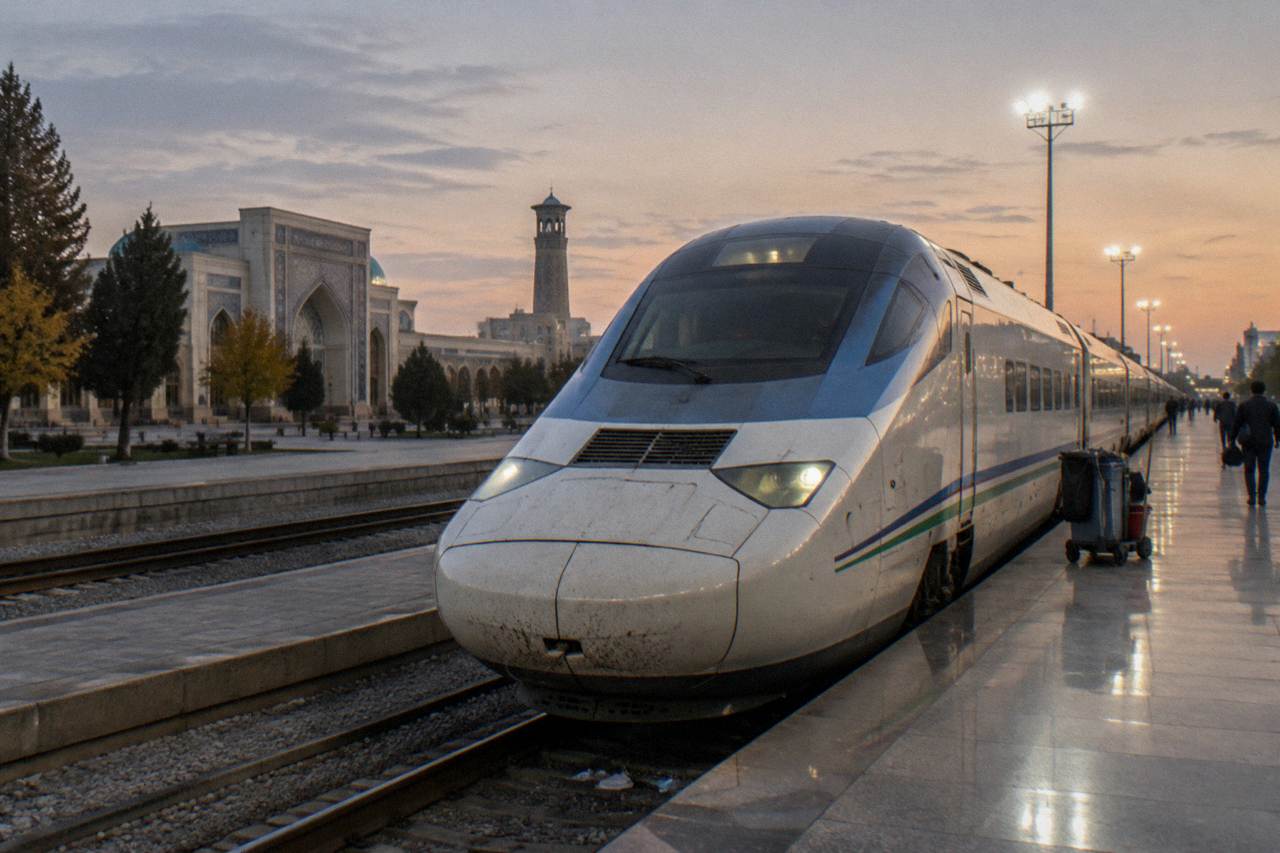
Afrosiyob is the one you have seen in photos, a long white trainset with a livery modeled on Uzbek ceramic patterns. It runs the core corridor, Tashkent to Samarkand to Bukhara, with a reported five or more departures a day in each direction on the main segments, clustered in morning and evening slots. On top of that, Sharq trains use conventional rolling stock on broadly the same route, taking roughly an hour longer to Samarkand and considerably longer to Bukhara, in exchange for a lower fare. Travelers report both as clean and punctual by regional standards, with air conditioning that runs cold, so a layer is worth having in your day bag.
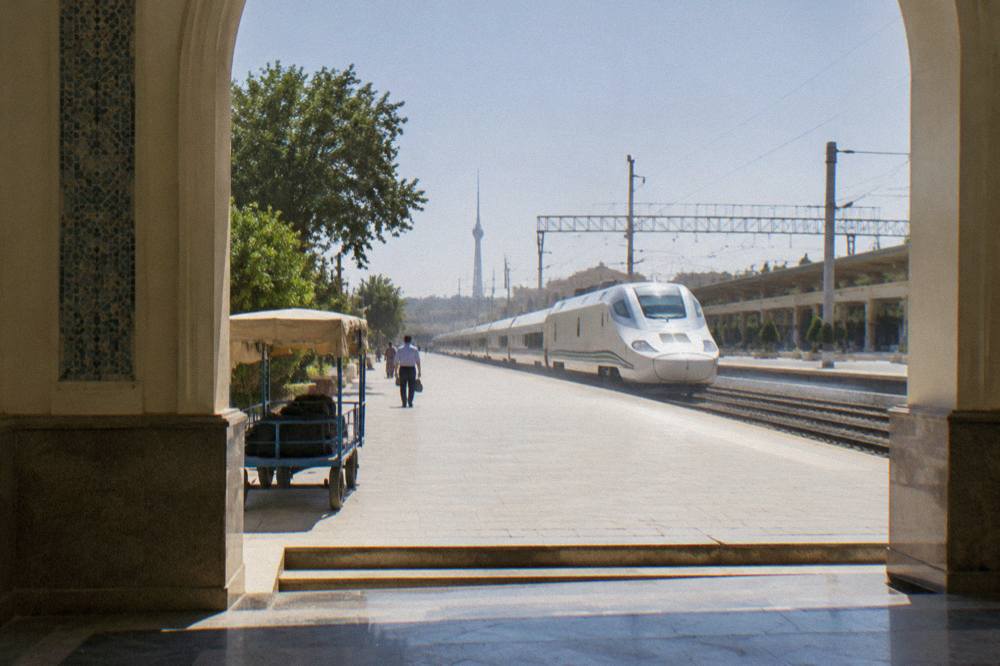
The map below is simpler than it looks. Everything a first visit needs sits on one axis: Tashkent in the northeast, Samarkand two hours down the line, Bukhara about two hours beyond that, and Khiva off to the northwest, reached either by the new direct train, by a flight to Urgench, or by road across the Kyzylkum. Nukus, the gateway to the Aral Sea and the Savitsky Museum, sits further west still and is usually reached by train from Urgench or by a short flight. Our 14 day itinerary guide covers that western extension in detail.
| Line | Train type | Roughly how long | How often |
|---|---|---|---|
| Tashkent to Samarkand | Afrosiyob | about 2h to 2h30 | 5+ departures a day |
| Tashkent to Samarkand | Sharq | about 3h | daily options |
| Samarkand to Bukhara | Afrosiyob | about 1h12 to 1h50 | several a day |
| Tashkent to Bukhara | Afrosiyob | about 3h50 to 4h20 | several a day |
| Tashkent to Bukhara | Sharq | about 6h | daily options |
| Tashkent to Khiva | Jaloliddin Manguberdi | about 7.5h | reported 3 times weekly |
One thing to keep in mind: these are secondary-source figures from rail agencies and travel sites, not a printed timetable, and Uzbekistan's schedules are adjusted seasonally. Before you commit a day's plan to a specific departure, check the live timetable on the national booking site, which we cover further down.
How Fast Is The Afrosiyob And What Does It Cost?
Afrosiyob covers Tashkent to Samarkand in about 2 to 2.5 hours and Tashkent to Bukhara in about 3h50 to 4h20, with economy fares reported from about $25 to $40 for the Samarkand leg and from about $42 to $55 for Bukhara, while business class runs from about EUR 65 and EUR 85 respectively. Fares are agency-quoted ranges and vary by date.
Those numbers deserve one caveat each. The durations are stable across sources, but the fares come from ticketing agencies that quote in euros, dollars or som depending on the site, and the official railway pages show som. Treat every figure as "from about", book early for the cheapest buckets, and expect prices to firm up in the April-May and September-October peaks. Children's discounts apply on most services, though the exact percentage varies by train and class.
| Segment | Class | Reported fare | Notes |
|---|---|---|---|
| Tashkent to Samarkand | Afrosiyob economy | from about $25 to $40 | agency-quoted, varies by date |
| Tashkent to Samarkand | Afrosiyob business | about EUR 65 | higher buckets near peak season |
| Tashkent to Bukhara | Afrosiyob economy | from about $42 to $55 | longest high-speed leg |
| Tashkent to Bukhara | Afrosiyob business | about EUR 85 | comfort option for the full run |
| Tashkent to Khiva | New service | about 780,000 som, roughly $65 | launched May 2026, confirm live |
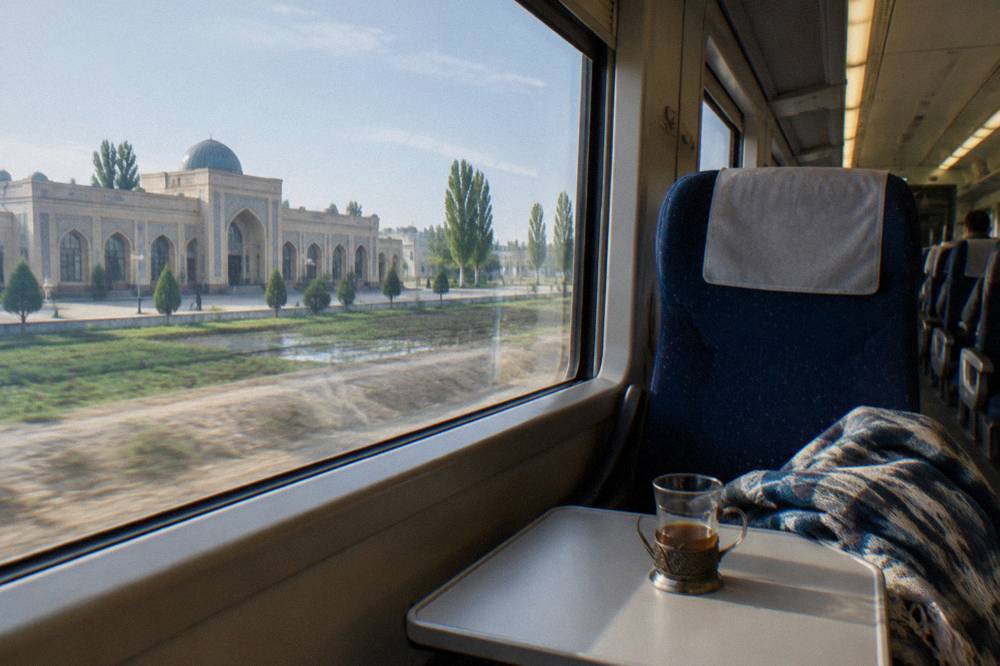
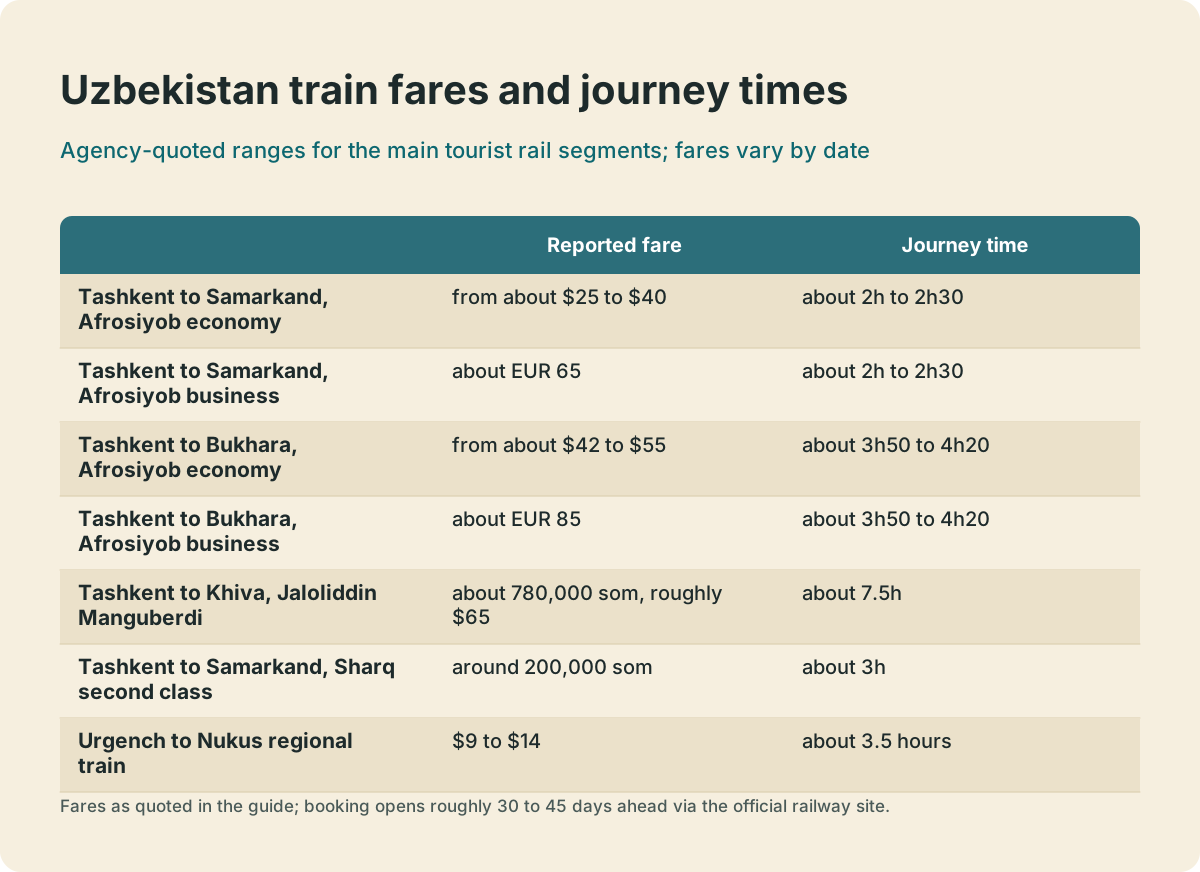
The practical reading of the chart is that Afrosiyob turns the golden triangle into a set of short hops. You can breakfast in Tashkent, lunch beside the Registan in Samarkand and still reach Bukhara before dinner. That geometry is exactly why so many packaged tours use the train rather than a private car for the long legs, and why the difference between a good and a rushed week in Uzbekistan often comes down to which segments your itinerary assigns to rail. If you are weighing that tradeoff for your own trip, the comparison in Afrosiyob train versus a private car works through it city by city.
The three packages above all lean on the rail corridor in different ways: the 8-day private tour, from $1035 per person with a 4.7 rating from 40 reviews, runs the full Tashkent, Urgench, Bukhara and Samarkand loop; the 3-day private tour, from $505 per person, compresses Bukhara and Samarkand into a bullet-train long weekend; and the 2-day train trip, from $499 per person with a 4.9 rating from 57 reviews, is the shortest version that still touches both imperial cities.
What Is The Sharq Train And When Is It The Better Choice?
Sharq is Uzbekistan's conventional express train on the same Tashkent, Samarkand and Bukhara corridor, taking about 3 hours to Samarkand and about 6 hours to Bukhara, with second-class fares reported around 200,000 som on the Samarkand leg, roughly half to two-thirds of the Afrosiyob economy price. First class costs more, with higher classes priced above second class.
The tradeoff is time against money and schedule fit. Sharq's slower pace does not matter much on the Tashkent to Samarkand run, where the difference is an hour and the fare saving is real, and Sharq departures sometimes fill the midday gap between Afrosiyob slots, which can rescue a plan when the high-speed train sells out. On the through run to Bukhara the calculus changes: six hours against under four and a half is a big slice of a short trip, and most travelers happily pay the difference. Traveler reports describe Sharq as comfortable if not glamorous, with the older cars showing their age next to the Talgo sets but offering more legroom in the seated classes.
A second consideration is where the train fits your travel style. If you are stringing together a relaxed ten-day route rather than a fast circuit, a slower train that arrives in the early evening costs you nothing and saves a hotel night's worth of budget elsewhere. Our how many days and which route guide is the right place to think that pacing through, because the answer determines whether an hour saved on rails matters at all.
Booking the train legs, hotels and city guides separately is entirely doable, and plenty of travelers do it. The argument for a package is that the operator has already solved the transfer problem, the awkward gap between arriving at Samarkand station at midday and your hotel check-in, and the question of which train to catch when the itinerary says "morning". For a first visit on a tight week, that scaffolding is worth real money to many people.
Can You Take A Train From Tashkent To Khiva Now?
Yes, reportedly: the new Jaloliddin Manguberdi service, a Hyundai Rotem high-speed train, launched in early May 2026 and is reported to cover Tashkent to Khiva in about 7.5 hours, running about three times a week with a fare around 780,000 som, about $65. Details come from secondary sources, so check the railway site for current days and times before planning around it.
Before this service, the western end of the country was the awkward one. Khiva has no airport; travelers flew to Urgench, 30 kilometers away, and drove in, or crossed the Kyzylkum Desert by road, a five to six-hour haul from Bukhara. The new line changes that. Reports say the train departs Tashkent in the early morning on Tuesdays, Thursdays and Saturdays and arrives early to mid afternoon, with returns on the opposite days. Those specifics come from rail news sites, not an official timetable, and new services get their schedules tuned in the first year, so treat the pattern as indicative and confirm on the booking site before you build a day around it.
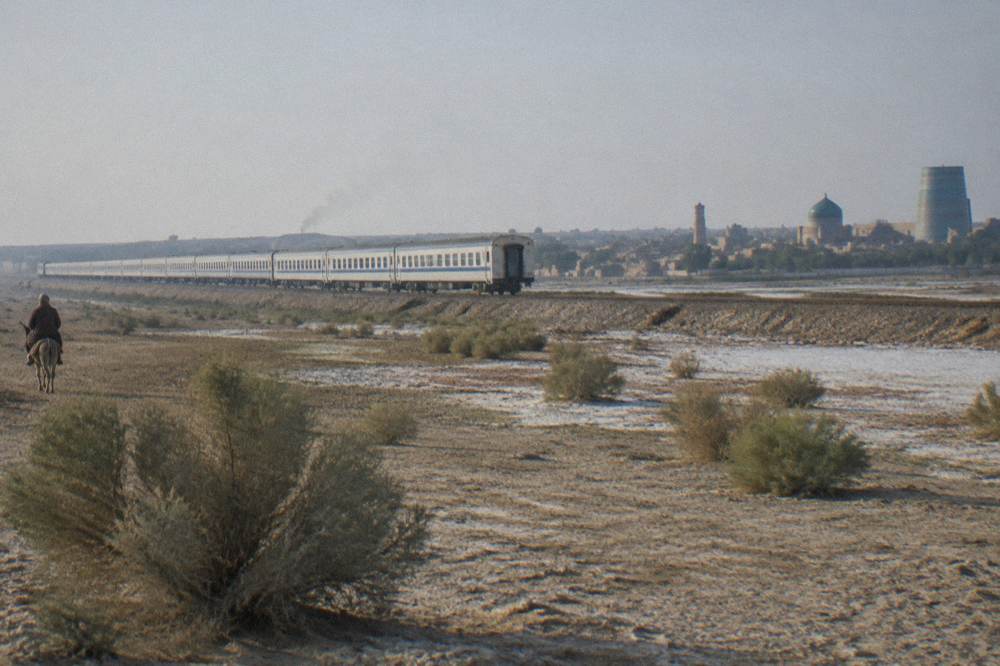
There is no regular direct Afrosiyob to Khiva, despite what some older blog posts imply. The Afrosiyob network proper remains the Tashkent, Samarkand, Bukhara triangle; Khiva's link is the new Hyundai train, and connections from Bukhara to Khiva still involve a change or a road leg. This is one reason the big private packages route themselves the way they do: the 8-day private tour from $1035 per person goes Tashkent to Urgench by air or rail, works Khiva, then crosses to Bukhara and returns by train through Samarkand, so you never retrace the longest leg. For more on the western cities themselves, see Khiva's Itchan Kala guide and our Silk Road route comparison.
One more western note for anyone heading past Khiva: Urgench to Nukus trains run roughly twice a week and take about 3.5 hours, with tickets around $9 to $14. If the Aral Sea is on your list, that frequency, not the fare, is what shapes the plan.
How Do You Buy Uzbekistan Train Tickets As A Foreigner?
Buy through the official railway site or app using your passport details, selecting the foreigner document option; booking opens roughly 30 to 45 days ahead, the site accepts international cards with varying success, and tickets are issued as e-tickets. Agents and third-party sites work as a fallback when card payments fail.
The official channel is eticket.railway.uz and the railway's app, both with an English interface. The process is straightforward once you find the right field: choose your route and date, pick a class, and enter your passport number where the form asks for a document, selecting the foreign-document option rather than the local ID. Payment is the weak link. Travelers consistently report that international Visa and Mastercard payments succeed with varying reliability, and local UzCard rails are steadier, which is why many visitors book their first leg before departure from home and sort later legs once in the country, or use a ticketing agent for a small fee. The rail enthusiast resource Seat 61's Uzbekistan page walks through the same process with screenshots, and is worth a look if you like to see a booking flow before you touch it.
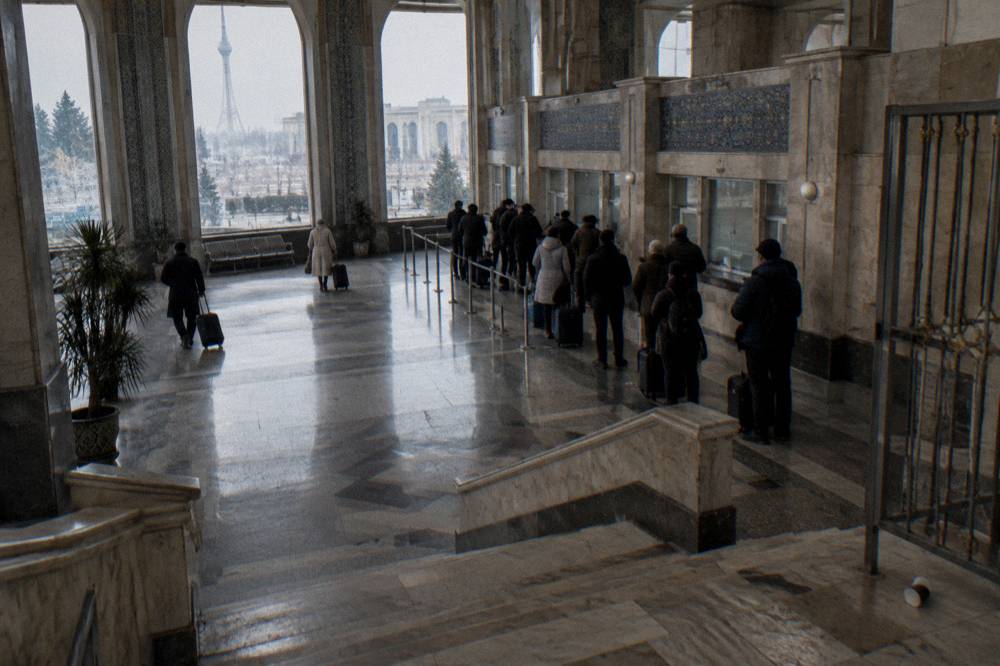
Timing matters more than payment method. With booking opening 30 to 45 days out and the April-May and September-October peaks drawing big tour groups, the popular morning Afrosiyob departures can sell out weeks ahead. If your dates are fixed and your trip is short, buy the long legs the day the window opens and leave the short hops flexible. A package sidesteps all of this, which is part of what you are paying for: on the train-built itineraries the operator holds the tickets and you simply board.
Which Tour Packages Already Include The Train Legs?
Most multi-day packages on this site use rail for at least the Tashkent to Samarkand to Bukhara spine, with the 8-day private tour from $1035 per person the fullest train-built itinerary, the 3-day private tour from $505 built around bullet-train legs, and the 2-day train trip from $499 covering Bukhara and Samarkand by rail. Shorter city tours generally leave trains out.
The pattern across the roster is consistent. Operators selling six, seven and eight-day itineraries almost always move you between the big three cities by train and save the private vehicle for airport pickups, city touring and the desert or mountain sections where no track runs. What varies is which extras ride along: some listings include meals, several include pickup, and the fine print on monument entry fees differs package to package, so the inclusions line on each listing is worth reading before comparing prices. Our what is included in a multi-day tour guide breaks those categories down line by line.
| Package | Days | From (per person) | Rating and reviews | Rail role |
|---|---|---|---|---|
| 8-Day Private Train Tour, Meals | 8 | $1035 | 4.7 from 40 reviews | full Tashkent, Urgench, Bukhara, Samarkand loop |
| 3-Day Private, Bullet Train | 3 | $505 | 4.7 from 29 reviews | fast Bukhara and Samarkand circuit |
| 2-Day Train Trip, Meals | 2 | $499 | 4.9 from 57 reviews | both cities by train, meals listed |
| 6-Day Private, Meals Included | 6 | $800 | 4.9 from 48 reviews | train spine with Khiva included |
| Budget 6-Day Private From Tashkent | 6 | $632 | 10 reviews | private format, train legs on the listing |
For travelers with only a weekend, the logic flips: a one-day Samarkand excursion by train beats a package outright. The Samarkand all-inclusive day tour from Tashkent, from $180 per person with a 5.0 rating from 60 reviews, is the fullest single-day version, while the complete one-day guided tour at from $178 per person, 4.8 from 118 reviews, covers the essentials for slightly less.
Between the two-day and six-day formats sits a wide middle ground, and the deciding factors are usually Khiva and pace. The 6-day private tour with meals, from $800 per person and rated 4.9 from 48 reviews, is the strong all-rounder if you want the four-city classic without the longer loop. Its card and details sit alongside the others in the silk road multi-day category.
If the western desert is the draw rather than the cities, a different branch of the roster takes over. The 2-day Aral Sea trip from Khiva, from $380 per person and rated 4.9 from 61 reviews, trades the rail corridor entirely for the road to Muynak and the ship cemetery, and pairs naturally with a few days in Khiva itself.
Train Or Private Car: How Do You Choose Between Them?
Choose the train for the long Tashkent, Samarkand and Bukhara segments, where Afrosiyob saves one to two hours against the road and costs a fraction of a private transfer; choose a car for Khiva and Bukhara connections, mountain and desert excursions, and any schedule where train times do not fit. Most good itineraries use both.
The honest answer is that this is not an either-or. A private car wins on flexibility: it leaves when you do, stops at the roadside melon stalls and the minor fortresses that no train serves, and carries you door to door. The Khiva to Bukhara transfer with five fortresses, from $220 per person and rated 5.0 from 111 reviews, is the clearest case for wheels, a road day where the journey itself is the sightseeing. But the car loses badly on the golden spine. The Tashkent to Samarkand drive takes about four hours against roughly two on Afrosiyob, driver fatigue and road monotony are real factors on a multi-city trip, and the train fare from about $25 to $40 in economy is far below any private transfer quote.
The road-versus-rail picture is easiest to read as a simple split: rails for the northeast triangle, roads for everything west and north of Bukhara, flights for the Urgench and Nukus hops when the schedule demands it. Uzbekistan Airways runs several daily flights from Tashkent to Urgench, about an hour and a half in the air, with minimum one-way fares reported around 442,000 to 484,000 som, and the airline's own fare policy update lists the current tariff structure. The national rail operator's news feed, covered by outlets like uzbekistan.de's rail report, is where further high-speed expansions will surface first, and more Hyundai Rotem sets are already in the pipeline.
Cost-wise, rail is the budget traveler's ally even when a package is out of reach. A full independent circuit, Tashkent to Samarkand to Bukhara to Khiva and back with a mix of trains and one flight, costs far less in transport than most visitors expect, with the longest rail leg from about $42 to $55. The overall trip budget question, hotels and meals included, is worked through in our Uzbekistan trip cost guide, where rail savings show up as the single biggest lever on a mid-range daily spend.
For a first-time visitor weighing it all at once, this site, Uzbekistan Tour Packages, exists precisely to make that comparison concrete: every package card names its format, duration and rail role so you can see which itinerary already has the train legs handled. And if you would rather start from the cities than the transport, the best time to visit month by month guide tells you when those morning platforms are hottest and when they are blissfully empty.
Common Questions About Uzbekistan Trains
How fast is the Afrosiyob train in Uzbekistan?
Afrosiyob covers Tashkent to Samarkand in about 2 to 2.5 hours, Samarkand to Bukhara in about 1h12 to 1h50, and the full Tashkent to Bukhara run in about 3h50 to 4h20. It is the country's flagship high-speed service, with a reported five or more daily departures on the main segments.
How much does a train ticket cost in Uzbekistan?
Reported Afrosiyob economy fares run from about $25 to $40 for Tashkent to Samarkand and from about $42 to $55 for Tashkent to Bukhara, with business class higher. Sharq trains are cheaper, with second class around 200,000 som to Samarkand. All fares vary by date and season, so treat them as ranges and check the live price when booking.
Can you take a train from Tashkent to Khiva?
Yes. A new high-speed service, the Jaloliddin Manguberdi, launched in early May 2026 and is reported to cover the route in about 7.5 hours, around three times a week, with fares around 780,000 som, about $65. Days and times come from secondary sources and new schedules can change, so confirm on the railway booking site before planning around it.
How do foreigners buy Uzbekistan train tickets?
Buy on the official railway booking site or app, selecting the foreign-document option and entering your passport details. Booking opens roughly 30 to 45 days ahead. International cards work with varying success, so have a fallback such as a ticketing agent or booking later legs once you are in the country.
Is the train better than a private car in Uzbekistan?
For the Tashkent, Samarkand and Bukhara spine, usually yes: Afrosiyob is faster than the road and far cheaper than a private transfer. For Khiva connections, fortress stops, mountains and desert excursions, a car wins because no train serves them. Most well-planned trips, packaged or independent, use both.
Do Uzbekistan tour packages include train tickets?
Most multi-day packages use rail for the long intercity legs and include the tickets in the package price, plus guided city touring and airport transfers throughout run by private vehicle. The 8-day private tour from $1035 per person is built around the full rail loop, and the 2-day train trip from $499 per person covers Bukhara and Samarkand entirely by train. Check each listing's inclusions for the exact coverage.