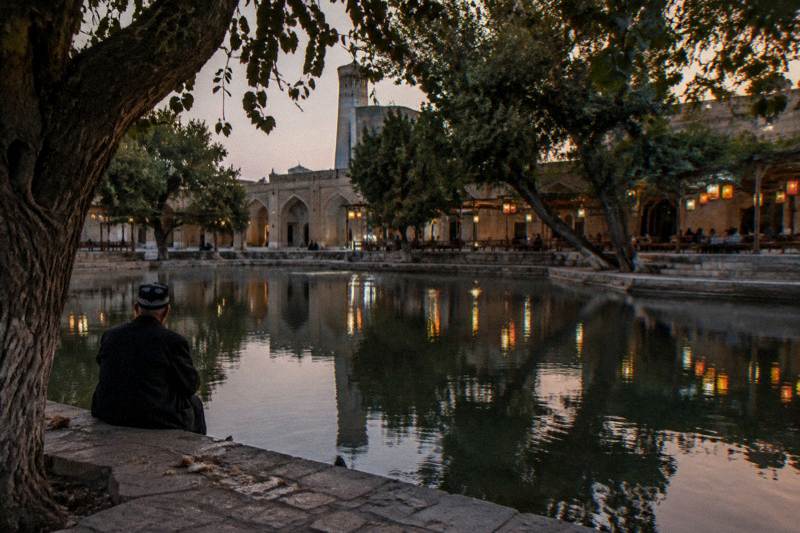
Uzbekistan In 14 Days: Adding Nukus, Fergana And The Aral Sea
Two weeks is the threshold where Uzbekistan stops being a highlight reel and becomes a region-hopping expedition: the classic four-city loop plus Karakalpakstan's ship graveyard and the craft towns of the Fergana Valley.
Short answer
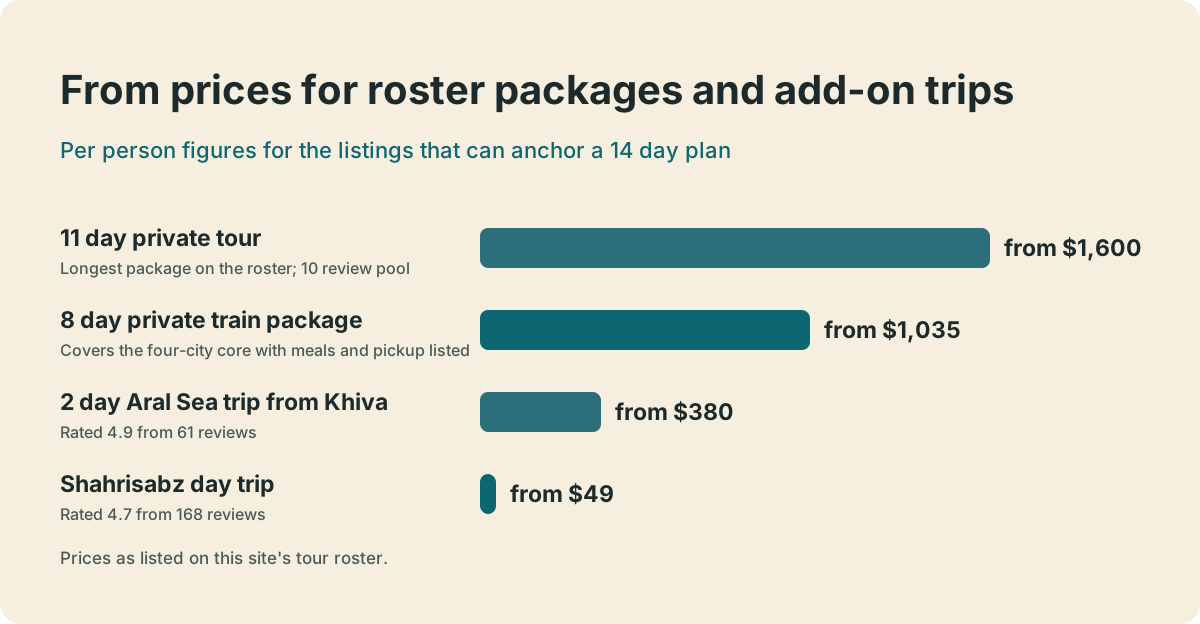
A 14 day Uzbekistan itinerary covers the classic Tashkent, Samarkand, Bukhara and Khiva loop plus two to four days in the far west for Nukus and the Aral Sea, or two to three days east in the Fergana Valley. No tour on this site's roster runs exactly 14 days; the nearest real listings are an 11 day private package from $1,600 per person and a 2 day Aral Sea trip from $380 per person.
The classic Uzbekistan loop, Tashkent to Samarkand to Bukhara to Khiva, fits comfortably in eight to ten days, and most travelers stop there. Fourteen days changes the question entirely. With the loop finished and roughly half your time still unspent, you can reach places the standard itinerary never touches: the Savitsky Museum in Nukus and the Muynak ship cemetery in Karakalpakstan, the retreating shoreline of the Aral Sea, and the pottery, silk and knife-making towns of the Fergana Valley in the far east.
Honesty first, because this page is written for people actually shopping for a two week trip: marketplace packages of exactly 14 days in Uzbekistan are rare. Fully specified 14 day packages are rare; the longest itinerary here runs 11 days across the Silk Road. This site's own roster tops out at an 11 day private tour, from $1,600 per person, with a 10 review pool. So a 14 day traveler usually builds the route from one long package plus an add-on, or pieces it together from day tours and trains. That is a perfectly good way to do it, and this guide shows both paths.
What Does A 14 Day Uzbekistan Itinerary Add Beyond The Classic Loop?
Fourteen days add the two regions the classic loop skips: Karakalpakstan in the far northwest, where Nukus anchors the Savitsky Museum and the road to the Aral Sea, and the Fergana Valley in the far east, home to Rishtan ceramics, Margilan silk and Kokand. Neither region sits on the Tashkent, Samarkand, Bukhara, Khiva rail corridor, so each costs two to three days of travel time, which is exactly what the extra days buy.
The arithmetic is what makes the decision for most travelers. The four-city core, done at a relaxed pace with a night or two per city plus travel days, consumes nine to eleven days of a 14 day allowance. That leaves three to five days. You cannot add both far-flung regions without compressing the core into something that feels like a checklist, so nearly every sensible 14 day route picks one: the desert west or the craft east.
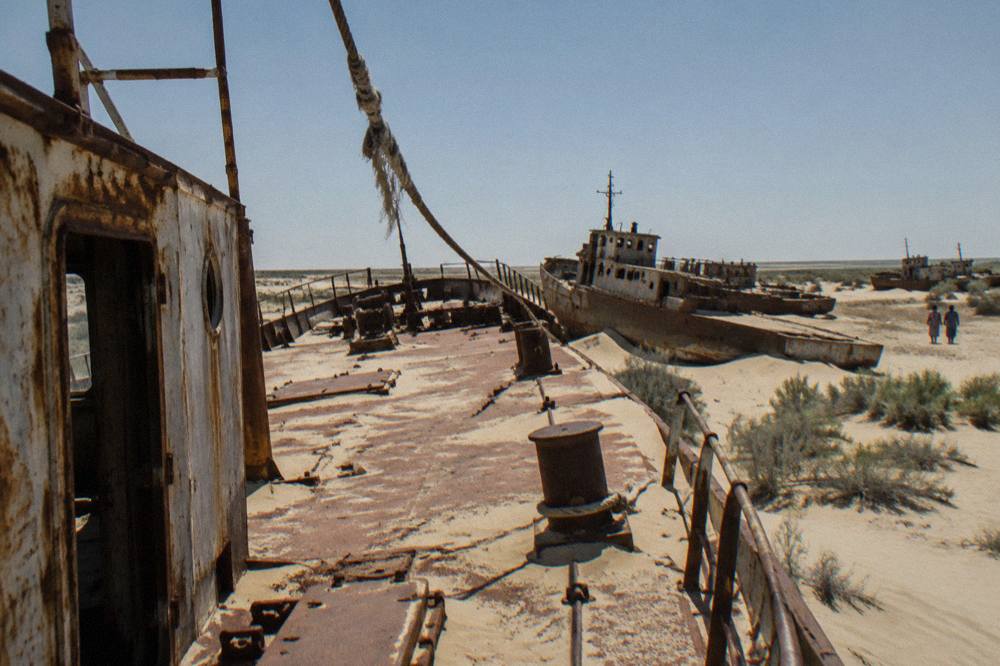
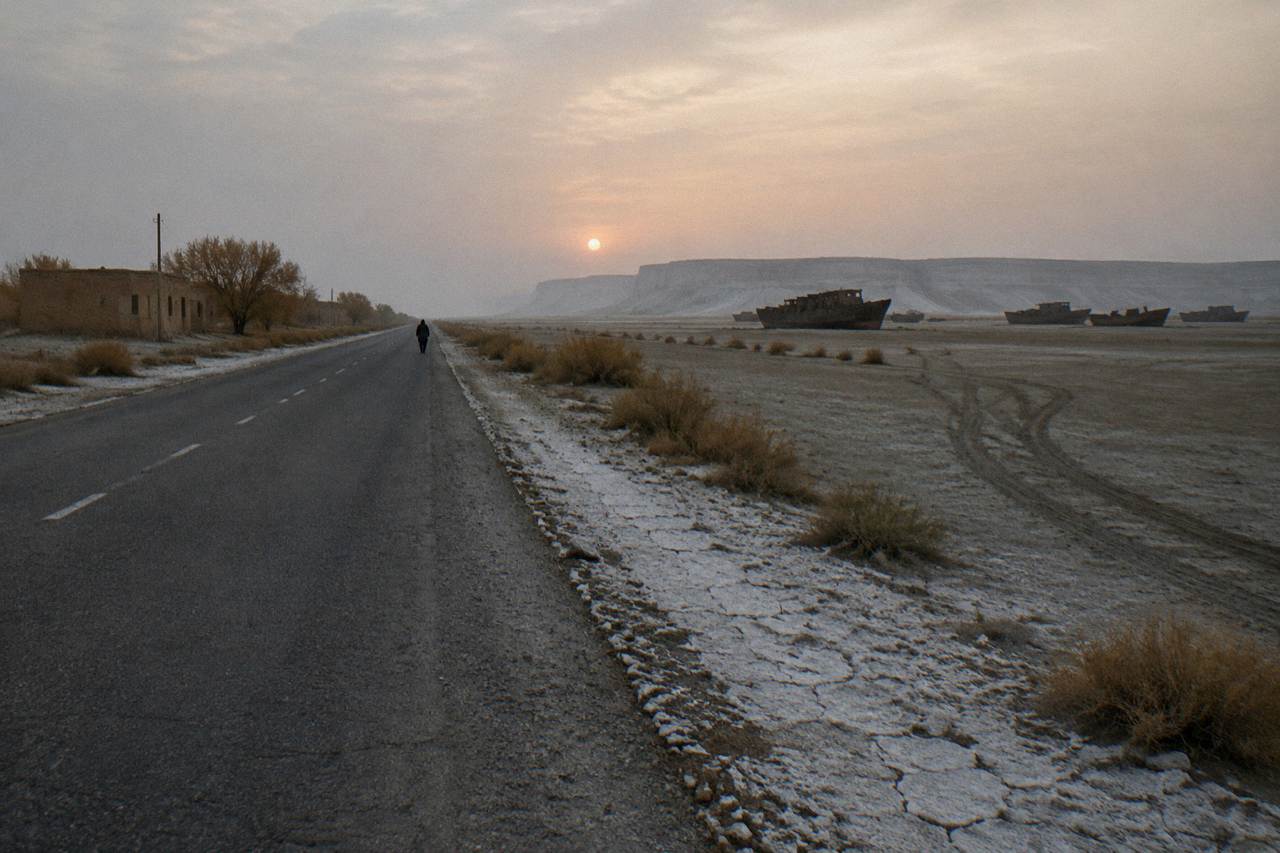
The west rewards travelers who want landscape and recent history. The Aral Sea was once the fourth largest lake on earth; its retreat has left Muynak's ships stranded kilometers from water, and the drive out to the current shoreline crosses open desert. The east rewards travelers who want workshops and living craft. Margilan's silk factory, Rishtan's ceramicists and Chust's knife makers all run on working studios rather than reconstructed museums, and the valley is green in a way the desert cities never are.
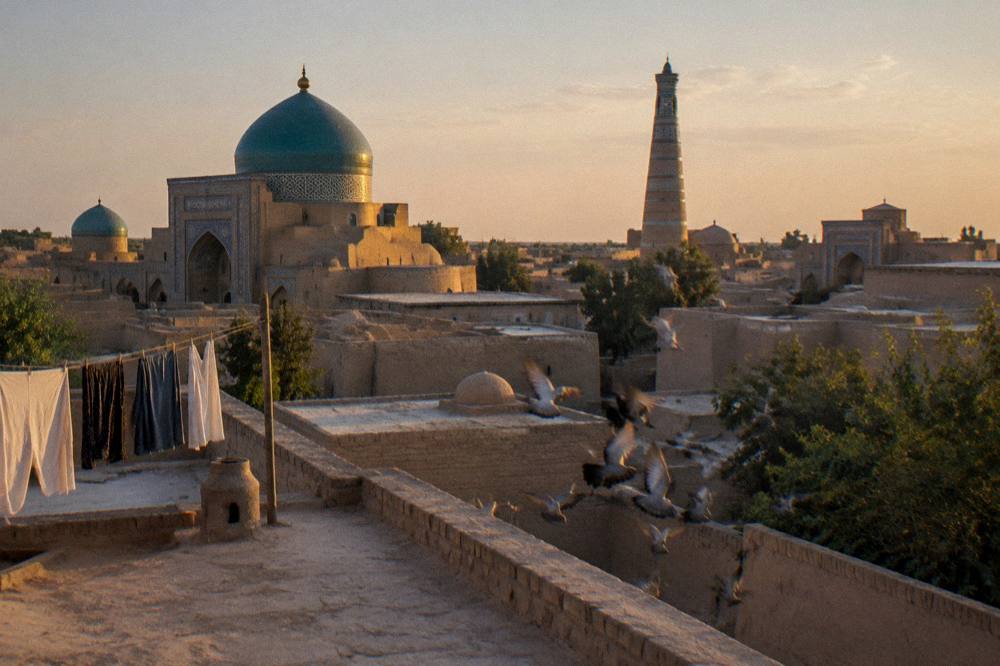
There is a third, quieter use of the spare days that some travelers prefer: slow the core down. Add a second full day in Samarkand, a Shahrisabz day trip over the mountain pass (a real roster option, 4.7 from 168 reviews, from $49 per person), a plov cooking class in a village outside Samarkand, or a Chimgan and Charvak mountain day from Tashkent. That version of 14 days is less ambitious on the map and often more restful in practice. Our guide to how many days Uzbekistan actually needs works through the shorter versions if you have not fixed your trip length yet.
How Do You Connect Nukus, The Aral Sea And Fergana To The Silk Road Route?
Nukus connects through Khiva or Urgench: the drive from Khiva to Nukus takes about three hours by road, and the train from Urgench to Nukus runs about twice a week, roughly 3.5 hours. Fergana connects through Tashkent: it is about 4 to 5 hours by road over the Kamchik Pass, or a short domestic flight. Both add-ons hang off opposite ends of the loop, so the order you visit cities in decides which add-on is practical.
Getting the sequencing right saves a full day of backtracking. The standard loop runs west, Tashkent to Samarkand to Bukhara to Khiva, then returns east. That makes Karakalpakstan the natural late-route add-on: continue past Khiva to Nukus by road or rail, see the Savitsky Museum and Muynak, then fly back to Tashkent from Nukus, a domestic hop of about an hour and a half. The Fergana Valley, by contrast, only makes sense as a first or last leg, tagged onto Tashkent at the start or the end of the trip.
| Region | Entry point | Connection | Realistic time needed | Best position in the route |
|---|---|---|---|---|
| Nukus and Savitsky Museum | Khiva or Urgench | Road about 3 hours from Khiva; Urgench-Nukus train about twice weekly, roughly 3.5 hours | 2 days including travel | After Khiva, fly Nukus-Tashkent home |
| Aral Sea and Muynak | Nukus or Khiva | Desert drive; the roster's 2 day trip departs Khiva | 2 to 3 days | Replace or extend the Nukus leg |
| Fergana Valley (Margilan, Rishtan, Kokand) | Tashkent | Road over Kamchik Pass about 4 to 5 hours, or domestic flight | 2 to 3 days | Start or end of trip, beside Tashkent |
| Shahrisabz | Samarkand | Day trip via mountain pass, about 7 hours total | 1 day | Middle, from Samarkand |
| Chimgan and Charvak mountains | Tashkent | Day trip, about 9 hours | 1 day | Any Tashkent day |
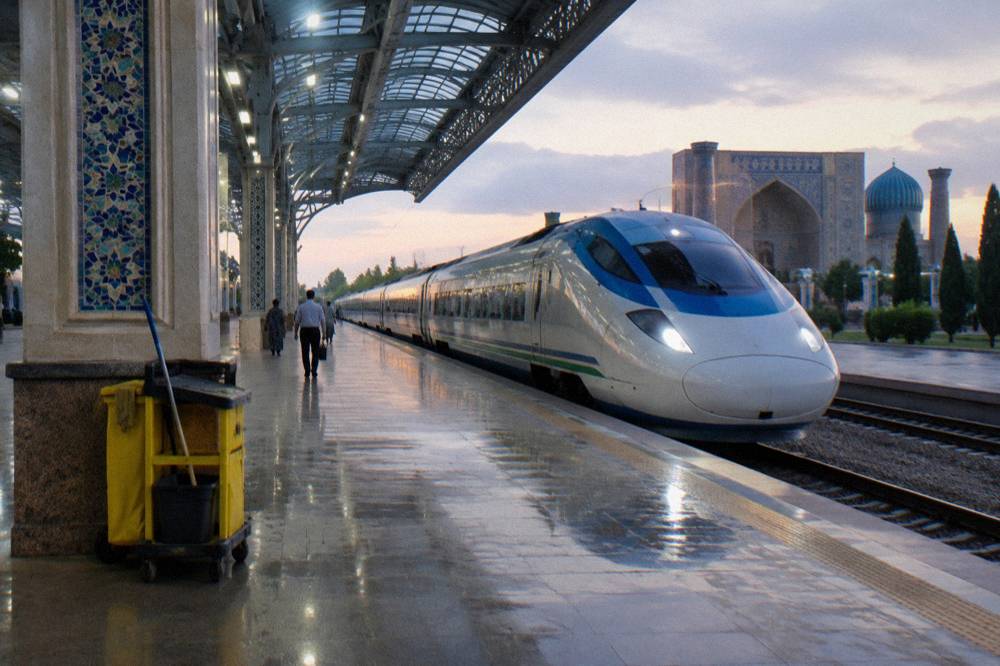
Rail booking deserves early attention. Afrosiyob high-speed trains cover Tashkent to Samarkand in about 2 to 2.5 hours and Samarkand to Bukhara in roughly 1 to 2 hours, with five or more departures a day on the main segments, and tickets open for sale roughly 30 to 45 days ahead on the official railway booking site at eticket.railway.uz. There is no direct Afrosiyob to Khiva; the new Jaloliddin Manguberdi service that launched in May 2026 is reported to run about 7.5 hours three times a week, but days and times should be confirmed on the railway site before you build your plan around it. Our guide to trains in Uzbekistan covers the full rail picture.
A 14 day traveler planning the far-west extension is really shopping for the longest private or group package available and then adding the desert leg. These are the three listings on this site's roster that cover the most ground:
Each of those three can anchor a 14 day plan. The 8 day private train package from $1,035 per person covers the four-city core with meals and pickup listed, leaving six days free. The 11 day private tour from $1,600 per person leaves three. And the Aral Sea trip itself can be booked standalone from Khiva wherever your route finishes, which is exactly how many two-week travelers bolt it on. You can Check availability for the Aral Sea listing alongside the internal Aral Sea tour page once your Khiva dates are firm.
Is The Aral Sea Trip From Khiva Worth Two Days?
Yes, for most travelers who have already paid the cost of reaching Khiva, the 2 day Aral Sea trip earns its place: it is the only roster listing that reaches Muynak's ship cemetery and the retreating shoreline, it is rated 4.9 from 61 reviews, and it runs from $380 per person with pickup and free cancellation listed. The honest caveat is that it is a long desert drive, and the payoff is landscape and recent history rather than monuments.
The itinerary logic is simple. Khiva is already the far end of most routes, and the Aral Sea extension pushes further into the same direction, so nothing else on the trip gets backtracked. The listing describes a two day format departing Khiva with pickup listed, which fits neatly as days twelve and thirteen of a fourteen day plan, returning to Khiva or onward toward Urgench for the flight or train back east. Because the price varies by group size, a party of four typically pays a lower per-person rate than a couple; the live listing shows the exact figure for your group before you commit.
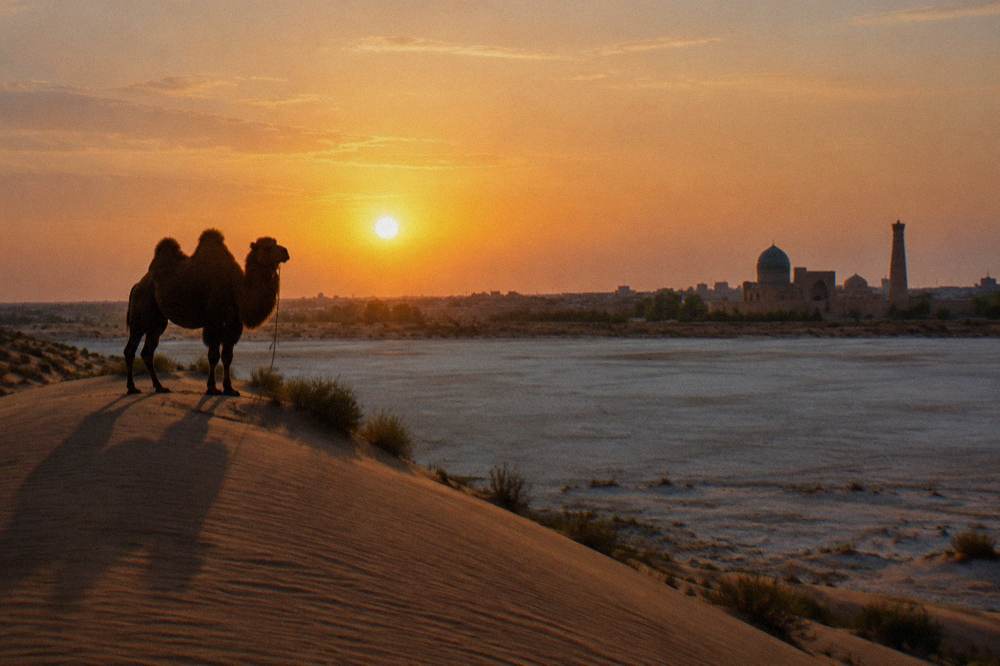
What you actually see matters for setting expectations. Muynak's ships sit kilometers from any water, rusting in ranked rows where the harbor used to be. The route continues across the Ustyurt Plateau toward the current shoreline, where the water that remains is vividly colored and heavily saline. Sunrise or sunset on the dunes above the seabed is the signature moment most guests remember. One-day versions exist elsewhere, but two days is the realistic minimum because of the driving distances involved; a day trip would spend most of its hours on the road.
The traveler deciding whether to spend two of fourteen days here should weigh it against the alternative uses of those days, another city, the Fergana Valley, or a slower pace in Samarkand. Travelers who respond to stark landscapes and to environmental history rate the Aral Sea among the trip's highlights. Travelers whose interest is architecture and craft often prefer to give those days to the east instead. Neither preference is wrong, but the decision should be deliberate rather than default, because the two options pull the route in opposite directions.
What Do Nukus And Karakalpakstan Offer Beyond The Savitsky Museum?
Nukus is the capital of Karakalpakstan, an autonomous republic inside Uzbekistan, and its anchor is the Savitsky Museum, which holds one of the world's largest collections of Russian avant-garde art alongside Karakalpak ethnography. Beyond the museum, the region's draws are Muynak's ship cemetery, the Mizdakhan necropolis near Nukus, and the ruined desert fortresses of ancient Khorezm scattered across the plateau.
The Savitsky story is genuinely unusual and worth the trip on its own. Igor Savitsky rescued thousands of avant-garde works that were banned under Stalin, storing them in a remote provincial museum far from Moscow's censors. The result is a collection of paintings that would anchor a major capital-city museum, sitting in a city most Silk Road itineraries never reach. The museum remains open and is consistently described as the region's highlight.
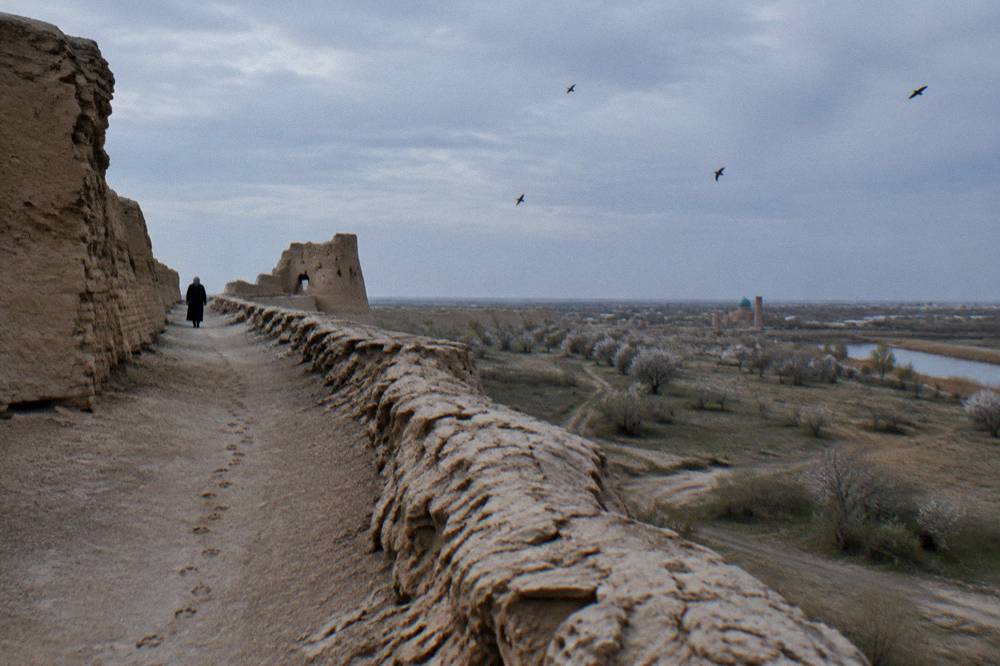
The desert fortresses are the second draw. Ayaz Qala, Toprak Qala and their neighbors are remnants of the Khorezm civilization, mud-brick walls rising out of flat desert, some two thousand years old. They sit between Nukus and the Aral Sea road, which is why some Aral Sea itineraries fold a fortress stop into the drive. The roster's Khiva-based day trip to three ancient fortresses, rated 4.7 from 151 reviews and from $84 per person with a meal listed, covers the same archaeological tradition from the southern side, and there is also a longer Khiva-to-Bukhara transfer listing that passes five fortresses and Akchakul Lake, rated 5.0 from 111 reviews.
Practically, no roster tour on this site includes Nukus. The listings that come closest are the far-west and long-format packages, and a traveler who wants Nukus as part of a guided whole should say so to the operator when booking: many private operators will restructure an itinerary, but that is a conversation with the operator, not a listed inclusion. This is the honest limit of the marketplace for 14 day travelers: the pieces exist and connect well, but nobody sells the complete Nukus-plus-Fergana-plus-Aral-Sea route off the shelf. Our overview of what multi-day tours include lists the standard inclusions so you can see exactly where custom additions begin.
The 11 day private tour is the longest package on the roster and the nearest thing to a 14 day base. It runs from $1,600 per person, departs Tashkent, and lists meals, pickup and free cancellation. Its 4.8 rating rests on just 10 reviews, a thin sample that is itself useful to know: this is a low-volume product, and travelers who want crowd-tested service often pair a shorter, more-reviewed core package with independent add-ons instead.
How Much Does A 14 Day Uzbekistan Trip Cost?
An independent 14 day mid-range trip runs about $60 to $120 per person per day on the ground, using operator-reported 2026 budget ranges, before international flights. A package-based version costs more: the roster's 11 day private tour is from $1,600 per person, and adding the $380 Aral Sea trip brings a guided two weeks to about $2,000 or more per person depending on the core package chosen.
The two approaches differ in what the money buys. Independent travel spreads cost across cheap trains, guesthouses and street food, and the mid-range band buys comfortable hotels and private drivers on travel days. Package travel concentrates cost but removes the planning load: hotels, intercity transport, guiding and often meals arrive bundled, and the per-person price drops as private group size grows. The exchange rate hovers around about 11,900 som per US dollar, and cards work at hotels and larger restaurants in the main cities while cash remains standard for bazaars, taxis and monument tickets.
| Cost component | Independent, mid-range | Package-based 14 days |
|---|---|---|
| Accommodation, 13 nights | About $40 to $80 per night | Included in package |
| Intercity transport | Afrosiyob economy from about $25 to $55 per segment | Included |
| Nukus / Aral Sea extension | Road or rail about $9 to $65, plus lodging | Aral Sea trip from $380 per person |
| Guides | Licensed city guide from about $70 per day | Included |
| Monument entries | Registan about $6 to $8; Itchan Kala combined ticket about 150,000 som | Some included, check listing |
| Meals | Street food a few dollars; restaurants more | Many packages list meals |
| Core tour price | None | 8 day from $1,035; 11 day from $1,600 per person |
Entry fees deserve a note on their own: they rise, and the secondary-source figures above are approximate. The Registan ensemble runs about 70,000 to 100,000 som for foreign visitors, the Bukhara Ark about 60,000 som, and Khiva's Itchan Kala combined ticket about 150,000 som, with a fuller VIP version around 240,000 to 250,000 som. Verify current rates on the museum-reserve sites or on site. Our detailed trip cost guide breaks these numbers down by trip length and travel style.
Which Tour Package Comes Closest To A 14 Day Route?
No listing on this site's roster runs exactly 14 days, so the closest match is the 11 day private tour from $1,600 per person, followed by the 8 day private train tour from $1,035 per person, each paired with the 2 day Aral Sea trip from $380 per person to reach two weeks of guided coverage. Travelers wanting every day guided should ask operators directly about extending a private itinerary, since private formats are the most flexible.
The 8 day option deserves a closer look for two-week travelers because of how it uses trains. It links Tashkent, Urgench, Bukhara and Samarkand by rail, lists meals, pickup and free cancellation, and carries a 4.7 rating from 40 reviews, a larger review pool than either longer alternative. Starting a 14 day plan here leaves six days for the west or east, enough for Nukus, the Aral Sea and a return flight, or a full Fergana Valley swing with slack to spare.
| Roster listing | Length | From (per person) | Reviews | Meals listed | Fit for a 14 day plan |
|---|---|---|---|---|---|
| 11-Day Magical Cities | 11 days | $1,600 | 10 reviews, no star claim | Yes | Base tour, add 3 days west |
| 8-Day Private Train Tour | 8 days | $1,035 | 4.7 from 40 | Yes | Core loop, add 6 days |
| 7-Day Local Guide, Mountains | 7 days | $1,075 | 5.0 from 21 | Yes | Loop plus mountains, add west |
| 2-Day Aral Sea Trip | 2 days | $380 | 4.9 from 61 | Not stated | Standard west add-on |
| Budget 6-Day Private From Tashkent | 6 days | $632 | 10 reviews, no star claim | Not stated | Core only, add both regions if fast |
One structural point matters more than any single listing: same-operator variants are different products. The roster alone holds three separate 6 day private tours with different prices, inclusions and review pools, and choosing among them is a real decision, not a formality. Our private versus small group comparison works through the tradeoffs, and the Silk Road route guide maps the route options side by side.
For travelers who would rather not assemble the trip at all, the honest answer is that a fully guided 14 day route usually means a custom quotation from a local operator rather than a fixed-price marketplace product. That is neither better nor worse than the package-plus-add-on approach, but it is a different buying process: you describe the route, the operator prices it, and there is no published per-person price to compare. The marketplace route, one long package plus the Aral Sea trip, is the version you can price and book today.
When Should You Schedule A 14 Day Route With The Far West?
Aim for April to May or September to October, when the four-city core sits in its mild peak season and the desert drive to the Aral Sea avoids summer highs that often exceed 35 to 40 degrees Celsius. A two week trip needs the shoulder seasons more than a short one does, because it includes both mountain passes and open desert, two environments where temperature extremes bite hardest.
Timing cuts both ways across this particular route. The Chimgan mountains and the Kamchik Pass into Fergana are coldest and least predictable in winter, with fog and snow possible. The Aral Sea extension is a long drive through exposed terrain, punishing in July and August, when Samarkand sits around 34 to 35 degree highs and the western desert runs hotter still. Spring and autumn split the difference: Tashkent in October averages a high around 22 degrees, Samarkand around 22 as well, and the desert is warm rather than dangerous.
Crowds follow the same calendar. April, May, September and October are the peak windows at the Registan and Itchan Kala, and hotel prices rise with them. Two weeks gives you enough slack to shift a few days either side of the peak, late April rather than early May, or the second half of September rather than the first, and often land the same weather with thinner crowds. Our month by month guide carries the full breakdown.
One entry-rule point for American readers planning a two week stay: US citizens may enter Uzbekistan visa free for up to 30 days from January 1, 2026, per the government's tourism announcement at gov.uz. A 14 day trip fits well inside that window. Hotels register you automatically, per the US Embassy's guidance at uz.usembassy.gov, but check the current entry rules before you book, and the visa guide covers the details.
A sample sequencing for an October trip makes the calendar concrete. Days one to three in Tashkent, including a city tour and a mountain day if the weather holds. Days four to six in Samarkand with a Shahrisabz excursion. Days seven and eight in Bukhara. Days nine and ten in Khiva. Days eleven and twelve on the Aral Sea trip. Day thirteen for Nukus and the Savitsky Museum, flying back in the evening. Day fourteen as buffer in Tashkent before departure. Reverse it to put Fergana first if the east wins your vote. However you sequence it, the planning resources at Uzbekistan Tour Packages, including the 10 day itinerary with a yurt stay and the 7 day classic route, cover the core loop in detail.
If you are comparing the three anchor listings for this route side by side one last time, here they are:
Common Questions About A 14 Day Uzbekistan Itinerary
Is there a 14 day tour package of Uzbekistan?
Not on this site's roster, and fully specified 14 day marketplace packages are rare in general. The closest real listings are an 11 day private tour from $1,600 per person and an 8 day private train tour from $1,035 per person, either of which can be extended with a 2 day Aral Sea trip from $380 per person to reach two weeks of coverage.
Can you visit Nukus and the Aral Sea on a tour?
The Aral Sea itself, yes: a 2 day trip from Khiva, rated 4.9 from 61 reviews, covers Muynak and the shoreline. Nukus is not included in any roster listing, though it connects easily by road or rail from Khiva and Urgench, and private operators will often restructure an itinerary on request.
Should I choose the Fergana Valley or the Aral Sea with 14 days?
Pick one, not both. The Aral Sea and Nukus extend the route west from Khiva; Fergana extends it east from Tashkent. Trying both compresses the four-city core into a rushed checklist. Choose the west for stark landscape and recent history, the east for silk, ceramics and craft workshops.
How many days do the four classic cities need?
About nine to eleven days at a relaxed pace: two to three nights each in Tashkent, Samarkand, Bukhara and Khiva plus travel days. That is why 14 days leaves room for roughly one regional add-on rather than two.
Is 14 days in Uzbekistan too long?
No, if you use the spare days for the far west or the Fergana Valley. It is too long only if you plan to repeat the four-city loop at the standard pace, in which case eight to ten days is enough and the extra days are better spent in a neighboring direction.
How do I get from Khiva to Nukus?
By road, about three hours, or by train from Urgench, which runs about twice a week and takes roughly 3.5 hours. Many travelers drive from Khiva to Nukus, then fly from Nukus back to Tashkent, a domestic flight of about an hour and a half.