Is The Afrosiyob Train Better Than A Private Car In Uzbekistan?
A plain comparison of the Afrosiyob train against private car travel in Uzbekistan: journey times, cost ranges, comfort, flexibility, and which roster tours use trains.
Is The Afrosiyob Train Better Than A Private Car In Uzbekistan?
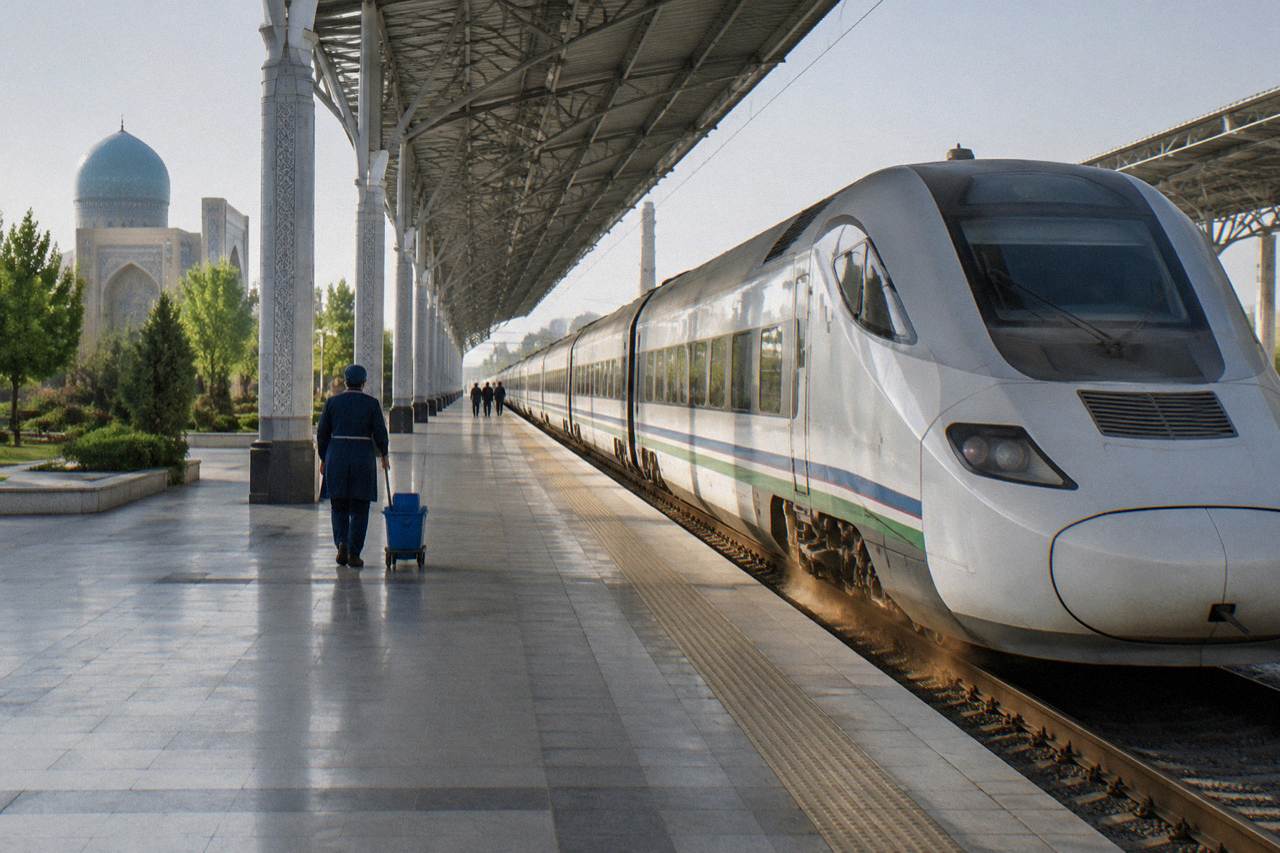
For the Tashkent to Samarkand to Bukhara corridor, yes: the Afrosiyob is faster, cheaper per seat and smoother than a car, covering Tashkent to Samarkand in about 2 to 2.5 hours. A private car wins everywhere else, because no train serves the mountains, the desert forts or hotel-to-hotel door steps, and a car waits when you stop. Most travelers mix both.
That is the honest answer, and it is worth unpacking, because the question hides a second one. The Afrosiyob and a private car are not really competing for the same job. The train competes on the one corridor where Uzbekistan's rail network is genuinely excellent, the Tashkent to Samarkand to Bukhara spine. The car competes on everything around that spine: the mountain day trips out of Tashkent, the fortress ruins between Khiva and Bukhara, the long desert crossings, and the simple convenience of being picked up at your hotel door.
Across the tour listings and the rail timetables, the same pattern holds. Travelers who ride the train between the big three cities and use cars for the edges report the least friction. Travelers who insist on one mode for everything either pay more than they need to or lose hours they did not need to lose.
There is also a booking reality to weigh. Afrosiyob seats are sold seats: they exist in finite numbers, booking opens about 30 to 45 days ahead, and popular departures fill. A private car can be arranged much closer to travel, sometimes the day before. If you are the kind of traveler who plans late, that difference matters more than any timetable. If that kind of booking pressure makes you think about handing the planning to an operator, the comparison of the best tour companies for Uzbekistan covers what private and small group operators actually offer.
How Fast Is The Afrosiyob Compared To Driving?
The Afrosiyob runs Tashkent to Samarkand in about 2 to 2.5 hours and Tashkent to Bukhara in about 3 hours 50 minutes to 4 hours 20 minutes, with more than five daily departures on the main segments. A car covers the same distances slower, and on the Samarkand to Bukhara leg the train's about 1 hour 12 to 1 hour 50 is hard for any road to match.
The numbers come from secondary rail sources and hold up across operators. The Sharq, the slower classic train on the same corridor, takes about 3 hours Tashkent to Samarkand and about 6 hours Tashkent to Bukhara, and costs less. So even the budget rail option beats road time on the spine, though the gap narrows.
| Route | Afrosiyob, About | Sharq, About |
|---|---|---|
| Tashkent to Samarkand | 2 hours to 2 hours 30 | 3 hours |
| Samarkand to Bukhara | 1 hour 12 to 1 hour 50 | Slower than Afrosiyob |
| Tashkent to Bukhara | 3 hours 50 to 4 hours 20 | 6 hours |
| Tashkent to Khiva | No regular direct Afrosiyob | New service, see below |
Two caveats keep this table honest. First, these are secondary-source ranges, not a timetable: exact minutes vary by train and season, and you should check live schedules before planning connections. Second, station time is not door-to-door time. Add transfers to and from stations, security checks and boarding, and a 2-hour train ride can consume 3.5 hours of your day. A private car that collects you at the hotel and drops you at the next one closes some of that gap by removing every transfer. If you would rather hand the trains, tickets, and transfers to a company that bundles them, our comparison of Uzbekistan tour operators walks through prices, trip styles, and how to judge an operator before you commit.
Where the comparison flips is everything off the spine. No train reaches the Chimgan mountains or Charvak reservoir. No train hops between the scattered desert fortresses. And the car's real advantage is not speed but stopping: when a roadside bread oven, a silk workshop or an unexpected view appears, the car stops and the train does not.
If that mix of train spine plus car edges sounds appealing, these three listings show the range of ways operators package it:
What Does The Train Cost Versus A Private Car Or Tour?
An Afrosiyob economy seat from Tashkent to Samarkand costs from about $25 to $40, and Tashkent to Bukhara from about $42 to $55, while a licensed private city guide runs from about $70 a day and a packaged private train tour from $505 per person. Done independently, the train is the budget option. Done through a package, you are paying for someone else to handle the seats.
The fare picture is straightforward. Afrosiyob economy from Tashkent to Samarkand is quoted around 40 euros, or roughly $25 to $40 depending on the source and date, with business class around 65 euros. Tashkent to Bukhara economy runs about 60 euros, roughly $42 to $55, with business around 85 euros. These are agency-quoted ranges that move with date and demand, so treat them as planning figures, not promises, and confirm the live price when you book.
| Cost item | Planning range |
|---|---|
| Afrosiyob economy, Tashkent to Samarkand | From about $25 to $40 |
| Afrosiyob economy, Tashkent to Bukhara | From about $42 to $55 |
| Licensed city guide, full day | From about $70 |
| Guide or driver tip, good service | $10 to $20 per day |
| 3-day private bullet train tour, roster price | From $505 per person |
The car side is harder to price as a single number, because it depends on whether you hire a car for a day, a transfer or a whole week. What the verified cost data does establish: a licensed English-speaking city guide starts around $70 for a full day, about $45 for a half day, and rates are often per group rather than per person, rising 10 to 20 percent in peak season. Tipping for good service from a private guide or driver runs $10 to $20 a day.
The exchange rate helps American travelers on the ground. It sits around about 11,900 som per US dollar in October 2026, so small local costs, meals and taxis feel inexpensive, though monument tickets and train fares are the items that add up.
The packaged middle ground is where most roster listings live. A 3-day private tour that links Tashkent, Bukhara and Samarkand by bullet train starts from $505 per person, price varies by group size, with pickup, meals and free cancellation listed. Against roughly $100 of train fares bought alone, the premium buys a guide, transfers, logistics and someone else solving problems. Whether that is worth it depends entirely on how much friction you want to carry yourself.
Which Route Works Better For Each City Pair?
Trains win Tashkent to Samarkand and Samarkand to Bukhara outright. Khiva is the decision point: the road from Bukhara takes about 5 to 6 hours by shared taxi or private transfer, and a new direct Tashkent to Khiva train, reported launched in May 2026, covers the run in about 7.5 hours, so neither option is clearly better and the right choice depends on your route shape. If you're still deciding how to split your nights between the two big cities, our Tashkent versus Samarkand comparison weighs the monuments, food, and day tours in each to help you choose.
Start with the easy pairs. Tashkent to Samarkand and Samarkand to Bukhara are train territory, full stop. The distances are short, the departures frequent, and the stations sit close to the city centers. A private car offers nothing on these legs except door-to-door convenience, and it costs more.
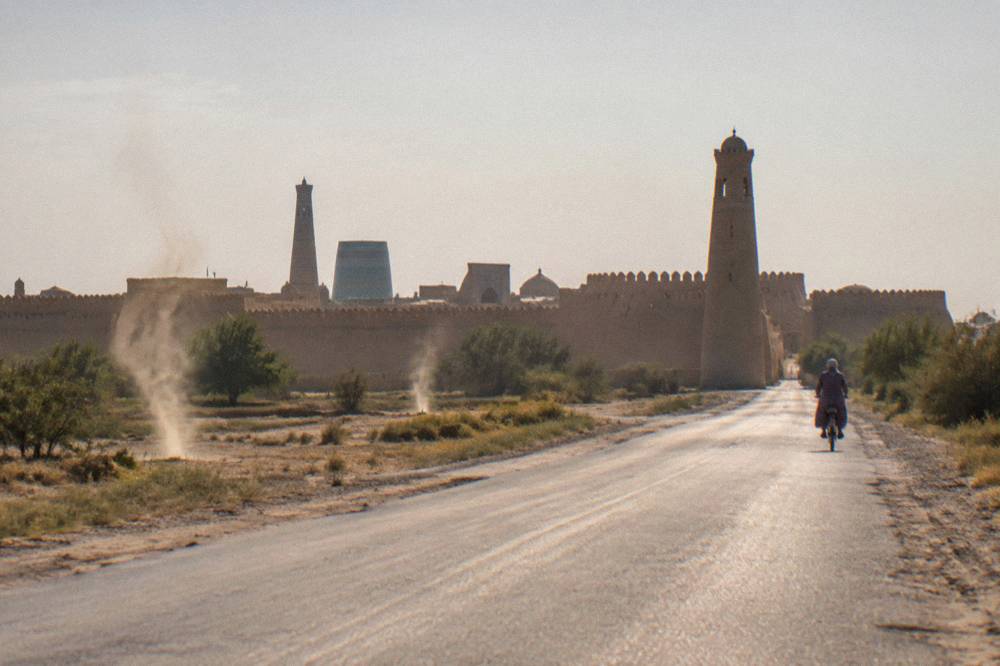
Khiva is different. The old city sits far west, beyond the rail spine, and for years the standard approach was a long road transfer from Bukhara, about 5 to 6 hours by shared taxi or private car, or a domestic flight into Urgench followed by a short drive. That has now changed, at least partly. A new high-speed service to Khiva, the Jaloliddin Manguberdi, was reported launched in early May 2026 in the tourism press, running the full Tashkent to Khiva distance in about 7.5 hours several times a week, with a fare reported around 780,000 som, about $65. Check the railway site for current days and times before you build a plan around it.
The route shape decides the mode. If you are doing a loop, Tashkent out to Khiva and back, the new train or the flight out and train back makes sense. If you are running Tashkent to Khiva to Bukhara in one direction, many travelers fly or train to Urgench first, see Khiva, then take a car east toward Bukhara and stop at the desert fortresses on the way. One roster listing does exactly that drive as its core product: the Khiva to Bukhara transfer with the top five fortresses and Akchakul Lake, from $220 per person, 10 to 12 hours, rated 5.0 from 111 reviews. A train cannot replicate that day, because the fortresses are the point.
For the shortest version of the train spine, one roster listing compresses it into two days: the 2-day Bukhara and Samarkand tour from Tashkent by train, from $499 per person, private, with pickup, meals and free cancellation listed, rated 4.9 from 57 reviews. It is a working example of the train-first approach, and reviews suggest the pace suits travelers with limited days.
Can You See Samarkand Or Bukhara On A Day Trip By Train?
Yes, and the train is what makes it possible: a day trip from Tashkent to Samarkand works because the Afrosiyob gets you there in about 2 to 2.5 hours, and roster day tours run from $178 to $299 per person. The same day trip by car is technically possible but eats hours more each way, which is why nearly every listed version is rail-based.
The roster is full of these, and their existence is itself evidence in the train-versus-car debate. Operators build day tours on the routes where the train makes a single day livable. A Samarkand all-inclusive day tour from Tashkent runs 12 hours from $180 per person, rated 5.0 from 60 reviews, with pickup, a meal and free cancellation listed. A one-day Bukhara tour from Tashkent runs 12 to 16 hours from $299 per person, rated 4.7 from 50 reviews. The hours tell the story: the train compresses the transit so the daylight belongs to the monuments. If you're still weighing which city deserves your limited daylight, the head-to-head guide to Tashkent versus Samarkand compares the monuments, food, and atmosphere on both ends of the line.
The budget end of the same idea starts at $178 for a one-day guided Samarkand tour from Tashkent, rated 4.8 from 118 reviews, though that listing does not include pickup, so check the meeting details before booking. At the premium end, an all-in-one-day Samarkand tour from $199 runs private, rated 4.9 from 41 reviews.
What the car adds on a day trip is flexibility after arrival. A train day trip is a fixed loop: you arrive, tour, return on a scheduled departure. A car with a driver can linger at Shahrisabz, detour to a village, or shift the return by an hour. Whether that flexibility is worth several extra hours of road time each way is a personal call, but the arithmetic rarely favors the car on a strict one-day outing.
When Does A Private Car Or Private Tour Win?
The car wins on the edges: mountain day trips from Tashkent, the desert fortress routes, Aral Sea expeditions, and any itinerary where you want to stop at will. It also wins on late planning, since train seats must be booked about 30 to 45 days ahead while a car can be arranged days before. On the big-city spine, the train still wins on time and cost.
The clearest car territory is the mountains. The Amirsoy, Chimgan and Charvak day trip from Tashkent, from $45 per person and rated 4.8 from 819 reviews, and the full-day mountain and lake tour from $69, rated 4.9 from 431 reviews, both depend entirely on road access. There is no rail line to a ski resort or a reservoir. The same holds for the 2-day Aral Sea trip from Khiva, from $380 per person, rated 4.9 from 61 reviews: the destination is a road journey by definition.
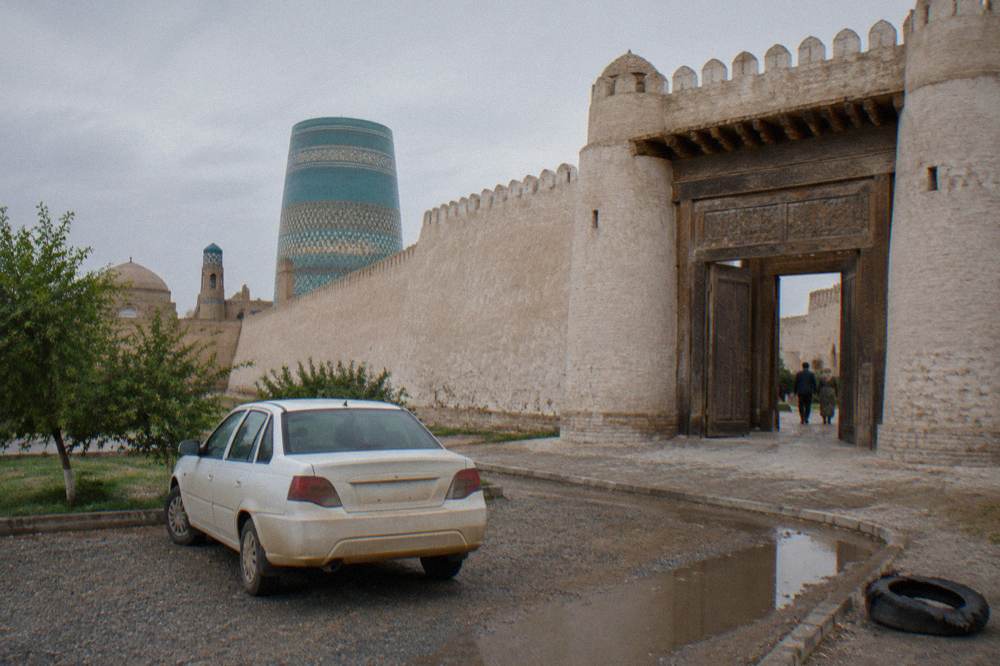
Between the extremes sit the packaged private tours that use both modes and let someone else drive the decisions. The roster's clearest train-plus-guide example is the 3-day private bullet train tour of Tashkent, Bukhara and Samarkand, from $505 per person, rated 4.7 from 29 reviews, with pickup, meals and free cancellation listed. For a longer run, the 8-day private train tour from Tashkent through Urgench, Bukhara and Samarkand starts from $1,035 per person, rated 4.7 from 40 reviews, with meals and pickup listed. Both are private, both ride the rails between cities, and both hand you a guide at each stop, which is the compromise most first-time visitors end up choosing.
| Roster listing | Format | From, per person | Rating |
|---|---|---|---|
| 2-day Bukhara and Samarkand by train | Private | $499 | 4.9 from 57 reviews |
| 3-day private bullet train tour | Private | $505 | 4.7 from 29 reviews |
| 8-day private train tour | Private | $1,035 | 4.7 from 40 reviews |
| Samarkand all-inclusive day tour | Group format on listing | $180 | 5.0 from 60 reviews |
Inside the cities, the car question mostly dissolves into a walking question. Samarkand's Registan cluster, Bukhara's old town and Khiva's Itchan Kala are all compact enough to cover on foot, which is why the most-reviewed listings on this site are walking tours, not drives. A private Samarkand city tour with transport inside the attractions, from $75 per person and rated 5.0 from 219 reviews, adds a vehicle only to bridge the spread-out stops. That is the car in its best urban role: a shuttle between walkable clusters.
How Do You Choose For A 7 To 10 Day Trip?
For a classic 7 to 10 day circuit, book the train for Tashkent, Samarkand and Bukhara, and a car or transfer for the Khiva leg and any side trips. Book train seats first, about 30 to 45 days ahead, because they are the constrained resource, then arrange cars around them. Travelers who book in that order rarely get stranded.
The sequencing advice is the part most guides skip. Your Afrosiyob seats are the scarce item: booking opens about 30 to 45 days ahead, foreigners can buy online with passport details, and international cards work with varying success, so it pays to try early and have a backup. The official ticketing route is through the railway's own e-ticket site, the railway e-ticket portal, and independent rail experts such as the Seat61 Uzbekistan guide walk through the process in detail. Cars, guides and even domestic flights, Uzbekistan Airways runs Tashkent to Urgench in about 1 hour 30, can be arranged later.
For route planning at this length, the seven day Tashkent to Khiva itinerary and the deeper Afrosiyob, Sharq and Khiva line guide both break the days down city by city, and the question of whether two days is enough for Samarkand decides how much of your week the train spine should consume. If a full package appeals more than self-driving the logistics, the comparison on Uzbekistan Tour Packages covers what the listed multi-day tours include, from meals to pickups.
One rule of thumb from the roster data: the longer the trip, the more the car earns its place. On 3 days, trains plus a guide are almost all you need. By 8 to 11 days, with Khiva, fortresses, mountains or the Aral Sea in play, road hours dominate the itinerary and the private format becomes the standard, which is exactly what the longer roster listings show.
The Verdict For Different Travelers
Solo and budget travelers should default to the train on the spine and shared taxis elsewhere. Couples and families gain the most from a private tour that mixes both. Photographers, fortress hunters and anyone with a late-booking style should lean toward the car. Nobody should use only one mode for a full circuit.
The train traveler's profile is easy to draw: fixed cities, booked-ahead plans, an interest in the big three monuments, and a tolerance for station logistics. The car traveler's profile is the opposite shape: scattered destinations, a desire to stop spontaneously, and a budget that absorbs the premium. The packaged private tour exists precisely for the large middle group that wants train speed without seat-hunting and car access without self-managing drivers.
Cost-wise, the independent train-plus-taxi approach remains the cheapest way to see the big three, helped by an exchange rate around about 11,900 som per US dollar in October 2026 and daily budgets that run $25 to $50 for frugal travelers. Comfort-wise, the Afrosiyob is a smooth, modern ride, and the car is a rolling base camp. The real currency being spent in this comparison is not money, it is control: the train trades flexibility for speed, and the car trades speed for control. Decide which of those two you value more, and the answer to the question above follows on its own.
If you are still weighing formats, these three listings bracket the choice from a short rail sprint to a full private circuit:
Common Questions About The Afrosiyob Train Versus A Private Car
Is The Afrosiyob Train Better Than A Private Car In Uzbekistan?
On the Tashkent to Samarkand to Bukhara corridor, yes: the Afrosiyob is faster, at about 2 to 2.5 hours to Samarkand, and cheaper per seat, from about $25 to $40 economy. Everywhere else, the mountains, the desert forts and the Khiva approaches, a private car is the practical choice, and most itineraries use both.
Does The Afrosiyob Reach Khiva?
There is no regular direct Afrosiyob service to Khiva. A new high-speed Tashkent to Khiva train was reported launched in May 2026, covering the run in about 7.5 hours with a fare reported around 780,000 som, about $65. Check the railway site for current days and times before planning around it.
Can Foreigners Book Afrosiyob Tickets Online?
Yes. Foreigners can buy on the railway's e-ticket site using passport details, and booking typically opens about 30 to 45 days ahead. International cards work with varying success, so have a backup payment plan and book early for peak-season departures.
Is A Private Tour That Includes Trains Worth It?
It depends on how much logistics you want to own. The 3-day private bullet train tour starts from $505 per person with pickup, meals and free cancellation listed, against roughly $100 of train fares bought alone. The premium buys a guide, transfers and someone else solving problems.
How Far Ahead Should You Book Train Tickets In Uzbekistan?
Book as soon as sales open, about 30 to 45 days before travel, especially for April to May and September to October departures. Seats on popular Afrosiyob runs fill, and unlike a private car, which can often be arranged days ahead, train seats cannot be created on demand.