Do They Speak English In Uzbekistan?
English in Uzbekistan: where travelers will find it, where they will not, and why an English-speaking guide changes the trip.
Do They Speak English In Uzbekistan?
Not as a general language of daily life. Uzbek is the state language and Russian remains the working second language across the cities, so a traveler ordering plov at a bazaar stall or negotiating a taxi will usually meet blank stares if they open in English. English exists in a thin layer over the tourist economy: hotel front desks in the main cities, licensed guides, ticket offices at the major monuments, and younger staff in tourist cafes.
The layer is thin but it is real, and it is thicker every year. Uzbekistan's tourism push has pulled English signage, English menu translations and English-speaking staff into the historic centers where almost every visitor spends their time. Outside those centers, and outside working hours, it thins out fast. The practical answer for most travelers is not "learn Russian before you fly" but "expect English in the booked parts of the trip, and bridge the rest with a phrase, a translation app, or a guide." For American travelers, the language question is only part of the picture, and our look at whether Uzbekistan is friendly to Americans covers the rest, from entry rules to money and everyday manners.
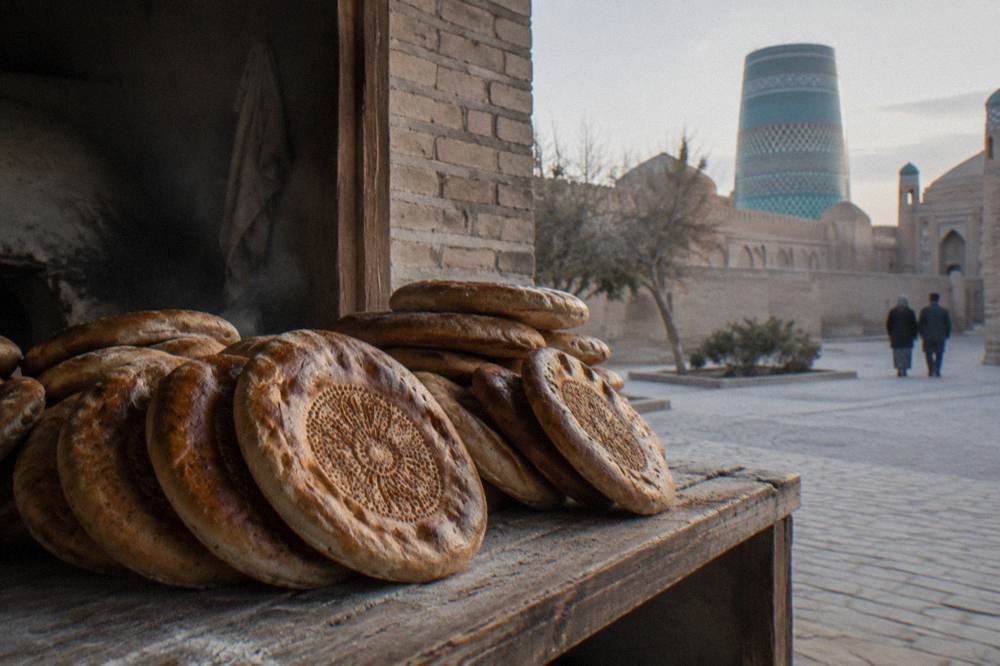
That is also the quiet argument for a package. A tour like 7-Day Uzbekistan with the Local: From Blue Domes to Mountains is built around a local guide who speaks English, listed from $1,075 per person with a 5.0 rating from 21 reviews, and the listing states meals are included and free cancellation is listed. The guide is not just narrating the Registan; they are ordering your lunch, explaining the bread, and translating the conversation with the ceramicist whose workshop is not on any map. Check availability
For travelers who land with nothing booked, a Tashkent walking or food tour with a local guide covers the same ground in half a day. It runs from $19 per person, holds a 4.9 rating from 273 reviews, and the guide does the talking at every stall. Food tours in particular are a language product as much as a food product: half the value of eating your way through a bazaar is having someone tell you what you are eating, where it came from, and how to ask for it again tomorrow.
Where You Will Find English: Hotels, Guides And Tourist Sites
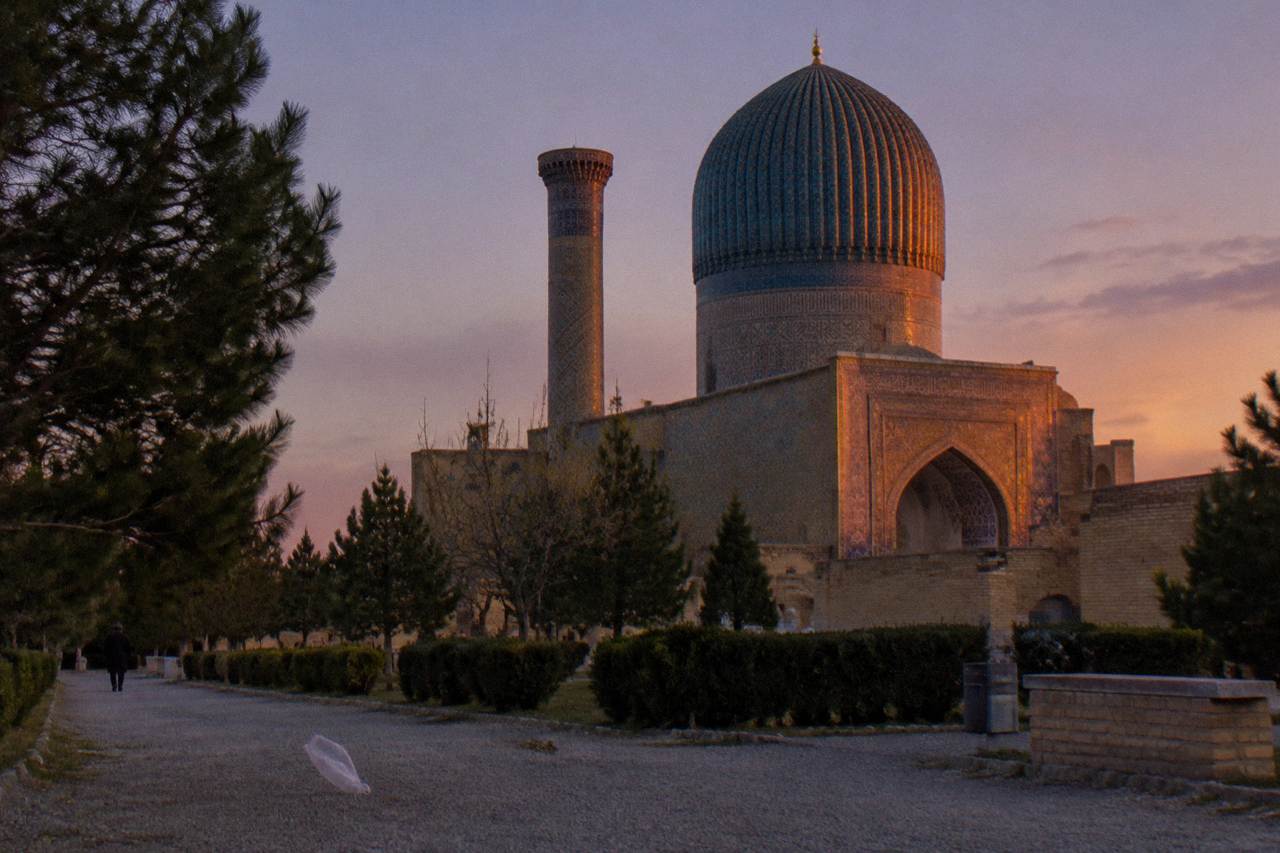
In the paid, tourist-facing parts of the country, English is dependable. Mid-range and upscale hotel front desks in Tashkent, Samarkand, Bukhara and Khiva almost always have at least one English-speaking receptionist on shift, licensed guides work in English as a matter of course, and the ticket windows at the headline monuments deal with foreign visitors all day. Museums in the big four cities increasingly carry English labels.
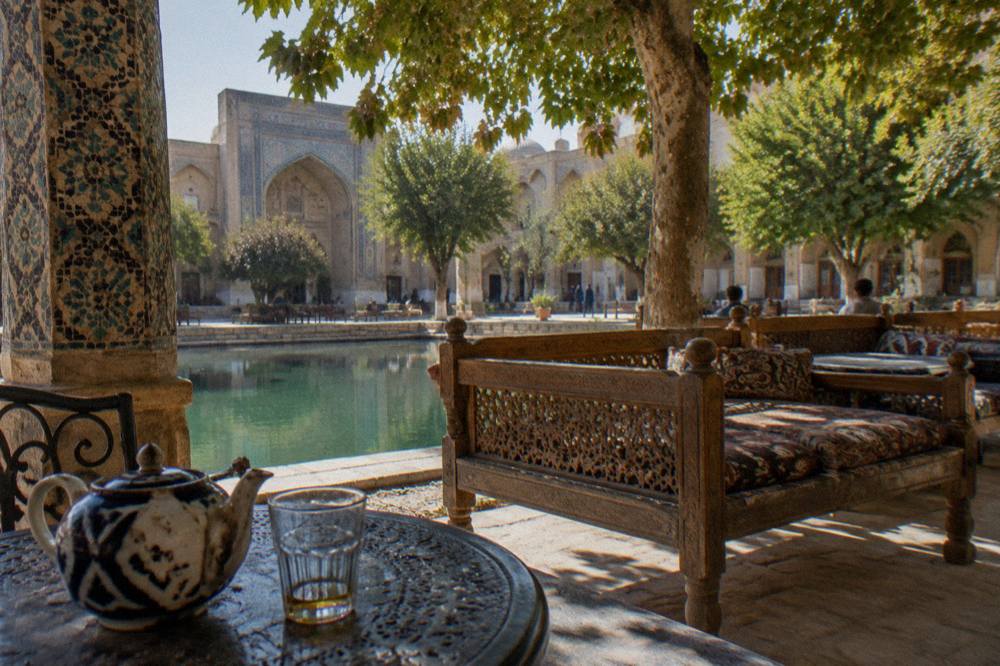
The reliability rises with how tourist-facing the venue is. A boutique hotel inside Bukhara's old town has English-speaking staff because its entire clientele is foreign. A family guesthouse two blocks outside the old town may not, though a translation app on a phone bridges that gap without drama, and booking platforms put the guesthouse's own descriptions in front of you before you commit. The same gradient applies to restaurants: an establishment on a square facing the Lyabi-Hauz has an English menu because tourists found it, while a canteen five minutes away serving the same food at half the price has a menu in Cyrillic and a proprietor who will mime the entire menu with genuine delight.
The train system deserves a specific mention because so many itineraries run on it. The high-speed Afrosiyob and the slower Sharq services connect Tashkent, Samarkand and Bukhara, with Afrosiyob covering Tashkent to Samarkand in about 2 hours to 2 hours 30 minutes and the full Tashkent to Bukhara run in about 3 hours 50 minutes to 4 hours 20 minutes. There are typically five or more Afrosiyob departures a day on the main segments. The booking site at eticket.railway.uz supports English and accepts passport details from foreign documents, which matters because on-board announcements and staff conversation will largely be in Uzbek and Russian. A new Tashkent to Khiva high-speed service was reported to have launched in May 2026, taking about 7.5 hours several times a week; check the railway site for days and times before building a plan around it. Tickets generally open for sale roughly 30 to 45 days ahead, so the online English interface is the tool that secures them before the crowds do.
This is where the format of your trip starts to matter more than the language question. A package that includes pickup, as most of the roster's multi-day tours do, removes the single most language-dependent moment of an Uzbekistan trip: the arrival transfer, where a tired traveler with bags needs to find a specific driver in a specific place. The inclusions guide for multi-day tours breaks down exactly which roster listings state pickup, meals and cancellation terms, and those line items map closely onto how much English-independent your week becomes. Free cancellation, listed on nearly every roster tour, also means the language of your booking is settled before you ever need a word of Uzbek.
Where English Runs Out: Bazaars, Taxis And Everyday Life
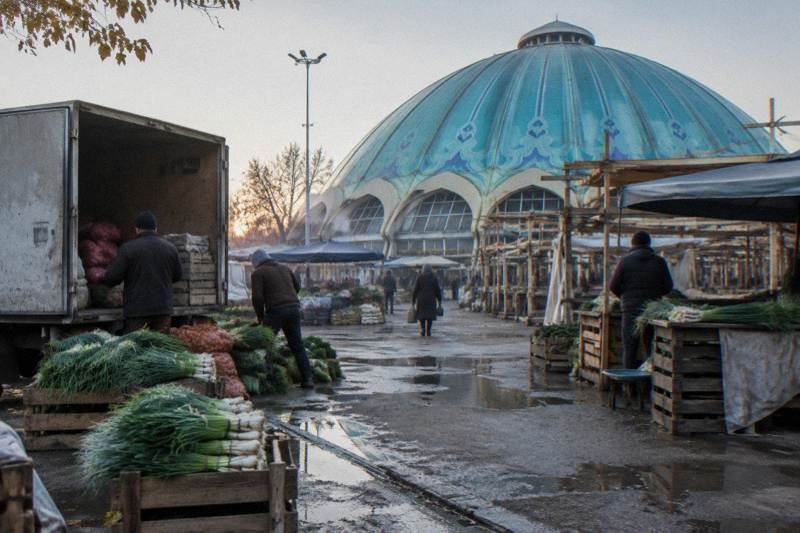
Outside the tourist layer, English is scarce. At bazaar stalls, in local cafes, in shared taxis and marshrutka minibuses, at neighborhood shops and in most casual street interactions, the working languages are Uzbek and Russian, and a traveler speaking English alone will often need gestures, a phone, or a number written on paper. This is normal and manageable, but it surprises visitors who have just come from the hotel lobby where everything worked.
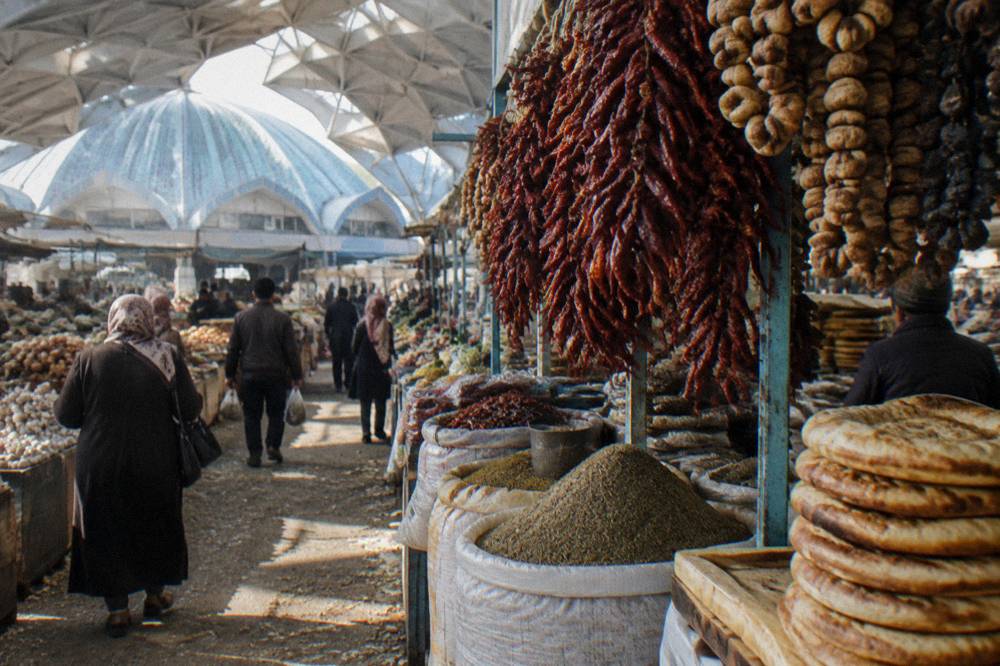
The gap shows up most in money moments. Haggling at Siyob Bazaar in Samarkand or Chorsu in Tashkent runs on numbers, and numbers are easy: a phone calculator, held up, ends most negotiations. Restaurant menus outside the historic centers are frequently Uzbek-only or Russian-only, though photographing a menu into a translation app takes seconds. Payment is its own topic: cards work at mid-range and upper hotels, malls and many tourist restaurants, but cash in local som is preferred or required at guesthouses, bazaars, small eateries and monument ticket windows. The exchange rate runs about 11,900 som per US dollar in October 2026, so a little mental preparation helps before you stare at a 150,000 som banknote. ATMs in the main cities dispense local currency, and carrying clean US bills for exchange is a common backup recommendation, since smaller towns and rural stops lean on cash far harder than the capitals of tourism do.
Taxis are the classic pressure point. Ride-hailing apps solved much of this in Tashkent, since the app sets the destination and the price. Street taxis require either Russian numbers or a settled price typed into a phone before the door closes. Overcharging of foreigners who cannot negotiate is a recurring complaint in traveler discussions, and it is almost entirely a language-adjacent problem rather than a safety one. Between cities, the fix is structural: intercity transport on a package means a driver or a train ticket that was already arranged in English online, and the shared-taxi rank becomes someone else's problem.
The honest framing is that these friction points are small, predictable and mostly comic in hindsight. Nobody is unsafe because a baker does not speak English. The US State Department advisory for Uzbekistan stands at Level 1, Exercise Normal Precautions as of January 2026, and the entry side is simple for Americans: visa-free stays of up to 30 days from 1 January 2026 under the announced decree, with hotels registering guests automatically. The US Embassy's page on registration in Uzbekistan is the reference to keep for how the hotel registration system works.
The table below is the practical version of everything above: what to expect, situation by situation.
| Situation | Expected English | Best bridge |
|---|---|---|
| Hotel front desk, mid-range and up, main cities | Usually available | Ask at booking |
| Licensed tour guide | Standard working language | Book ahead |
| Monument ticket offices (Registan, Ark, Itchan Kala) | Basic, numbers-based | Cash in som ready |
| Museum labels | Increasingly present, uneven | Audio guide or guide |
| Bazaar stalls and local cafes | Rare | Phone calculator and translation app |
| Taxis and marshrutkas | Rare | Ride-hailing app or written price |
| Train staff and stations | Limited | Book online in English beforehand |
| Younger staff, tourist cafes | Often conversational | Patience and kindness |
Why An English-Speaking Guide Matters On A Package
A guide converts every weak-English moment of a Uzbekistan trip into a fluent one while adding context no translation app supplies. The bazaar negotiation, the workshop visit, the plov order, the explanation of what you are looking at inside a madrasah, all of it moves from gesture-based to conversation-based. On a private package the guide also handles drivers, train tickets and check-ins.
The roster makes the price of that conversion surprisingly concrete. The budget end is 6-Day Private Tour to Tashkent, Khiva, Bukhara and Samarkand, listed from $765 per person with pickup and free cancellation stated, though with 11 reviews it is too early to make a rating claim. At the fuller end, the 8-day private train tour from $1,035 per person carries a 4.7 rating from 40 reviews with meals listed. Between them sits the 6-day private with meals included, from $800 per person and rated 4.9 from 48 reviews. All of them put an English-speaking local between you and every transaction of the week.
What a guide adds beyond translation is harder to price. The verified free-walking-tour scene in the four cities shows how much local guides carry: walks in Samarkand, Tashkent, Bukhara and Khiva all operate on a pay-what-you-want basis with strong ratings, which means guiding talent is deep and locals are eager to explain their cities. A multi-day package taps that same talent for a full week, with the added value that your guide learns what interests you by day two and shapes day three around it. Everything else covered here is indexed on Uzbekistan Tour Packages.
There is also a seasonal argument. The climate windows that suit sightseeing, spring from March to May and autumn from September to October, are exactly when the sites are busiest and independent navigation is most stressful. Samarkand in April runs roughly 21 to 22 degrees Celsius daytime highs; by July it reaches the mid-30s. A guide in peak season is not a luxury bolt-on, it is the difference between moving through crowds with someone who knows the side door and standing in line twice as long with a map in the sun. Winter travel flips the problem: cold, quiet months mean thin crowds and easier access, but also a thinner layer of English-speaking staffing at cafes and shops that scale down for the season.
Learning A Few Words Of Uzbek And Russian
You do not need either language, but ten words of each buy disproportionate goodwill. Uzbek and Russian both open doors in the bazaar, and the effort is received warmly because visitors who try are still a novelty outside the main squares. The most useful split is simple: Uzbek greetings and thanks for warmth, Russian numbers and transactional words for function, because much of the commercial layer still defaults to Russian.
Start with the greetings. "Assalomu alaykum" is the standard hello, answered with "va alaykum assalom." "Rahmat" is thank you in Uzbek; "spasibo" does the same job in Russian. "Nech pul?" means how much, and it may be the single highest-value phrase in the country. "Ha" and "yo'q" are yes and no in Uzbek; "da" and "net" in Russian. Numbers are worth learning in whichever language your ear catches, and a phone calculator covers any gap.
One caution: do not over-plan around transliteration. Uzbek uses a Latin-based alphabet, so signage in Uzbek is broadly readable, but older signs and plenty of signage in Russian use Cyrillic, and a quick familiarization with Cyrillic letters pays for itself on day one. Street signs, metro station names and shop fronts stop being noise and become navigable. The Tashkent metro in particular rewards this small effort, because its stations are among the most decorated in the region and half the experience is noticing which stop is which.
| Phrase | Language | Meaning | Where it helps most |
|---|---|---|---|
| Assalomu alaykum | Uzbek | Hello | Everywhere, opens any interaction |
| Rahmat | Uzbek | Thank you | Everywhere |
| Nech pul? | Uzbek | How much? | Bazaars, taxis |
| Spasibo | Russian | Thank you | Cities, older vendors |
| Skolko? | Russian | How much? | Markets, taxis |
| Yo'q / Net | Uzbek / Russian | No | Declining, ending negotiations |
| Yaxshi | Uzbek | Good | Approving a price or a dish |
If you want to compare formats before deciding how much of the week to hand to a guide, the private versus small-group comparison lays out the trade-offs, and the route planner for how many days to spend helps decide where a guide earns its keep most. The shorter your trip, the stronger the case for guided time, because a two-day sprint through Samarkand leaves no slack hours to lose to a missed negotiation or a wrong bus.
What English-Speaking Travelers Report From The Road
The consistent pattern in traveler reports is pleasant surprise in the tourist zones and mild friction everywhere else, with the friction described as comic rather than threatening. Visitors repeatedly note that hotel staff, guides and younger people in the main cities speak workable to fluent English, while bazaars, local transport and rural stops require tools. Almost nobody reports hostility; the dominant experience of the language gap is patience, laughter and a phone held up.
Guides draw particular praise, and the roster's review pools show why. The Private Samarkand City Tour with Transport, running five to seven hours, holds a 5.0 rating from 219 reviews, and the Samarkand Historical Monuments walking tour holds 4.9 from 1,104 reviews. Those are not language-adjacent numbers by accident: a guide who explains, translates and routes is the difference between a monument visit and an education, and reviewers reward it heavily. City walks in Bukhara and Khiva show the same shape, 4.9 from 633 reviews on the small-group Bukhara walk and 4.6 from 326 reviews on the Khiva highlights tour, all products whose entire job is communication.
The mistake to avoid is assuming the tourist layer extends past its edges. A day trip to the mountains north of Tashkent, for instance the Chimgan and Charvak circuit, moves through villages where English effectively stops, and that is precisely the kind of excursion where an included guide or driver-guide arrangement earns its keep. The full-day mountain tour on the roster, from $69 per person with a 4.9 rating from 431 reviews, includes pickup, and the guide arrangement is stated on the listing. Craft experiences follow the same logic: a bread-making class or a woodcarving masterclass is taught by an artisan, and on the roster's workshop listings the teaching is arranged so English-speaking guests can take part, which is exactly the kind of access that self-directed travelers cannot assume.
Season and language interact in one more way worth knowing: events. Navruz, the spring equinox celebration on 21 March, fills city squares with public festivities that are wonderfully open to visitors but entirely in Uzbek. The Silk and Spices festival in Bukhara, typically held in late May or early June in odd years, is similar. You do not need English or Uzbek to enjoy either, but a guide turns a spectacle into a story, explaining what the sumalak is and why half the neighborhood is stirring it.
Common Questions About Speaking English In Uzbekistan
Can I speak English in Uzbekistan?
Yes, in the tourist-facing parts: hotel front desks, licensed guides, monument ticket offices and many cafes in the historic centers of Tashkent, Samarkand, Bukhara and Khiva. No, not reliably in bazaars, local taxis, small guesthouses outside the centers or rural areas. A translation app and a few words of Uzbek or Russian cover the rest.
can i speak english in uzbekistan?
On its own, only in the tourist layer described above. Paired with a guide, a ride-hailing app, a calculator and a translation app, English is enough for a full trip. Travelers do it every day, and the friction usually becomes a story rather than a problem.
Do guides in Uzbekistan speak good English?
Licensed guides in the main cities work in English as a standard offering, and the review pools on this site's roster, including a 5.0 from 219 reviews on the private Samarkand city tour, reflect thousands of English-speaking guests. Independent traveler discussions occasionally mention uneven guide knowledge, which is one argument for booking tours with substantial review histories.
Should I learn Russian or Uzbek before my trip?
Neither is required. If you learn anything, learn a handful of words in both: Uzbek greetings for warmth and Russian numbers for function, since much of the commercial layer still defaults to Russian. Ten phrases total buy most of the goodwill available.
Does the language barrier make Uzbekistan hard for independent travelers?
Harder than Western Europe, easier than its reputation suggests. Uzbek uses a Latin alphabet, so signage is readable, and the main cities are set up for foreign visitors. The moments that need language, arrival transfers, bazaar purchases, street taxis, are exactly the moments a package with listed pickup and a guide removes.