Is Samarkand The Oldest City In The World?
Samarkand is often called the oldest city in the world, but the record is more careful than the guidebook line. Here is what the evidence supports, and how to see the ancient city for yourself.
Is Samarkand The Oldest City In The World?
No. Samarkand is not the oldest city in the world, and no serious source claims that title for it. What the record does support is that Samarkand has been continuously inhabited for about 2,500 years, a figure widely cited for the city, which puts it among the oldest living cities anywhere, while several cities in the Middle East and beyond are cited as older still.
The confusion is understandable, and it is worth unpacking because the unpacking is what makes Samarkand interesting. Travel writing loves a superlative, and "oldest city in the world" is a superlative that sells postcards. Uzbekistan's own tourism material leans hard on the city's antiquity, sometimes loosely enough that a reader could come away believing Samarkand has no rivals. It does have rivals, and the comparison is not close.
The honest framing goes like this. A handful of cities, several of them in the Levant and Mesopotamia, carry documented or strongly argued claims of habitation reaching back millennia before Samarkand's widely cited founding era. Archaeologists debate those claims the way they debate everything, because "city" is itself a fuzzy word when you push it back far enough. Was a settlement of a few thousand people with walls a city? Was a seasonal trading post? The further back you go, the more the question becomes definitional rather than factual.
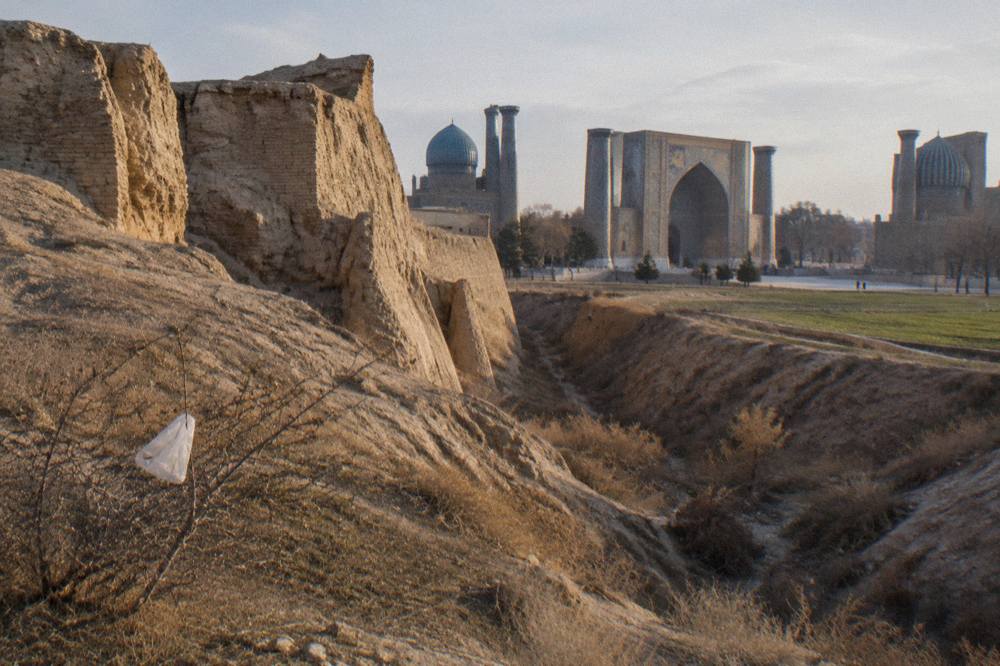
Samarkand sits in a different and more defensible category: continuous occupation. Cities get founded, destroyed, abandoned, and rebuilt all the time. Samarkand was certainly destroyed, more than once, and yet people never stopped living on and around this patch of ground in the Zarafshan valley. That continuity, not raw age, is the remarkable thing, and it is what a visitor actually feels when standing on the Afrasiyab mounds north of the modern center, looking across a settlement site that people have called home since before the Silk Road had a name.
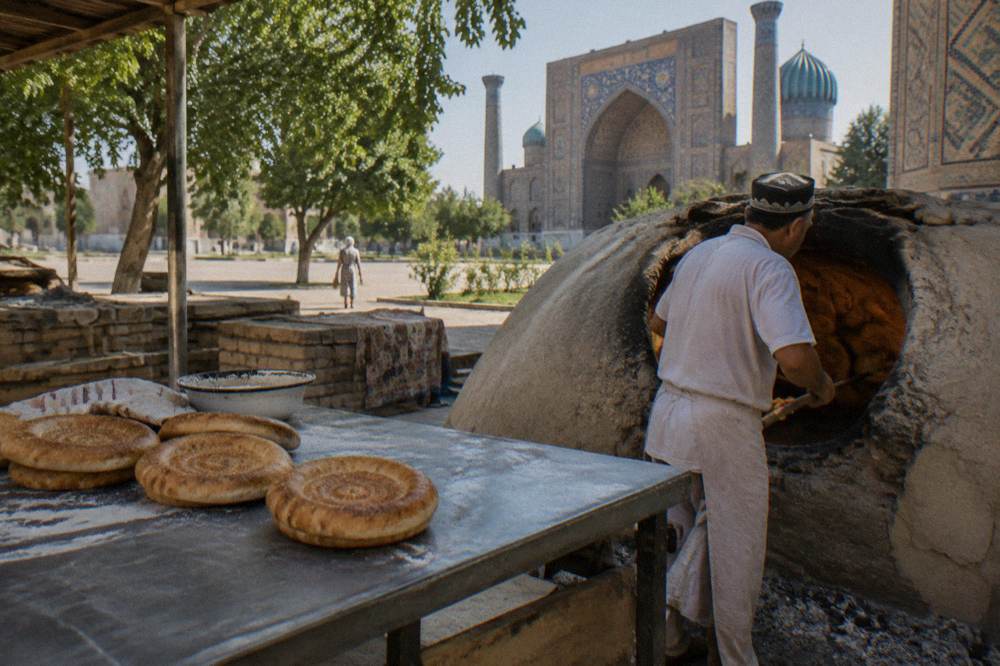
For travelers, the distinction matters in a practical way. You are not visiting a ruin of a dead city, the way you might visit an excavated tell. You are visiting a living one, with a bazaar, a working silk carpet workshop tradition, bread ovens turning out the round loaves the city is famous for, and a high-speed rail link to the capital. The age is everywhere, but so is the present. Our guides to the city's monuments, starting with the Registan, Shah-i-Zinda and Bibi Khanym guide, cover what that looks like on the ground, site by site.
If you want to experience the ancient city with a guide rather than reading plaques, three listings on this site cover the range of formats and budgets:
How Old Is Samarkand, Actually?
The widely cited figure is about 2,500 years, and that is the number this site prints. Samarkand appears in the written record under names close to its modern one from the era of Persian and Greek accounts of the region, and the Afrasiyab settlement site shows occupation from well before the height of the Silk Road. Anything more precise than "about 2,500 years" is a claim this site will not make.
Why the caution? Because precise age claims for ancient cities are almost always shakier than they look. A city's "age" can mean the date of the oldest archaeological layer found so far, which changes every digging season. It can mean the first written mention, which depends on which records survived. Or it can mean the founding date in a later chronicle, which is often a story rather than a measurement. Samarkand's age is quoted differently by different sources, and the spread between those figures is not a rounding error, it is genuine uncertainty about what counts as the starting line.
The Afrasiyab site is the physical anchor for the claim. It is a raised spread of mounds between the modern city center and the hills, and excavation there has turned up occupation layers, irrigation works, and palace frescoes that speak to a substantial settlement in antiquity. Standing there, you are looking at the pre-Muslim, pre-Timurid city, the one that the earliest outside observers described. The medieval city that most visitors picture, the domes and turquoise tilework, came later, built by conquerors and patrons who wanted a capital worthy of their ambitions.
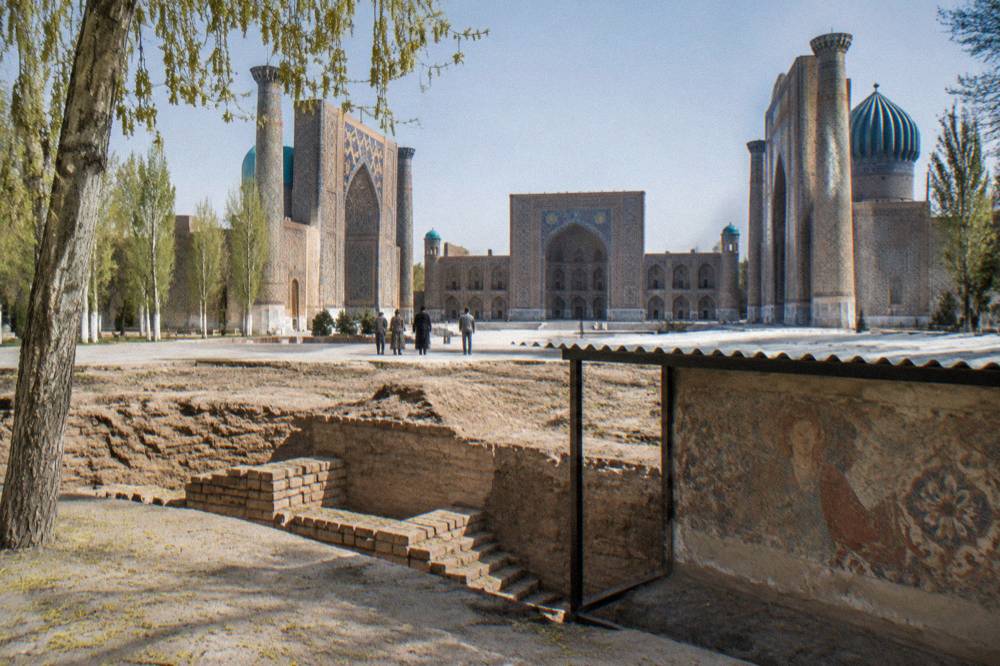
That layering is the real answer to the age question. Samarkand is not one city but a stack of them: the ancient settlement at Afrasiyab, the medieval city of the Silk Road era slightly to the south and west, and the modern Uzbek city laid out around them both. Each layer borrowed and built on the last. A walking tour through the modern streets crosses all three in an afternoon, which is a density of history that very few places on Earth can offer, whatever the final age tally says.
The site's approach to these numbers is deliberately conservative. Where a claim is widely cited and roughly stable, like the 2,500 year figure, it gets printed with the word "about" attached. Where sources disagree, the disagreement itself is the story. Readers who want to dig into the evidence base can cross-check the climate and history context of the region on reference pages such as the long-term Samarkand climate and geography record, which illustrates how much of what we know about the region rests on layered, periodically revised measurement.
Which Cities Are Older Than Samarkand?
Several cities are cited in the archaeological literature as older than Samarkand, most of them in the Middle East, with settlement claims reaching back thousands of years further. Cities in the Levant and Mesopotamia, along with a few in South Asia and elsewhere, are the usual candidates. No single city holds a universally accepted title, because the evidence and the definitions both shift.
It helps to sort the contenders into tiers. The first tier is small, and it is made up of the cities where excavation and written records together point to habitation stretching back several thousand years before Samarkand's era. These are the places that archaeologists and historians usually mean when the "oldest city" conversation turns serious. The second tier is larger and more crowded: cities like Samarkand, with continuous habitation measured in the low thousands of years, documented in reliable records, and still living today. Being in that tier is extraordinary, and it is where the honest superlative for Samarkand lives.
Here is how the landscape of claims looks when you line it up by category rather than by contested date:
| Category | What it means | Where Samarkand stands |
|---|---|---|
| Claimed oldest cities | Settlement claims reaching back several thousand years before Samarkand's era | Samarkand does not compete in this tier |
| Long-inhabited cities | About 2,000 to 3,000 years of continuous habitation, well documented | Samarkand sits here, at about 2,500 years widely cited |
| Re-founded ancient sites | Ancient sites reoccupied after long abandonment | Not Samarkand, habitation continued through the city's destructions |
| Medieval showpiece cities | Great architecture from the Silk Road era, younger foundations | Samarkand also belongs here, unusually |
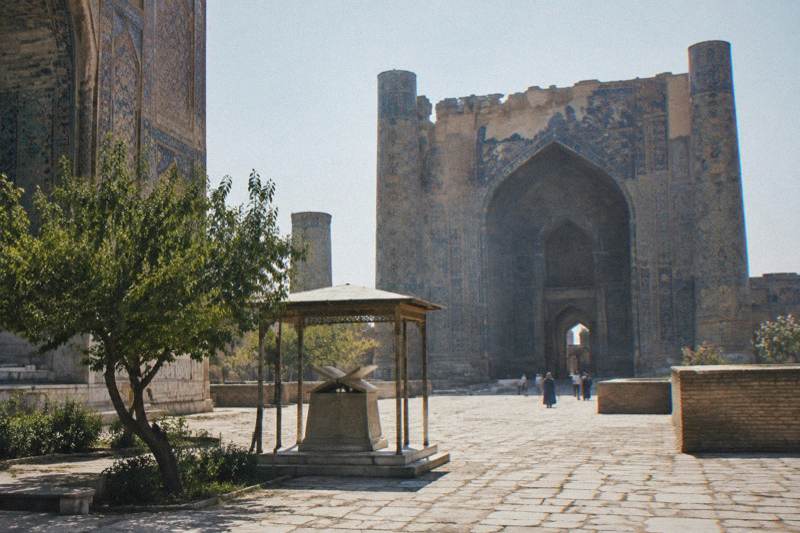
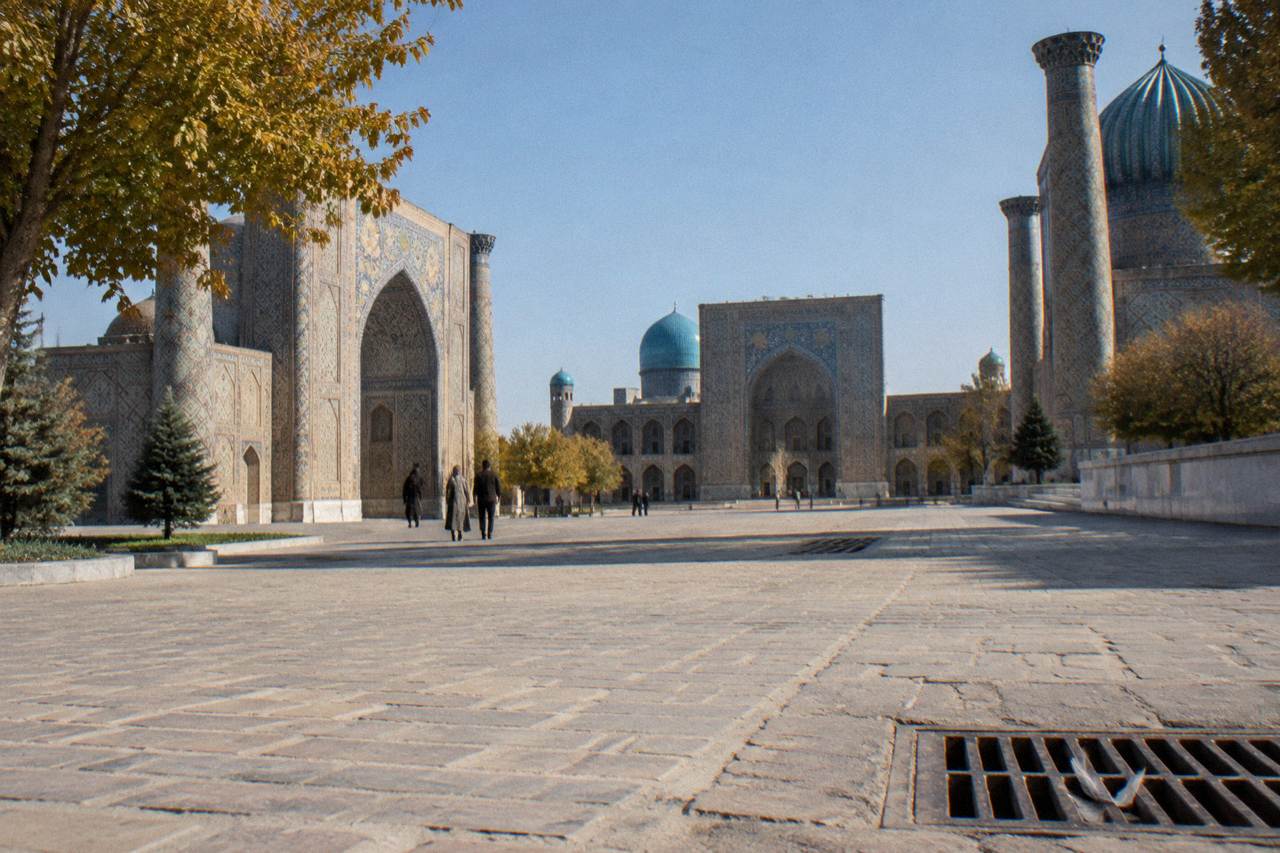
The fourth line is the one travelers care about most, and it is where Samarkand genuinely does stand almost alone. Plenty of places are old. Very few are both old and in possession of one of the most complete ensembles of medieval monumental architecture on the planet. The Registan, the Shah-i-Zinda necropolis, the Bibi Khanym mosque: these are working buildings and restored ones, standing in a city that has been continuously inhabited throughout. The age claim that matters for a visitor is not the abstract number, it is that stack of living, usable, walkable centuries.
A word of caution about the debate itself. Popular articles ranking the "oldest cities" circulate constantly, and they rarely agree with each other, because they are comparing claims made by different national tourism boards, different excavation reports, and different definitions of the word city. Treat any listicle that crowns a single winner with suspicion, including ones that crown Samarkand. The defensible statement is the one this article leads with: ancient, continuously inhabited, not the oldest.
For readers planning an actual visit, the age question quickly turns into a practical one: how many days to give a city with this much layered history. Our piece on whether two days is enough for Samarkand works through that trade-off in detail.
What Can You Still See Of Ancient Samarkand Today?
Most of what a visitor sees in Samarkand is from the Silk Road era and later: the great monuments were built on top of, and beside, the older city. The visible traces of ancient Samarkand are concentrated at the Afrasiyab settlement site and its museum, while the medieval layer supplies nearly all the famous buildings. The ancient city is under your feet; the medieval city is in front of your eyes.
Start at Afrasiyab if the deep history is what brought you. The site is a quiet expanse of mounds a short distance north of the Registan, with a museum on the edge displaying the excavated frescoes and finds. You will not find soaring tilework here, and that is the point: this is the ground-level evidence of the city's oldest chapter, the physical remainder that backs up the 2,500 year figure. Give it a morning, and go with a guide if you can, because the site explains itself poorly without narration. The full index of guides sits on Uzbekistan Tour Packages.
The medieval layer is what most tours focus on, and rightly so. The Registan ensemble, the Bibi Khanym complex, the Shah-i-Zinda avenue of mausoleums, the Gur-e Amir: this is the architecture of the city's most famous era, restored across the last century and now the core of Samarkand's tourist economy. Walking between them, you retrace the medieval street logic of a Silk Road capital, whose markets, caravanserais and workshops are documented in the period sources. The tiles photograph well, but the urban plan is the deeper artifact.
Entry to the major monuments is modest by international standards and worth budgeting in advance. The Registan ensemble runs about 70,000 to 100,000 som for foreign visitors, roughly $6 to $8, and prices have been rising, so check on site for the current figure; a recent visitor's breakdown of Registan ticketing and what each ticket covers is a useful secondary reference. Carry cash in som for monuments, since cards are not reliably accepted at ticket windows.
| Layer of the city | What survives visibly | Best experienced at |
|---|---|---|
| Ancient settlement | Afrasiyab mounds, excavated frescoes, museum finds | Afrasiyab site and museum, north of the center |
| Silk Road era | Registan, Shah-i-Zinda, Bibi Khanym, Gur-e Amir | The monument circuit on foot or with a guide |
| Living craft traditions | Bread ovens, silk carpet weaving, mulberry paper workshops | Working studios, several bookable as visits |
| Modern city | Bazaars, rail links, new cultural venues | Siyob Bazaar and the train station |
The craft layer deserves a mention because it is the least obvious and often the most memorable. Samarkand's silk carpet tradition and its mulberry paper workshop are living practices tied to the city's Silk Road past, and both are bookable as short visits on this site. The famous bread of Samarkand, round, dense and stamped before baking, is claimed locally as a tradition reaching back centuries, and the ovens that make it are working businesses you can watch. None of this is ruins. That is the pleasure of the place: history here has a pulse.
How To See The Old City On A Tour?
The most reviewed way to see Samarkand's monuments with a guide is the Samarkand Historical Monuments Guided Walking Tour, rated 4.9 from 1,104 reviews, from $15 per person, running 4 to 4.5 hours privately. Alternatives include a private tour with transport from $75 and same-day trips from Tashkent from $229, covering different needs and budgets.
That walking tour, the Samarkand Historical Monuments Guided Walking Tour, is the workhorse listing for this city on our roster, and its review count tells the story: 1,104 reviews at 4.9 is a depth of feedback almost nothing else on the site matches. It departs from Samarkand itself, so it suits travelers already overnighting in the city, and it walks the monument core with a local guide. For the age question that brought you here, a guided walk is genuinely the better format, because the layering of the city, ancient, medieval, modern, is exactly the kind of thing a good guide narrates and a plaque does not.
If your time is anchored in Tashkent instead, the day-trip format changes the math. The Samarkand One Day Tour from Tashkent, from $229 per person with hotel pickup listed, runs 9 to 14 hours and is rated 4.7 from 355 reviews; an all-inclusive variant from $180 includes a listed meal and is rated 5.0 from 60 reviews. These trips ride the high-speed rail corridor, so the travel itself is part of the experience: Afrosiyob covers Tashkent to Samarkand in about 2 to 2.5 hours. Our article on the Afrosiyob train compared with a private car works through that choice in detail.
For travelers who want the deepest dive into the city's fabric, the shorter local formats are easy to stack. A 4-hour city tour, "A City Tour Of Samarkand: The Pearl Of The East," runs from $18 per person and is rated 5.0 from 243 reviews, and the craft workshops, from bread making at $21 to silk carpets and mulberry paper at $29, slot neatly into a second day. The total spend for a rich two-day Samarkand program, guide, monuments and one workshop, still comes in well below a single day of guided sightseeing in most of Western Europe. That value gap is part of why the city has boomed with travelers in recent years.
One planning note that follows from the city's layout: Samarkand's sights spread across a wider area than Bukhara's or Khiva's compact old towns, so a tour with transport, or a sensible use of taxis between clusters, saves real time and shoe leather. The private Samarkand City Tour with Transport, from $75 per person and rated 5.0 from 219 reviews, exists precisely for that reason. Free cancellation is listed on all of these tours, which makes booking ahead a low-risk way to lock a guide for the morning you want.
Does The Age Question Change How You Should Visit?
Yes, in one specific way: it argues for slowing down. A city with about 2,500 years of continuous habitation rewards travelers who give it two nights rather than a rushed day trip, because the layers, Afrasiyab, the monuments, the crafts, the bazaar, each need their own hours. The age is the reason to go deeper, not just to tick the Registan.
The day-trip format is a legitimate choice, and the listing above makes it easy, but it samples the medieval layer and skips the rest. The ancient layer, Afrasiyab, takes half a day to do properly with the museum. The craft layer takes another half day. The bazaar takes an unhurried morning with coffee. Add the monument circuit and you have a full two-day program, which is exactly the shape most seasoned travelers end up recommending for this city.
Timing matters too. Spring and autumn are the comfortable windows; July highs in Samarkand average around 34 to 35 degrees Celsius and sightseeing in exposed courtyards becomes a test of endurance rather than a pleasure. October sits in the sweet spot, with highs around 22 and lows around 7 to 8. Our month-by-month guide covers the full calendar if you are flexible on dates.
Budget-wise, an ancient-city pilgrimage here is gentler on the wallet than almost any comparable destination. Independent daily budgets run about $25 to $50 per person for basic guesthouse travel and $60 to $120 for mid-range, excluding flights. Licensed local guides typically start from about $70 for a full day. Those planning a full Silk Road circuit should read our 7 to 10 to 14 day trip cost breakdown before committing to a package.
There is also a simple sensory argument for the slower visit. The claim that Samarkand is "the oldest city in the world" compresses the place into a single fact. Spending two days decompresses it again: the smell of bread ovens in the morning, the sound of the bazaar, the way the tile colors shift through the day on the Registan's facades. Cities earn their reputations through accumulation, and accumulation is exactly what a fast visit throws away.
Common Questions About Samarkand's Age
Is Samarkand The Oldest City In The World?
No. Samarkand is about 2,500 years old by the widely cited figure and has been continuously inhabited, which makes it one of the oldest living cities, but several cities are cited as older. No city holds a universally accepted title as the world's oldest.
How old is Samarkand?
About 2,500 years, the figure widely cited for the city. More precise claims vary between sources, so this site prints the conservative number with "about" attached rather than an exact founding date.
Which cities are older than Samarkand?
Several cities in the Middle East, particularly the Levant and Mesopotamia, carry settlement claims thousands of years older than Samarkand's era. The exact ranking is contested because archaeologists disagree on what counts as a city at that depth of time.
Can you still see ancient Samarkand?
Yes, mainly at the Afrasiyab settlement site and its museum north of the modern center, where occupation layers and excavated frescoes document the city's oldest chapter. The famous tiled monuments are from the later Silk Road era.
Is Samarkand worth visiting if it is not the oldest city?
Yes. Continuous habitation across about 2,500 years, combined with one of the world's great surviving ensembles of medieval architecture, makes it a destination very few places match, whatever the final age ranking says.
How many days should you spend in Samarkand?
Two nights is the comfortable answer for most travelers: one day for the monument circuit with a guide, and a second for Afrasiyab, the bazaar and a craft workshop. A day trip from Tashkent is possible but samples only the highlights.