Does The Silk Road Still Exist?
The Silk Road as a single caravan highway is gone, but its cities, bazaars, caravanserais and craft workshops survive across Uzbekistan. Here is what remains and how to travel it.
Does The Silk Road Still Exist?
No single road called the Silk Road ever existed, and no caravans cross it today, but the network it describe survives in physical form across Uzbekistan. The caravanserais, bazaars, domed markets and fortified old towns of Samarkand, Bukhara and Khiva still stand, still function and still admit visitors. What ended was the camel-borne trade; what remains is the architecture, the crafts and the cities that trade paid for. To figure out which of these places should top your list, start with our guide to what Uzbekistan is most famous for.
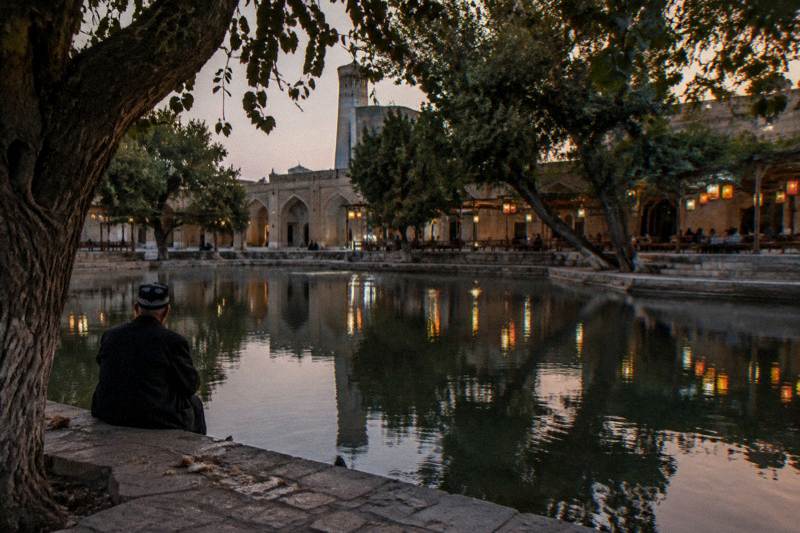
That answer surprises people who expect either a museum or a myth. The Silk Road was never one road. It was a shifting web of caravan routes between China and the Mediterranean, and it changed course with politics, water and war. Merchants, monks and craftsmen moved along it for centuries, and the cities that sat at its crossroads grew rich enough to build on a scale that still draws travelers now. Uzbekistan holds the densest surviving cluster of that building anywhere on earth, which is why the classic modern itinerary, Tashkent to Khiva to Bukhara to Samarkand, follows the old corridor so closely. Those stops hold most of what the country is known for, and this guide to what Uzbekistan is most famous for points you to the Registan, the best plov, and the old craft quarters.
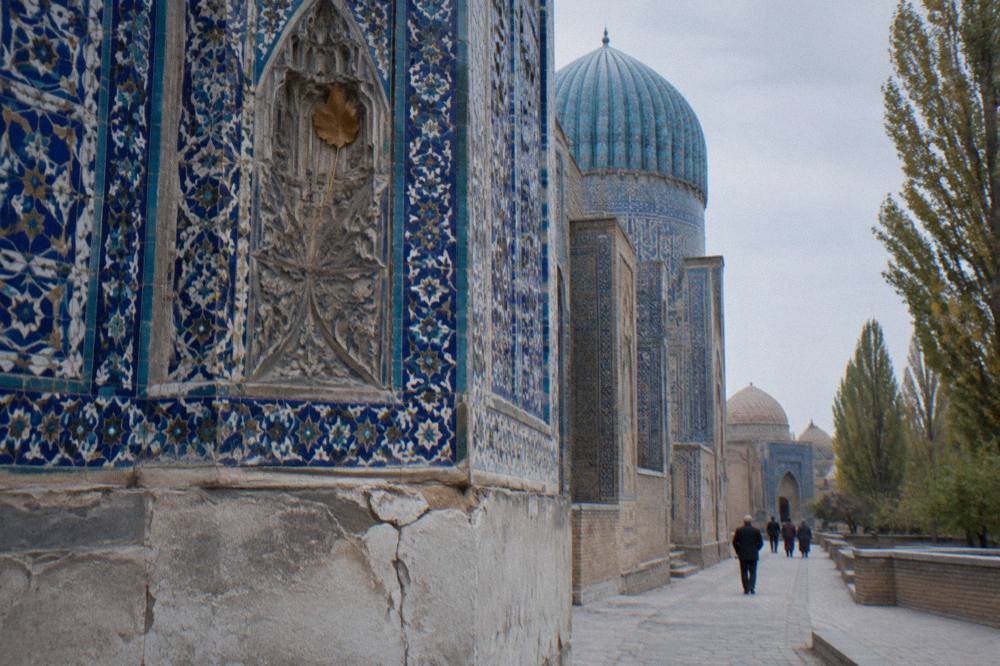
The survival is not cosmetic. Bukhara's old town is a living quarter where residents hang laundry across medieval courts and butchers sell from stalls their predecessors used for the same trade. Khiva's Itchan Kala, the walled inner city, is walked daily by locals and visitors alike. Samarkand's Registan square, the ceremonial heart of a medieval trading city, functions today as it always did, as a stage, a meeting point and a landmark you navigate by. None of this was rebuilt as a theme park. Some restoration has been heavy handed over the years, and honest writers concede that, but the underlying fabric is genuinely centuries old.
What has replaced the camels is infrastructure that follows the same logic. Rail lines now run the Tashkent to Samarkand to Bukhara corridor that caravans once walked, and the market towns along the way still hold their weekly bazaars on the days traders have used for generations. In that practical sense the road exists more strongly now than at any point in the last century. The question is really two questions: does the physical heritage survive, and can you still travel the route in a connected way. The answer to both is yes, and the sections below lay out exactly what remains, site by site, and how the modern journey works.
For planning a full circuit, the coverage at Uzbekistan Tour Packages maps the route against real bookable tours, including rail-based options that mirror the caravan corridor city for city.
If you want to compress that circuit into one decision, these are the three formats worth comparing first.
Did The Silk Road Go Through Uzbekistan?
Yes, and through its richest section. The caravan routes between China and Persia crossed the territory of modern Uzbekistan at its narrow waist, where the oasis cities of Samarkand, Bukhara and Khiva controlled access to water, pasture and mountain passes. Most goods moving between East and West passed through at least one of these cities, and the tolls and trade they collected paid for the monuments visitors come to see now.
Geography did the choosing. Caravans needed water at roughly a day's intervals, safe places to pen animals and defensible towns to sleep in. The string of oases between the Amu Darya and the Zarafshan rivers supplied all three, and the cities planted on them became the fixed points of the route. Samarkand sat where routes from China and India met before pushing west. Bukhara commanded the river crossing and the approaches to Persia. Khiva, further west, anchored the desert leg and the crossing toward the Caspian. A caravan skipping all three would have added weeks of dry, dangerous road for no gain.
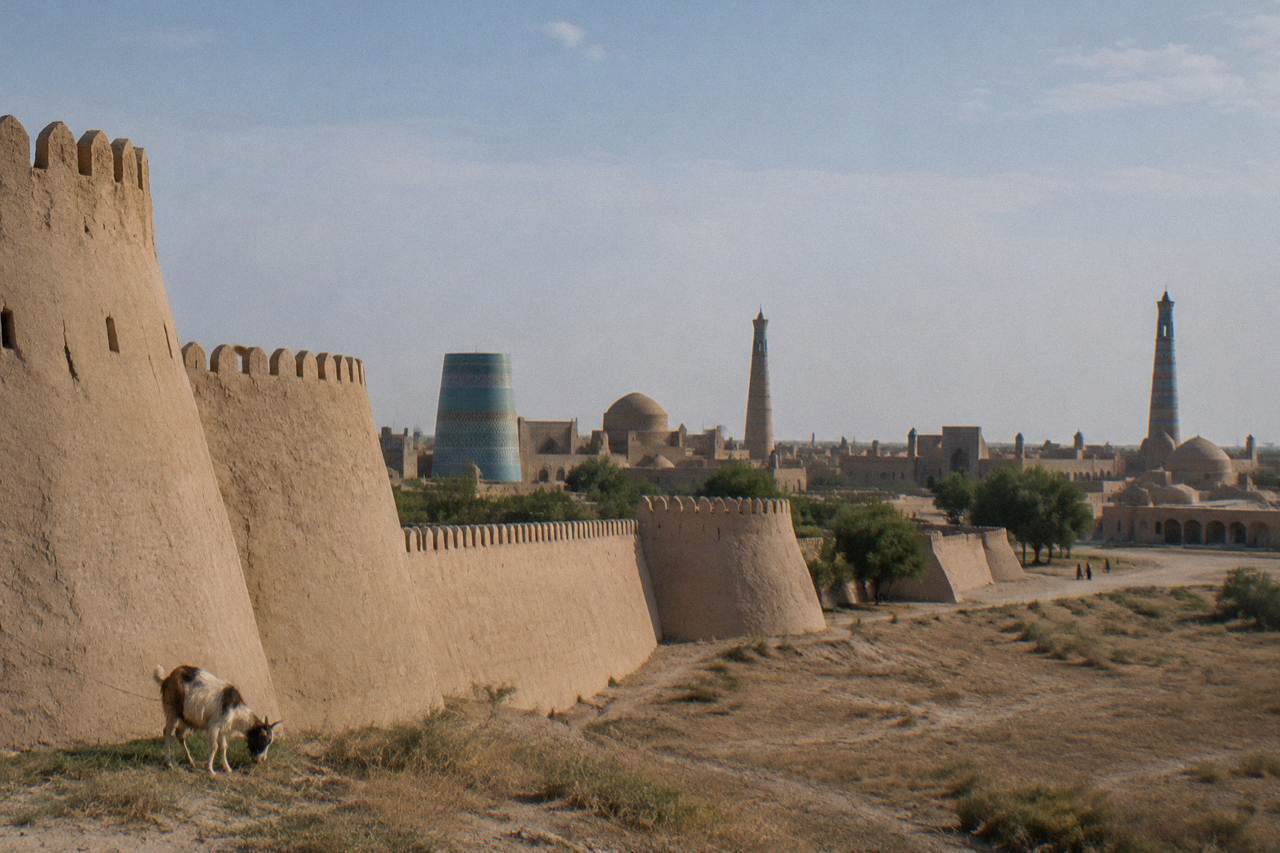
The proof is written in the buildings. A trading city that taxed the world's traffic for centuries accumulates caravanserais, domed trading halls, money changers' quarters and warehouses, and those building types are exactly what fills the old centers today. Bukhara's old town has trading domes still used as shops, with a succession of covered crossroads where silk, coins and saddlery were sold by guild. Khiva's wall, gates and minarets form the densest single ensemble of Silk Road era architecture anywhere in Central Asia. Samarkand holds the grandest monumental statement of the route's peak, plus entire avenues of mausoleums and craft quarters that grew up around the trade. Walking between those domes and minarets yourself is a realistic trip rather than a dream, and our practical guide to traveling the Silk Road today covers how to do it city by city and train by train.
The connection runs deeper than stone. The crafts that made these cities rich, silk weaving, carpet knotting, paper making, woodcarving and tilework, are still practiced in the same towns, sometimes in the same family workshops, and several are bookable as classes rather than museum demonstrations. The route planning guide for Silk Road tours breaks down which of these stops fit which itinerary length, from a single-city weekend to the full four-city circuit.
For travelers who want the trade corridor experience in one packaged week, the 8-day private train tour is the closest modern equivalent, since it moves between Tashkent, Urgench, Bukhara and Samarkand the way the caravans did, stopping at each city in sequence. It carries a 4.7 rating from 40 reviews, runs from $1035 per person with the price varying by group size, and lists pickup, meals and free cancellation on its listing.
Which Silk Road Sites Can You Still Visit Today?
Nearly all of them. The Registan ensemble in Samarkand, Bukhara's Ark fortress and trading domes, and Khiva's walled Itchan Kala are all open, active sites, with no widespread closures reported in 2026. Entry is by ticket at each site, roughly a few dollars per monument at current exchange rates, and several lesser caravanserais and bazaar buildings can be walked through free of charge.
The headline sites are in better shape than many visitors expect. Restoration work at the major monuments is continuous, state funded and generally keeps sites accessible rather than closing them. No major closures of the Registan, the Bukhara old city or Itchan Kala were reported in 2026, and the work that does happen tends to affect individual buildings rather than whole ensembles. Tickets are bought on site, prices are quoted in som and they do rise over time, so treat any figure as approximate and check at the gate.
| City | Surviving Site | What You See Today | Approximate Entry Cost |
|---|---|---|---|
| Samarkand | Registan ensemble | Three madrasah facades around a square, one housing a working carpet workshop | About 70,000 to 100,000 som for the ensemble |
| Samarkand | Shah-i-Zinda | A stepped avenue of tiled mausoleums, an active pilgrimage and photo site | Included in separate monument tickets |
| Bukhara | Ark fortress | A walled citadel with museum halls above the old city | About 60,000 som |
| Bukhara | Trading domes | Covered crossroads of shops selling silk, jewelry and spices | Free to walk |
| Khiva | Itchan Kala | The entire walled inner city, walls, gates, minarets and palaces | About 150,000 som combined, fuller ticket about 240,000 to 250,000 som |
| Khiva | City walls and gates | Walkable ramparts with desert views at the western gate | Included with Itchan Kala ticket |
Exchange context, for anyone converting in their head, runs about 11,900 som per US dollar in October 2026, which puts the Itchan Kala combined ticket in the region of twelve dollars and the Ark around five. Those are planning figures, not promises. Monument tariffs in Uzbekistan rise periodically, sometimes with little notice, and the fuller Itchan Kala ticket, which opens selected interiors and climbable minarets, costs meaningfully more than the standard one. Budget a day's monument fees at ten to twenty dollars per person across any of the three cities and you will rarely be caught out.
Beyond the headline monuments, the quieter survivals are what make the answer to this article's question feel real. Bukhara alone has a cluster of restored caravanserais now holding craft workshops and teahouses, courtyards where merchants once unloaded are now where woodcarvers sell, and the water system that let an oasis city function still shows in the old covered cisterns. Khiva's newer section outside the walls, the Dichan Kala, holds the ordinary town the monument core served. These are places you experience by walking rather than by ticket, and a guided walk is often the difference between a facade and a story.
The most reviewed guided walk on the roster, the Samarkand monuments walking tour, covers exactly this territory, holding a 4.9 rating from 1,104 reviews at from $15 per person over roughly four hours with free cancellation listed. Numbers like that reflect a decade of walkers, not a launch week, which matters when a rating is doing the recommending.
What Is The Best Silk Road Tour?
For most travelers the best option is a multi-day private package that links all four cities by train and road, because the Silk Road only makes sense as a route, not as isolated monuments. On this site's roster that means the 8-day private train tour from $1035 per person, rated 4.7 from 40 reviews, or the 11-day version from $1600 for a slower pace. Day tours work well as supplements once you are in a city. If you want to see how the whole route comes together in practice, our guide to traveling the Silk Road today walks through every city and train leg.
The reasoning is about geography. Samarkand, Bukhara and Khiva sit several hours apart, and the experience of the old trade corridor comes partly from the movement between them, the desert edges, the oasis towns, the sense of distance the caravans covered. A traveler who flies into one city, visits its monuments and leaves has seen a museum. A traveler who moves along the corridor sees the network, which was the whole point of the thing. The piece on choosing how many days to spend in Uzbekistan works through the pacing trade-offs in detail.
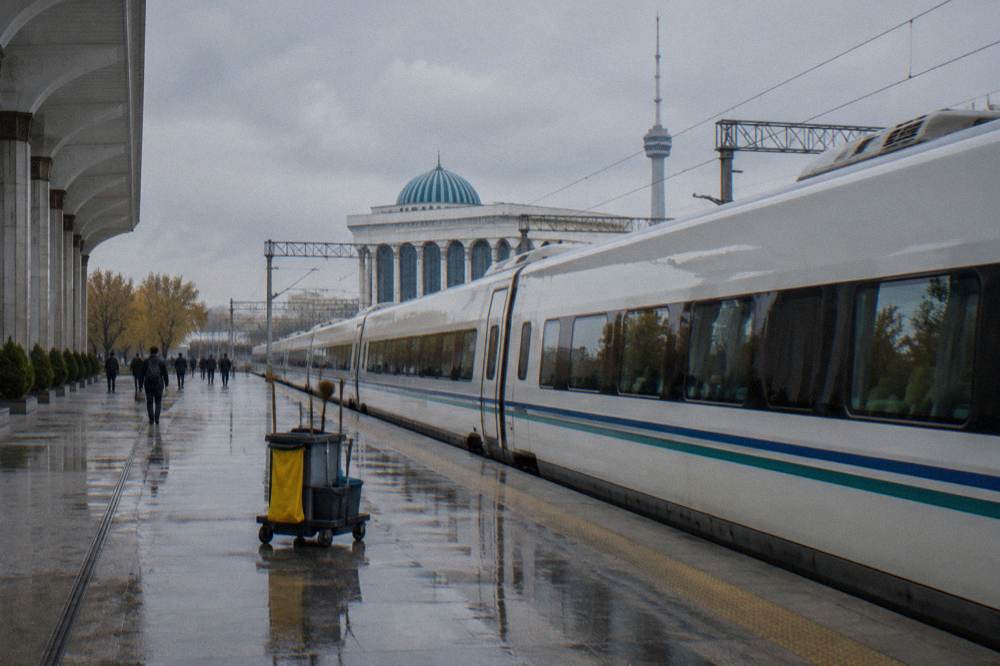
Format matters as much as length. Private packages, which make up most of the roster's Silk Road offerings, give you a dedicated vehicle and guide and price that scales with group size, which is why listings carry the note that the price varies by group size. Small-group and walking formats cost less and suit city stops. Meals, pickup and free cancellation are listed per tour, and they differ between otherwise similar packages, so check inclusions line by line rather than assuming. The comparison of private versus small-group formats is the honest breakdown.
| Tour | Days | Format | Price From | Rating |
|---|---|---|---|---|
| 8-Day Private Train Tour, Meals | 8 | Private, departs Tashkent | $1035 per person, varies by group size | 4.7 from 40 reviews |
| 11-Day Magical Cities, Meals | 11 | Private, departs Tashkent | $1600 per person | ★ 4.8 |
| 7-Day Local Guide, Mountains | 7 | Departs Tashkent | $1075 per person | 5.0 from 21 reviews |
| 5-Day Silk Road Secrets | 5 | Departs Tashkent | $856 per person, varies by group size | ★ 5.0 |
| Budget 6-Day Private From Tashkent | 6 | Private, departs Tashkent | $632 per person | ★ 4.7 |
The 11-day option deserves a note for travelers with the time. It covers the same corridor at a pace that lets you linger in the bazaars, take a craft class and absorb a city rather than tour it, with pickup, meals and free cancellation listed. Its listing carries ten reviews and a 4.8 star rating, so weigh it on itinerary and inclusions rather than ratings. At from $1600 per person it is the roster's longest package and the closest thing to traveling the road rather than visiting it.
Can You Still Travel The Route Yourself?
Yes, and more easily than at any time in recent memory. High-speed rail links Tashkent, Samarkand and Bukhara with several departures a day, a new Tashkent to Khiva service launched in May 2026 by report, and domestic flights connect Tashkent with Urgench. An independent traveler can book trains online and cover the full corridor in a week or two without a tour at all.
The rail corridor is the modern Silk Road in everything but cargo. The high-speed trains cover Tashkent to Samarkand in about two to two and a half hours and Samarkand to Bukhara in about one to two, with five or more departures a day on the main segments. Economy fares on the Tashkent to Samarkand leg run from about $25 to $40 depending on date and availability, quoted by agencies and varying by season, and tickets can be bought online at the railway's ticketing site, where booking opens roughly 30 to 45 days ahead. International cards work with varying success, so have a backup plan at the station.
| Leg | Modern Option | Roughly How Long | Notes |
|---|---|---|---|
| Tashkent to Samarkand | High-speed train | About 2 to 2.5 hours | Several daily departures, book early in peak season |
| Samarkand to Bukhara | High-speed train | About 1 to 2 hours | Frequent, easy to add on arrival |
| Tashkent to Bukhara | High-speed train | About 3 hours 50 minutes to 4 hours 20 minutes | Direct, no change needed |
| Tashkent to Khiva | New high-speed service | About 7.5 hours | Reported launched May 2026, about three times weekly, check days on the railway site |
| Khiva to Bukhara | Road transfer | About 5 to 6 hours | Private transfer, often combined with fortress stops |
| Tashkent to Urgench | Domestic flight | About 1.5 hours | Minimum fares from about 442,000 som one way |
The Khiva line is the newest piece of the puzzle and worth understanding before you plan. The new service, reported in tourism press to have launched in early May 2026, is said to run about seven and a half hours each way roughly three times a week, with a fare around 780,000 som, about $65. Reports, not confirmed timetables: days and times should be checked on the railway site before you build an itinerary around it, and no departure time printed anywhere should be treated as fixed. The alternative remains a domestic flight to Urgench, from about 442,000 to 484,000 som one way, followed by a short road hop into Khiva, bookable through Uzbekistan Airways.
Entry rules are the last piece of independent planning. US citizens may enter visa free for up to 30 days under rules in force since 1 January 2026, and hotels register you automatically, so a hotel-based corridor trip involves essentially no bureaucracy. Advisory levels sit at Level 1, Exercise Normal Precautions as of January 2026. Rules shift, so check the current entry rules before you book, a point the official tourism announcement of the visa-free change at gov.uz makes a sensible starting point for.
Why The Bazaars And Crafts Still Count As Evidence
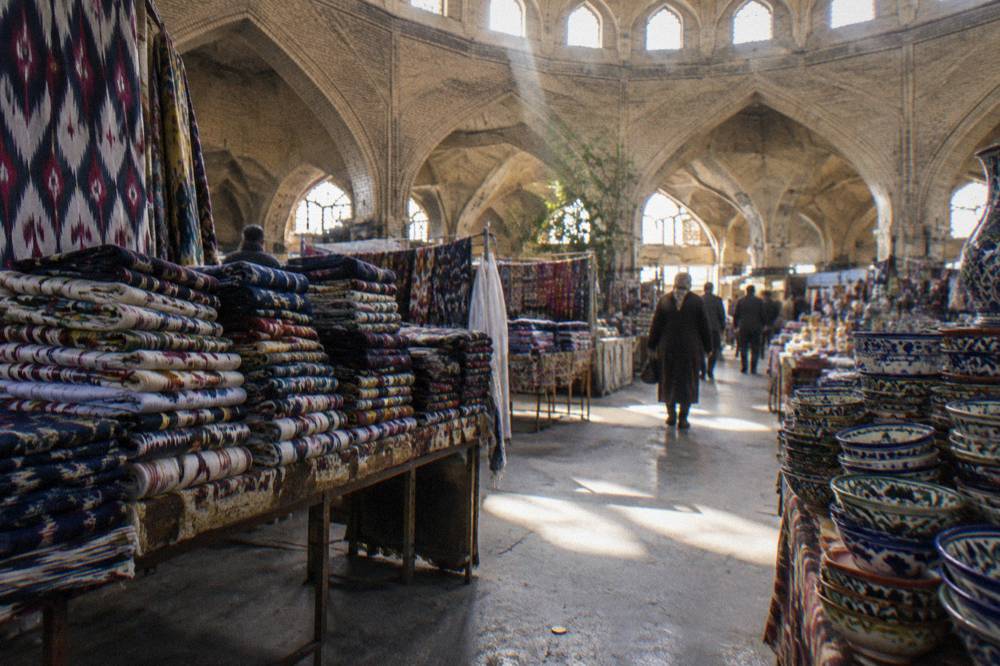
The strongest proof the Silk Road survives is not a monument but a working economy. Samarkand, Bukhara and Khiva still hold bazaars trading in the same categories the route moved, silk, spices, bread and metalwork, and the craft techniques behind them are still taught in bookable workshops. Trade shifted from camel to container, but the skills, the market days and the guild quarters carried on.
Start with bread, which sounds mundane until you see it treated as heritage. Samarkand's legendary flatbread is still stamped, slung and baked in tandoor ovens in the same city, and a bread making class there runs from $21 per person with a 4.9 rating from 174 reviews, teaching the stamping and throwing technique in about two hours. Khiva runs its own master class, from $20, rated 4.5 from 235 reviews, in under an hour. Neither is a reenactment. The bakers teaching them sell the same loaves to locals at the same markets their grandfathers supplied.
The luxury trades survived the same way. Silk carpet weaving and paper making from mulberry bark, both crafts that arrived on the caravan routes and rooted in Samarkand, are taught in a combined workshop from $29 per person, rated 4.7 from a modest 19 reviews. Khiva's woodcarving masterclass, from $20, holds a 5.0 from 61 reviews and works with the same pillar-and-girder patterns that fill the city's mosques. Walking a bazaar after a class changes what you see in it: the piled silks, the spice pyramids and the carved poplar columns stop being souvenir clutter and start being the inventory of a continuous economy.
This is also where a free option helps. Pay-what-you-want walking tours run in all four of the corridor cities, and the guides frame the old towns through exactly this lens of trade, water and guilds rather than dates and dynasties. For a fuller treatment of those walks and what they cover, see the round-up of free things to do across Uzbekistan, which lists the meeting points city by city.
What Ended The Original Trade Route?
The caravan trade declined over centuries rather than ending at a single moment, and the proximate causes were maritime. As European sea routes around Africa and later the Suez Canal moved bulk cargo by ship at a fraction of overland cost, the economics of the camel caravan collapsed. Political fragmentation and shifting empires in Central Asia finished the process, leaving the cities poor but their buildings intact.
Sea freight was the killer. A ship carried hundreds of times what a caravan could, needed no pasture and no escorts, and by the age of oceanic trade the overland route could not compete on price for anything except locally produced goods. Revenues in the oasis cities fell, and the great building programs slowed to nothing. Later, the region's incorporation into the Russian empire and then the Soviet system reoriented its economy toward cotton and internal markets, a disruption so complete that the corridor cities became provincial backwaters. That backwardness, economically painful, is a large part of why the old centers survived unplastered and un-demolished.
The irony worth holding onto is that the route's death preserved it. Cities that stayed commercially important rebuilt continuously, erasing their past. Cities that froze in time kept their walls, domes and caravanserais because nobody could afford to replace them. Uzbekistan inherited an accidental open-air archive of the trade network, and the past three decades of independence, restoration and reopened borders have turned that archive back into a destination. The road's cargo is now visitors rather than silk, but the corridor is moving goods again.
Which brings the whole question back around: if you want to see the Silk Road, you can, and you can travel it in sequence. These are the three ways to do it in one booking.
Common Questions About The Silk Road
Does The Silk Road Still Exist?
The caravan trade is gone, but the physical route survives across Uzbekistan as living cities. Samarkand, Bukhara and Khiva keep their walled centers, trading domes, caravanserais and bazaars, and high-speed trains now run the same corridor the caravans walked. The road exists as heritage, as craft economy and as a travel route you can book today.
what killed the silk road?
Maritime trade. Once cargo could move by sea at a fraction of the cost of camel caravans, the overland route lost its economics, and political fragmentation in Central Asia accelerated the decline. The cities along it grew poor, which paradoxically preserved their architecture from being rebuilt or demolished.
Did the Silk Road go through Uzbekistan?
Yes. The main caravan routes between China and Persia crossed the territory of modern Uzbekistan, where the oasis cities of Samarkand, Bukhara and Khiva controlled water, pasture and mountain passages. Most East-West trade passed through at least one of them, and the tolls paid for the monuments still standing.
What is the best Silk Road tour?
For most travelers, a multi-day private package linking all four cities, since the route only makes sense as a sequence. On this roster the 8-day private train tour from $1035 per person, rated 4.7 from 40 reviews, is the standard choice, with an 11-day version from $1600 for a slower pace and single-city walking tours from $15 as supplements.
Can you travel the Silk Road without a tour?
Yes. High-speed trains link Tashkent, Samarkand and Bukhara several times daily, a new Tashkent to Khiva service was reported launched in May 2026, and domestic flights reach Urgench. Tickets can be bought online about 30 to 45 days ahead, and US citizens enter visa free for up to 30 days.