What Is Uzbekistan Most Famous For?
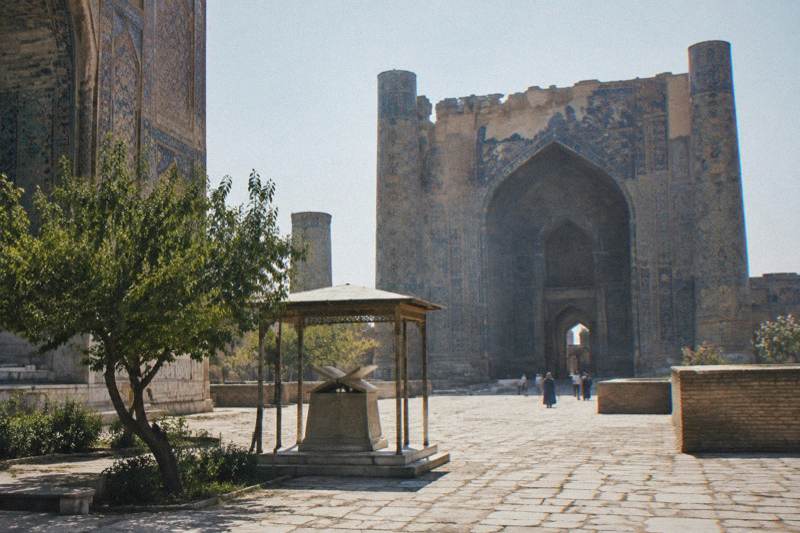
Uzbekistan is famous for the Silk Road cities of Samarkand, Bukhara and Khiva, the Registan, plov, bread, architecture, and craft traditions. Here is where to see each one.
What Is Uzbekistan Most Famous For?
Uzbekistan is most famous for its Silk Road cities, above all Samarkand, Bukhara and Khiva, and for the tiled medieval architecture that made them UNESCO landmarks. Around that core sit a food culture led by plov, a bread tradition with famous regional loaves, and craft work in silk, carpets, wood and paper. The Registan in Samarkand is the single most recognized image of the country. Once you're ready to see these cities yourself, our guide to exploring Uzbekistan's Silk Road cities on free walking tours is a good place to start.
The short answer is architecture, but that word undersells it. What people photograph in Uzbekistan is color: deep blue and turquoise tilework wrapped over domes, facades and minarets, built during the Silk Road era when these cities sat at the crossing points of caravan routes between East Asia and Europe. The trade died down centuries ago, and the buildings stayed. Samarkand, Bukhara and Khiva all carry UNESCO World Heritage status for their historic centers, and that trio is the reason most visitors give for booking a trip at all. Before you wander into those tiled courtyards and working mosques, our guide on whether a woman can wear shorts in Uzbekistan explains the local dress expectations and what to pack for the desert heat.
Around the architecture sits everything the trade routes carried in. Plov, the rice dish cooked with lamb, carrots and onion, is the national dish and a daily fixture rather than a tourist performance. Bread is regional and fiercely local: Samarkand's dense loaves, Khiva's flat discs. Silk carpet weaving, woodcarving and paper made from mulberry bark all survive as working workshops you can visit, in some cases as classes you can join. The Uzbekistan Tour Packages roster reflects that spread: of 35 bookable listings, the largest single group is multi-day Silk Road packages, but the roster also carries bread classes, a woodcarving masterclass and a mulberry paper workshop.
Fame here is also unusually concentrated. Everything the country is known for sits along a single corridor you can cover by train in a week, from Tashkent through Samarkand and Bukhara to Khiva in the west. Very few destinations offer this ratio: three UNESCO-listed historic centers, a national dish you can watch being assembled in front of you, and craft workshops that take bookings, all reachable without a domestic flight if you plan around the rail timetable. That concentration, more than any single building, is why the country has moved from obscure to firmly on the Silk Road traveler's list in the last decade. If you want to see all of it without spending much, our free walking tour guide to Tashkent, Samarkand, Bukhara, and Khiva explains how the tours work and what to expect in each city.
If you are planning around the famous things rather than a fixed route, the three listings below are the natural starting points: a compact multi-city package, a longer premium version, and a cheap guided introduction to the single most famous ensemble.
What Is The Most Famous Landmark In Uzbekistan?
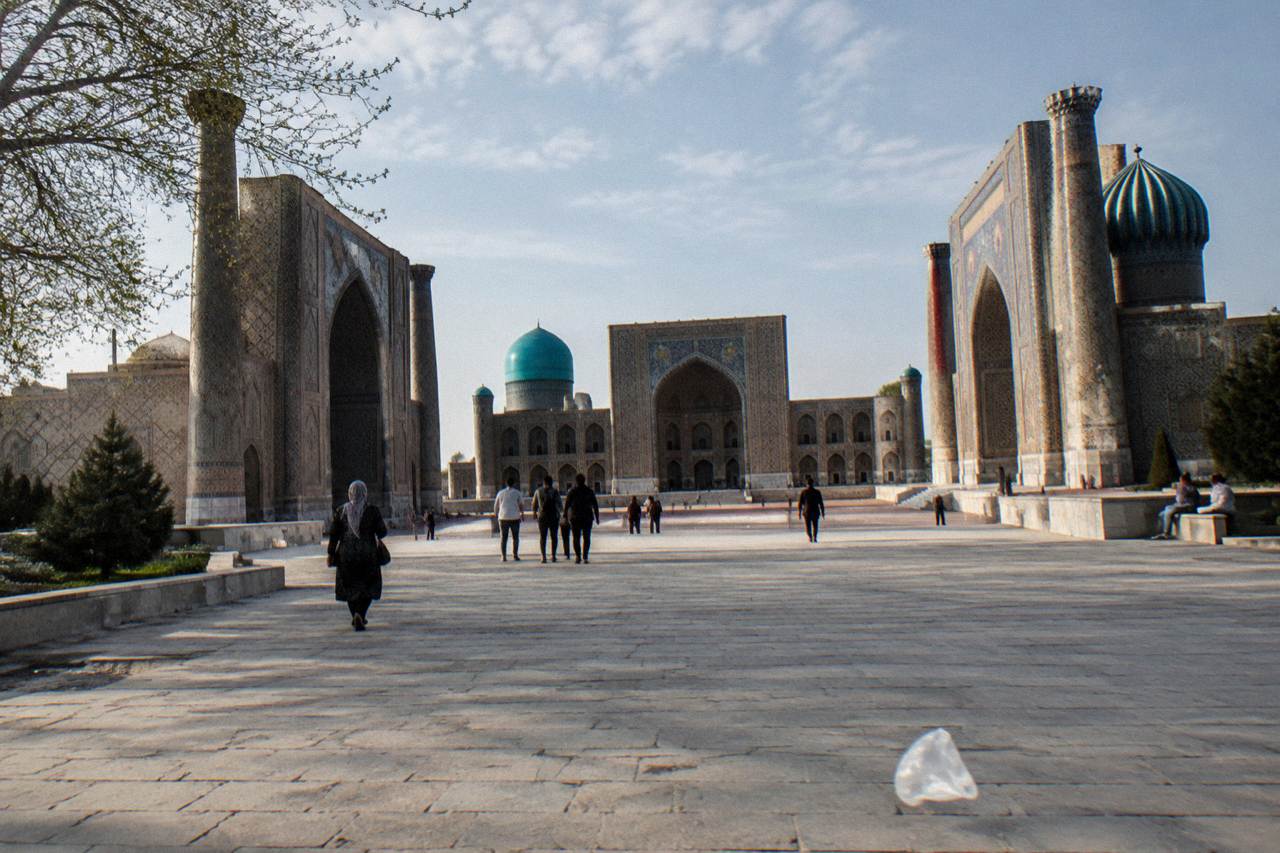
The most famous landmark in Uzbekistan is the Registan ensemble in Samarkand: three monumental madrasah facades facing a single square, wrapped in blue and turquoise tilework. It is the image on most postcards, the first result in most searches, and the single site every Silk Road itinerary includes. Entry costs about 70,000 to 100,000 som for the ensemble, and prices have been rising.
The Registan works as a landmark because it is a space as much as a building. You walk into a square enclosed on three sides by towering tiled pishtaks, the great arched entrance portals, and the effect is scale and color at once. Guides on the ground will tell you the square was a public center in the Silk Road era, used for royal proclamations and trade, and the buildings around it are centuries old, restored repeatedly across their lives. Restoration is the honest word here: much of what you photograph has been rebuilt or extensively repaired, and saying so does not diminish the visit.
Timing matters more than most guidebooks admit. The square changes character with the light: harsh and bright at midday, warm in the late afternoon, and floodlit in the evening, when many travelers consider the facades at their most dramatic. Some visits in the cooler months also coincide with thinner crowds at the gates. Budget an hour or two for the square itself and longer if you want to enter the buildings, whose interiors hold courtyards and exhibition spaces that most day-trippers skip.
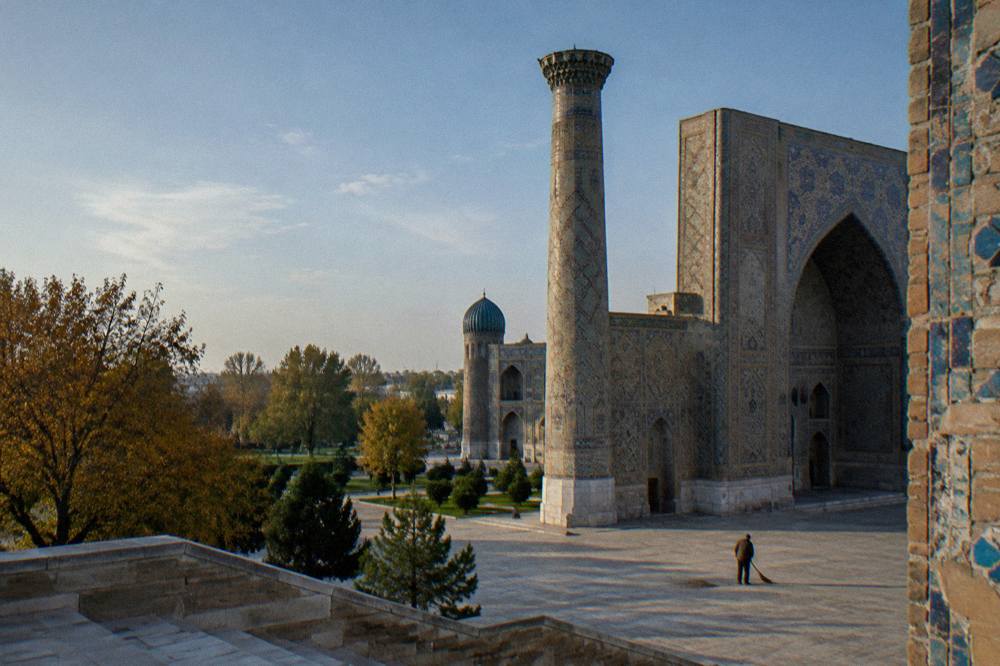
Samarkand holds more than the Registan. The Shah-i-Zinda avenue of tiled mausoleums is, for many visitors, the more moving site: a narrow walking street lined with intensely decorated shrine facades, free of the Registan's grandeur and busy with pilgrims. The Bibi-Khanym Mosque next to a busy bazaar is the third of the big three. Our guide to Samarkand's monuments walks through all three and how to sequence them in a day.
The most reviewed way into the city's monuments on this site's roster is the guided walking tour below, which covers the historical center in about four hours at a low per-person price, with free cancellation listed. If you would rather have a private guide and transport between the spread-out sites, the Private Samarkand City Tour with Transport is the step-up option at 5.0 from 219 reviews, from $75 per person.
Why Are Bukhara And Khiva Almost As Famous?
Bukhara is famous for a preserved old town of trade domes and shrines you can walk end to end, and Khiva for Itchan Kala, a walled inner city that is the most complete medieval townscape in the country. Both carry UNESCO status alongside Samarkand. Together the three cities form the classic Silk Road route that nearly every multi-day tour follows.
Bukhara rewards walking more than checkpoint sightseeing. The old town is a fabric of caravanserais, trade domes still selling crafts, and the Ark fortress, with the Poi Kalon complex as its visual climax. Many of the open areas cost nothing; the Ark charges about 60,000 som, and sites are generally paid individually rather than through one combined ticket. The mood is different from Samarkand: lower, denser, built for merchants rather than empires. Lyabi-Hauz, the plaza around an old pool framed by a madrasah, is where the city slows down in the evenings, and it is the kind of place where a half day disappears without effort.
Khiva is the most theatrical of the three. Itchan Kala is a walled city with gates, minarets and mud-brick streets inside, and the combined ticket runs about 150,000 som, with a fuller ticket at about 240,000 to 250,000 som valid for two days. Visitors debate whether Khiva feels more like a living city or an open-air museum, and the fair answer is both: the western gate area is tourist-facing, the back streets less so. Our comparison piece on which cities to include on an Uzbekistan route breaks down who should skip what.
Because the three cities are linked by train and road, most travelers buy them as one package. The 5-day Silk Road Secrets itinerary is the roster's compact version, from $856 per person with pickup, meals and free cancellation listed, and it suits a first trip built around the famous sites.
Bukhara's old town is easy to explore on foot with a guide, and the small-group walking tour below is the most reviewed Bukhara option on the roster, at 4.9 from 633 reviews and from $23 per person.
What Food Is Uzbekistan Known For?
Plov is the dish Uzbekistan is famous for: rice cooked with lamb, carrots and onion, served everywhere from wedding feasts to roadside canteens. Around it sit bread, with Samarkand's dense loaves among the most famous regional staples in Central Asia, plus skewered kebabs, dumplings and the noodle soup lagman. Food is the second reason, after architecture, that people remember the country.
Plov is not a restaurant novelty here; it is the default plate. Recipes shift by region and by cook, and arguments about the correct version are a national pastime. In Samarkand a village cooking class on the roster combines the dish with a home visit, at 4.8 from 52 reviews and from $59 per person, which is about as direct an entry into the food culture as a visitor can buy. Larger cities also run dedicated plov centers where the dish is made in enormous kazan cauldrons, and watching the morning preparation is free.
Bread deserves its own paragraph. Uzbek loaves are round, stamped with a decorative checker (a tool that patterns the surface) and baked in tandoor ovens, and each city defends its own style. Samarkand bread is famously dense and keeps for days; a traveler story holds that a Samarkand loaf was carried along the Silk Road and arrived intact, which says something about both the bread and the distances involved. Khiva's version is flatter and darker. Two roster listings are built entirely around it: a bread-making class in Samarkand, 4.9 from 174 reviews and from $21, and a 50-minute master class in Khiva at 4.5 from 235 reviews, from $20.
Tea belongs in any honest list of what the country is known for. Green tea in a porcelain bowl is the default gesture of hospitality, poured three times in the traditional ritual before it is served, and refusing it is harder than accepting. Chaikhanas, the tea houses that sit beside every bazaar, are where the food culture actually lives: bread torn at the table, kebabs arriving between rounds of tea, conversation in no hurry at all.
| Food | What it is | Where to try it well |
|---|---|---|
| Plov | Rice with lamb, carrots and onion, cooked in layers | Tashkent bazaars; village cooking classes near Samarkand |
| Samarkand bread | Dense stamped round loaf from a tandoor | Samarkand's Siyob bazaar area; bakery classes |
| Kebabs | Skewered grilled meat, usually lamb | Evenings in any city's old town |
| Lagman | Hand-pulled noodles in meat broth or stir-fry | Bukhara and Tashkent eateries |
| Samsa | Pastry parcel, often lamb and onion, tandoor-baked | Everywhere; best from street tandoors |
Money shapes the food experience in a visitor's favor. A budget daily spend of about $25 to $50 per person covers local meals and basic lodging, and even a mid-range budget of $60 to $120 buys restaurant meals most days. Cash is still the norm at bazaars and small eateries; cards work at mid and upper hotels and many tourist restaurants. The exchange rate runs about 11,900 som per US dollar in October 2026, and ATMs in the main cities dispense som, though withdrawal limits and fees vary. Tipping is modest and increasingly expected in tourist areas: five to ten percent in restaurants if no service charge is on the bill, and about $10 to $20 a day for a private guide or driver who has done well.
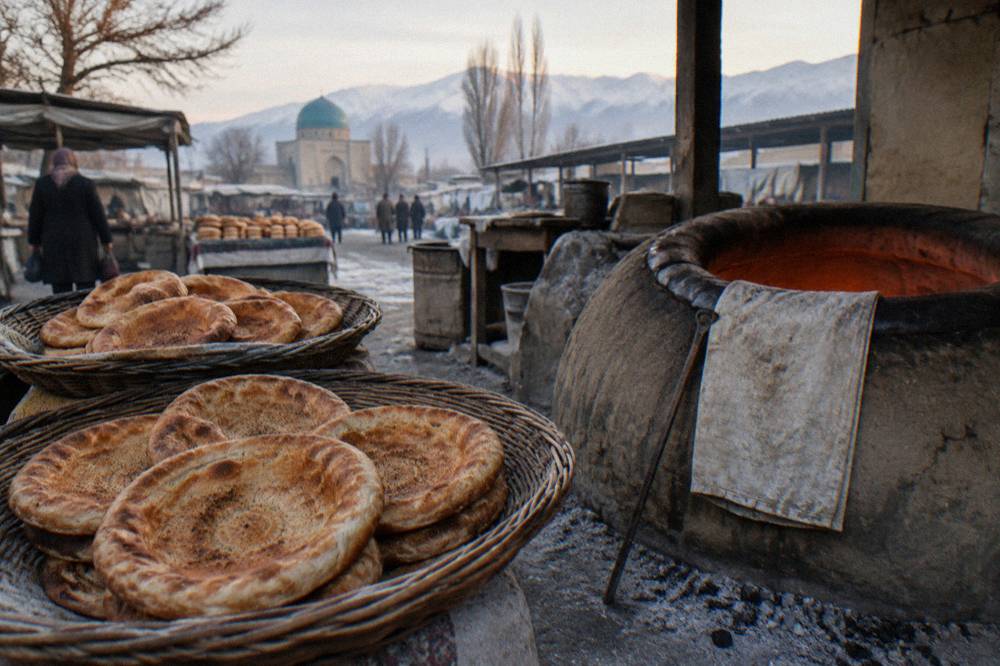
For travelers whose food interest is a genuine driver rather than a side note, the bread class below sits inside the most famous food city on the route.
What Crafts Made The Country Famous?
Uzbekistan is famous for silk carpets, suzani embroidery, woodcarving and paper made from mulberry bark, crafts that all grew from Silk Road trade and survive as working workshops today. Samarkand and Khiva are the two centers visitors can actually watch artisans in. Several bookable classes let you make, not just watch.
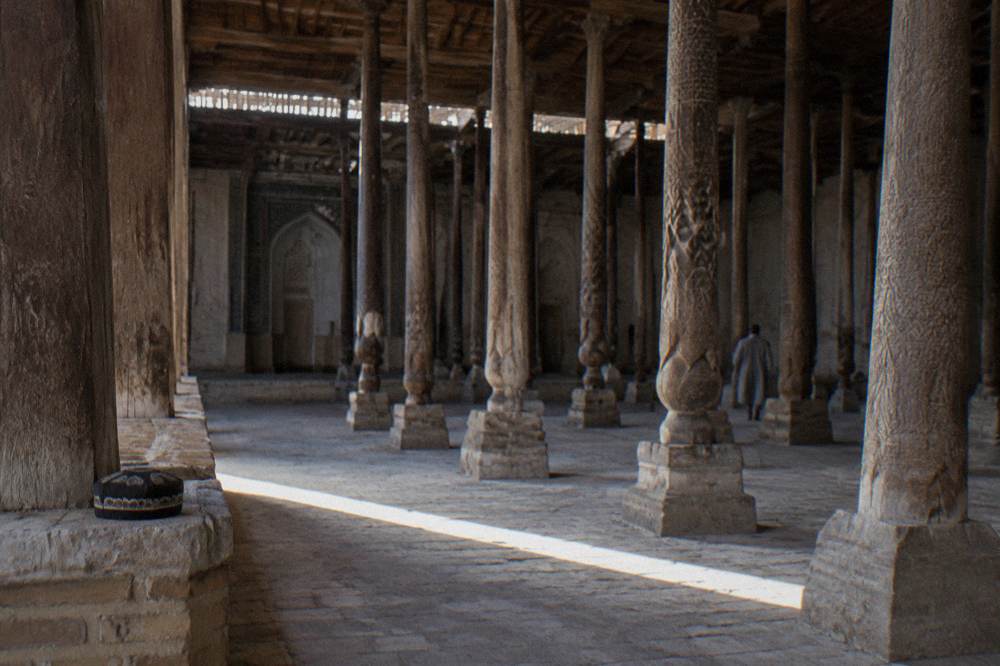
The craft story is the same story as the architecture: the caravan trade created demand, and cities built industries around it. Silk arrived with the route itself; carpet weaving and embroidery developed into regional styles that families still practice. Woodcarving in Khiva, with its distinctive carved doors and columns, is the easiest craft to see in situ because the old city is full of it. Mulberry paper, made by a method that turns bark into a smooth sheet, survived near-extinction and now runs as a small workshop outside Samarkand's center.
What marks the current moment is access. A generation ago these workshops were hard to arrange; now a visitor can book a two-hour session. The roster lists a silk carpet and mulberry paper workshop in Samarkand from $29 per person, 4.7 from 19 reviews, and a woodcarving masterclass in Khiva with local craftsmen from $20 per person, rated 5.0 from 61 reviews. Both include free cancellation. The classes suit families and curious travelers more than shoppers; you leave with something you made.
Suzani embroidery, the large hand-stitched textiles hung on walls and given at weddings, deserves a mention alongside them. It is the craft most likely to follow you home, since the bazaars of Bukhara and Samarkand sell both antique and newly made pieces, and the difference in price is wide. Buying well means looking at the density of stitching on the back of the piece rather than the brightness of the front, a check any workshop guide will happily demonstrate.
| Famous thing | Where to see or do it | Typical entry cost |
|---|---|---|
| Registan ensemble | Samarkand | About 70,000 to 100,000 som |
| Itchan Kala walled city | Khiva | About 150,000 som combined |
| Bukhara Ark fortress | Bukhara | About 60,000 som |
| Plov | Any city; best at bazaars | A few dollars a plate at local spots |
| Samarkand bread | Siyob bazaar, bakeries | Under two dollars a loaf |
| Silk carpet and paper crafts | Samarkand workshops | Workshop classes from about $29 |
Monument prices rise over time and the workshop listings vary by season, so treat every figure above as an "about" and check the live listing or on-site board for the current number.
Is The Country Famous For Trains Too?
Increasingly, yes. Uzbekistan runs the high-speed Afrosiyob trains linking Tashkent, Samarkand and Bukhara, a rarity in Central Asia, and a reported new service to Khiva launched in May 2026. For travelers, the rail network is what makes the famous three-city route workable in a week. Once your trains are sorted, the next question is what goes in your suitcase, and our guide to what a woman can wear in Uzbekistan, shorts included covers mosque dress codes and packing for both desert heat and winter cold.
The Afrosiyob covers Tashkent to Samarkand in about 2 to 2.5 hours and Samarkand to Bukhara in about 1 hour 12 minutes to 1 hour 50 minutes, with more than five departures a day on the main segments. Fares are secondary-source figures and move with dates: Tashkent to Samarkand economy seats run from about $25 to $40, business about 65 euros. The slower Sharq trains are cheaper and take about 3 hours to Samarkand. Foreigners can book on the official e-ticket site using passport details, with booking windows opening roughly 30 to 45 days ahead.
The Khiva line is the newsworthy one. A high-speed service reported to have launched in early May 2026 covers Tashkent to Khiva in about 7.5 hours, a trip that previously demanded an overnight train to Urgench or a domestic flight. Days, times and fares should be checked live on the railway site before you plan around it, and the fare was reported at about 780,000 som, roughly $65. For a fuller treatment of the network, our piece on Afrosiyob trains versus a private car compares the two ways of covering the route.
One practical note that surprises first-time visitors: entry is now simpler than the logistics. US citizens may enter visa free for up to 30 days from 1 January 2026 under a change announced on the government's tourism portal, and hotels register you automatically, per the US Embassy's guidance for private-stay registration rules. Check the current entry rules before you book, since passport validity advice varies between sources and the official pages carry the binding word.
Why Did These Places Become Famous At All?
Uzbekistan's cities became famous because the Silk Road ran through them, and the wealth the route generated paid for architecture ambitious enough to survive. Samarkand, Bukhara and Khiva were centers of trade, scholarship and craft for centuries, and their monuments were built to advertise that status. Modern fame is essentially rediscovery of what the caravan era left behind.
The honest framing is that none of this was built for tourists. The madrasahs were schools, the caravanserais were hotels for merchants, the bazaars were working markets, and the scale of the architecture was a statement of power and piety during the medieval period. When the sea routes bypassed Central Asia, the region's wealth drained away and the cities froze in place, which is precisely why the old centers survived as completely as they did. Khiva's wall is intact because there was never money to replace the city behind it.
Rediscovery came in waves. UNESCO listing put the three historic centers on the world map; easier visas and better trains put them within weekend-package reach. A walk through the Silk Road's modern reality makes the point that the route never fully died; it changed vehicles. Today the free-walking-tour scene reinforces the fame loop: a pay-what-you-want Samarkand city walk rated 4.85 from 1,078 reviews runs several days a week and meets near the mausoleum area, introducing travelers to the city for the price of a tip.
For most readers, the practical takeaway from all this fame is simple: the famous things cluster along one train line, and a single well-chosen package covers nearly all of them. If your interest is the monuments above all, start with a Samarkand-focused option; if it is the whole route, start with a multi-day package and let the trains do the distance.
Common Questions About Uzbekistan
What Is Uzbekistan Most Famous For?
Uzbekistan is most famous for its Silk Road cities, Samarkand, Bukhara and Khiva, and their blue-tiled medieval architecture, led by the Registan in Samarkand. Around that core it is known for plov, regional bread, tea culture, and craft traditions in silk, carpets, wood and mulberry paper.
what is the most famous landmark in uzbekistan?
The Registan ensemble in Samarkand: three monumental tiled facades around a single square. It is the country's most photographed site and appears on virtually every tour itinerary, with entry at about 70,000 to 100,000 som for the ensemble.
Is Uzbekistan famous for food?
Yes. Plov, the layered rice and lamb dish, is the national food, and the country's stamped tandoor breads are regionally famous, with Samarkand's dense loaves the best known. Kebabs, samsa, lagman and a strong green tea culture round out a cuisine built around the bazaar.
Which Silk Road city should I see first?
Samarkand, if you only see one. The Registan, Shah-i-Zinda and Bibi-Khanym together carry the country's most famous sights, and the city sits on the high-speed rail line from Tashkent. Travelers with a week usually add Bukhara and Khiva.
Are the craft workshops worth booking?
They suit travelers who want to do something rather than only look. The roster's options include a Samarkand bread class from $21, a Khiva woodcarving masterclass from $20 rated 5.0 from 61 reviews, and a silk carpet and mulberry paper workshop from $29. All three list free cancellation.
Can you see the famous sights by train?
Yes, that is the standard approach. High-speed trains link Tashkent, Samarkand and Bukhara, and a reported service to Khiva launched in May 2026 takes about 7.5 hours from Tashkent. Check the railway site for current days and times before planning.