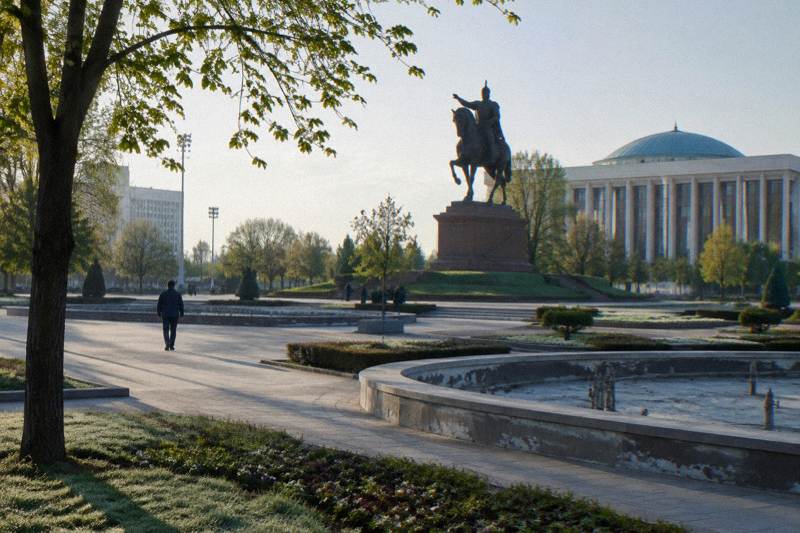
Is Uzbekistan Safe For Tourists In 2026
Uzbekistan's government has spent years courting foreign visitors, and the official advice from the US State Department has reflected that. This guide walks through what the advisory actually says, which parts of the country carry real restrictions, and the small daily risks that matter more than headlines.
Short answer
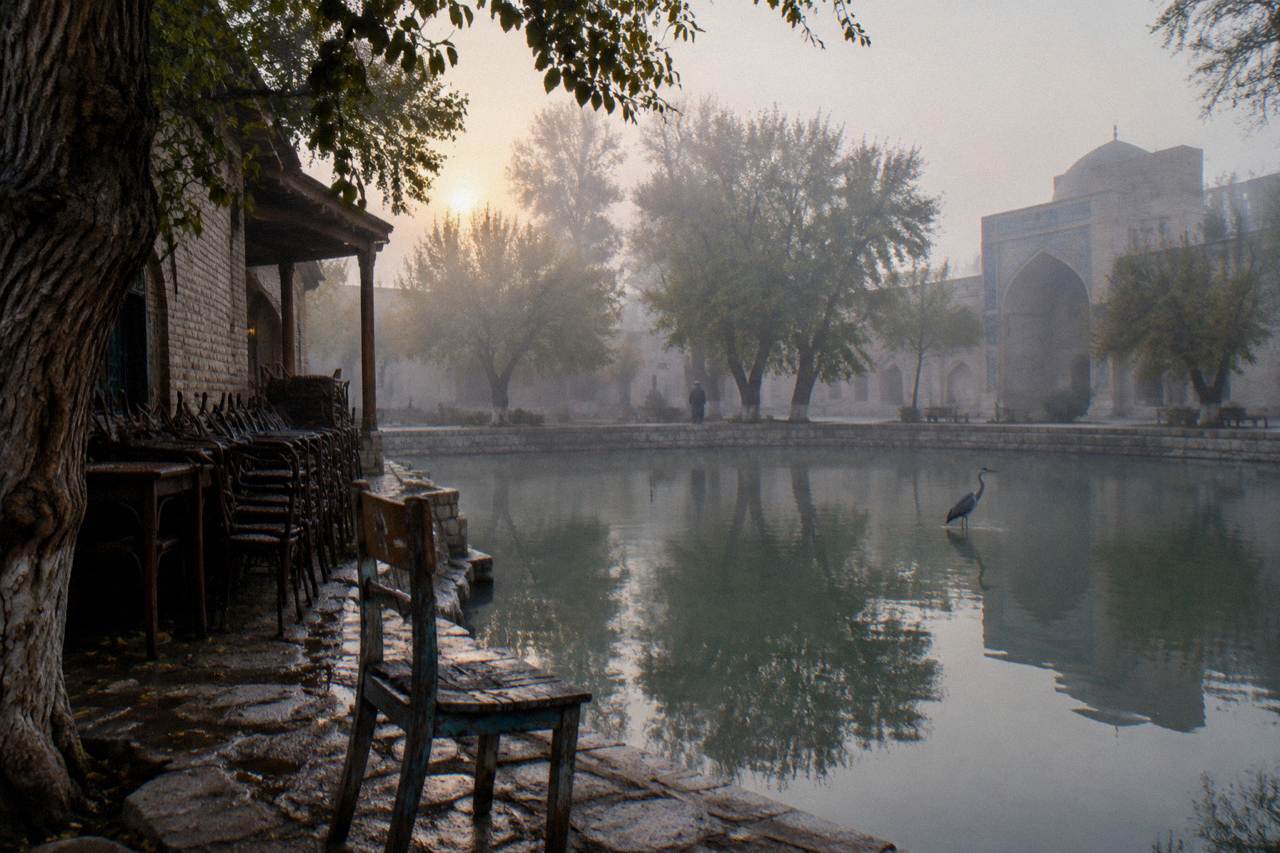
Yes, for most travelers. The US State Department's advisory for Uzbekistan stood at Level 1, Exercise Normal Precautions, as of January 2026, its lowest level. US citizens may enter visa free for up to 30 days from January 1, 2026. The main precautions are ordinary: avoid the Afghan border area, guard against taxi overcharging, and keep cash for small vendors.
Uzbekistan receives a steady stream of first-time visitors now that the entry rules have loosened, and the first question most of them ask is not about Registan or plov. It is whether the trip is safe. The short version: the country is one of the easier introductions to Central Asia, the official advisory level sits at the bottom of the scale, and the risks that actually touch travelers are mundane ones like taxi fares, not the dramatic ones people imagine. This guide, published through Uzbekistan Tour Packages, lays out what the record supports, city by city, with the caveats that matter.
The single biggest change for American readers happened before 2026 even began. Under a presidential decree announced in late 2025 and in force from January 1, 2026, US citizens may enter Uzbekistan without a visa for up to 30 days, a shift the Ministry of Tourism confirmed on its official portal. A country does not open its doors like that while expecting trouble with visitors. The full entry picture, including registration rules and passport questions, is covered in our separate guide to the 30-day visa-free rule for US citizens.
Is Uzbekistan Safe For Tourists Overall In 2026?
For the great majority of travelers, yes. Uzbekistan carries the lowest advisory tier the US State Department issues, Level 1, Exercise Normal Precautions, as of January 2026, and that level has been stable through the period our research covers. The risks that deserve your attention are ordinary travel risks: unregulated taxi fares and the physical realities of desert heat and long distances.
That advisory wording deserves a careful reading, because the official travel advisory for Uzbekistan stood at Level 1 in January 2026. Level 1 means exercise normal precautions, the same tier applied to most Western European countries. It is not a guarantee of anything, and no advisory is. What it signals is that the State Department's assessment, as of January 2026, found no elevated pattern of risk to travelers beyond the everyday. Safety in this guide is practical and on the ground, not crime statistics or country rankings., no "safest country" claims. Those either do not exist in verified form or mislead more than they inform.
Two structural factors do real work in the background. First, tourism is a priority sector for the Uzbek government, and the investment shows in renovated old towns, new train services, and police presence around the main monuments. Second, Uzbek society is famously hospitable toward guests, and the overwhelming experience reported by visitors is of being helped, not targeted. A traveler who keeps normal city habits will likely find the country calmer than most European capitals.
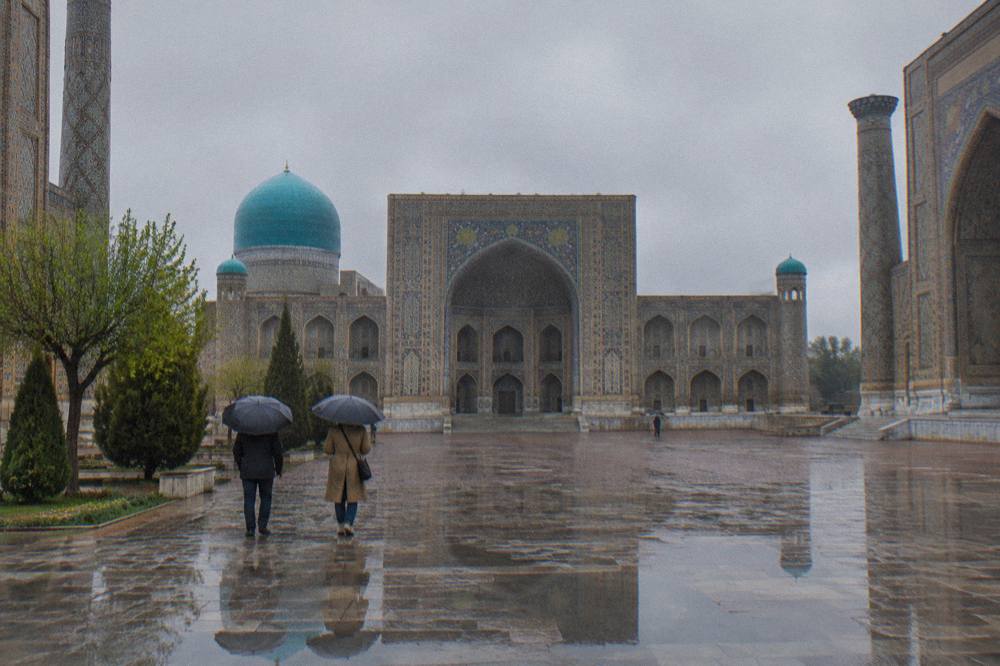
Because the circuit is predictable, the safety picture can be summarized city by city, and the table below does exactly that. Every row is a place a normal itinerary touches, so a reader can match it directly against their own plan.
| City on the circuit | Feel for a visitor | Watch-outs worth naming |
|---|---|---|
| Tashkent | Modern capital, metro, apps, visible security | Taxi overcharging without an app |
| Samarkand | Spread-out monuments, steady tour traffic | Heat, distances |
| Bukhara | Compact, walkable old town, evening life | Souvenir pricing, bill checks |
| Khiva | Small walled city, tourism-focused | Cash-only corners, summer heat |
| Chimgan and Charvak mountains | Organized day-trip territory | Weather and altitude, not crime |
There is one firm geographic restriction to plan around. The southern border zone with Afghanistan is closed and should simply not feature in any itinerary. Everything else on the classic Silk Road circuit, Tashkent, Samarkand, Bukhara, Khiva, and the mountains near Chimgan, sits far from it. Our guide to Silk Road routes and which one fits keeps every option well inside the safe zone.
What Are The Actual Risk Areas In Uzbekistan?
The one area to avoid outright is the southern border strip with Afghanistan, which is closed to travel. Beyond that, no city on the tourist circuit carries a specific official warning, and the practical risks are concentrated in predictable places: crowded markets, unbooked taxis, and road travel at night. A well-planned route encounters none of these at a level worth losing sleep over.
The table below is a planning summary, not an incident log. We print no statistics because our verified research record does not support any, and invented numbers would serve nobody.
| Area or situation | Risk profile for tourists | What to do |
|---|---|---|
| Afghan border zone (southern strip) | Closed, off-limits | Exclude from any itinerary |
| Tashkent, Samarkand, Bukhara, Khiva city centers | Low, normal city precautions | Standard vigilance at markets and stations |
| Street taxis hailed without an app | Overcharging, the most common complaint | Use a ride app or agree the fare first |
| Night driving on intercity roads | Reduced visibility, livestock on road | Book daytime trains and transfers |
| Mountain day trips (Chimgan, Amirsoy, Charvak) | Altitude and weather, not crime | Go with an organized day trip |
Notice what dominates the middle rows: money, not violence. The most frequent complaint in traveler reports is a taxi fare that tripled because no price was agreed in advance. Ride-hailing apps largely solve this in Tashkent; in the smaller cities, agreeing the fare before getting in does the same job. A related habit from our research file: tipping norms are modest and cash-based, roughly $10 to $20 a day for a private guide or driver and 5 to 10 percent in restaurants when no service charge applies, so keep small som notes for exactly these moments rather than negotiating every gesture.
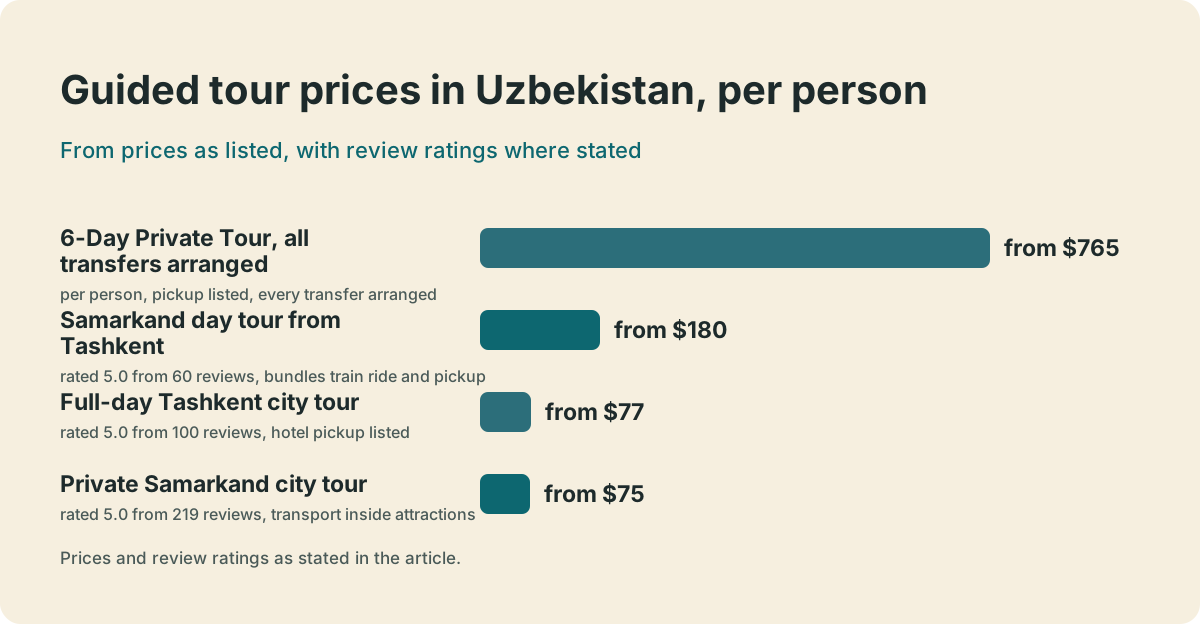
For travelers who prefer structure, the natural solution is letting someone else handle the logistics. A private package such as the 6-Day Private Tour to Tashkent, Khiva, Bukhara and Samarkand, from $765 per person with pickup listed, removes the taxi question entirely, since every transfer is arranged. If you are still weighing guided versus independent travel, our comparison of private and small-group tours in Uzbekistan breaks down the tradeoffs.
Is Tashkent Safe For Visitors?
Yes, and it is arguably the easiest city in the region for a first-time visitor. Tashkent is a modern capital with a metro, ride-hailing apps, malls, and a visible security presence around government buildings and the main sights. Normal big-city habits apply. The complaints travelers actually report are prosaic: taxi overcharging outside the apps, occasional language friction, and construction dust.
The city's layout works in the visitor's favor. The major sights, the Hazrati Imam complex, Chorsu Bazaar, the Amir Timur Square area, are polished and well-patrolled, and the metro doubles as an attraction in its own right with its tiled station halls. A new Islamic Civilisation Centre opened near the Hazrati Imam complex around March 2026, adding another landmark to a district that was already the calm heart of the old city.
The practical risks shrink further if you put a local guide on the first day. The full-day Tashkent city tour, rated 5.0 from 100 reviews and from $77 per person, covers the layout with hotel pickup listed, which means no negotiating your first taxi in an unfamiliar city.
After that first orientation day, most visitors find Tashkent easy to get around on their own. Keep your phone and wallet in front pockets at Chorsu, use the same caution you would at any crowded market, and treat unsolicited help at ATMs with polite suspicion, a rule that applies in every city on earth.
Is Samarkand Safe To Walk Around?
Samarkand is safe and relaxed, with the main risks limited to heat and distances. The Registan ensemble and the old city are walkable and well-trodden by tour groups. Reports from visitors center on pushy souvenir sellers, not anything threatening.
The geography matters more than crime here. Samarkand's sights are spread out, the walk from Registan to Shah-i-Zinda is long and shadeless in summer, and July and August highs average around 34 to 35 degrees Celsius per long-term climate data. Heat, not hostility, is the thing that catches visitors out. Carry water, start early, and break the middle of the day. Our month-by-month guide to the best time to visit Uzbekistan shows why spring and autumn windows are the comfortable ones.
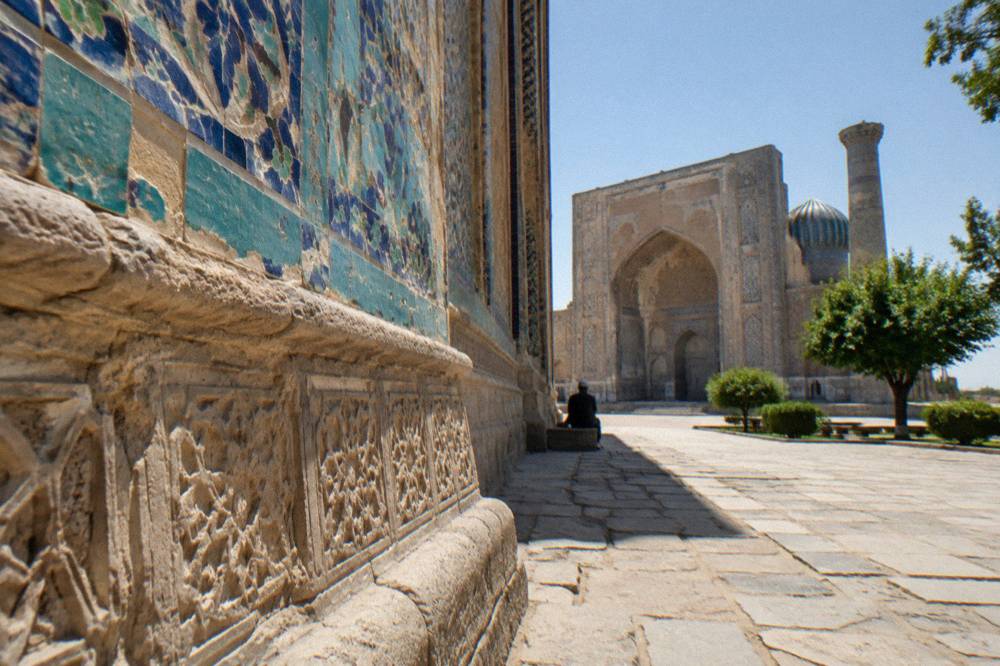
At the monuments themselves, two habits cover most of the risk. Agree any photo fee or guide fee before the service happens, and buy tickets only at the official counters, where foreign-visitor entry to the Registan ensemble runs about 70,000 to 100,000 som with increases reported, so carry cash in local notes. Nothing about this is unique to Uzbekistan; it is standard practice at major sights from Istanbul to Delhi.
Guided options are abundant and inexpensive. A private Samarkand city tour with transport inside the attractions, rated 5.0 from 219 reviews and from $75 per person, handles both navigation and ticket counters, while the all-inclusive Samarkand day tour from Tashkent, rated 5.0 from 60 reviews and from $180 per person, bundles the train ride and pickup.
Is Bukhara Safe?
Bukhara is very safe by any urban standard, and its old town is compact enough that most visitors walk everywhere at all hours without issue. The reported problems are the small stuff: souvenir pricing that flexes with the customer, restaurant bills that need checking, and summer heat that rivals anywhere in the region. It is a city built for strolling.
The old town around Lyabi-Hauz is a low, enclosed maze of restored merchant houses, and the atmosphere in the evenings, families out, tea houses full, is one of the pleasantest in the country. The practical guidance is short: check the bill for a service charge before tipping, agree taxi fares in advance since app coverage is thinner than in Tashkent, and keep small notes for the monument entrances, about 60,000 som for the Ark according to secondary sources, with prices rising over time.
A walking tour is the cheapest safety upgrade available. The small-group Bukhara walking tour, rated 4.9 from 633 reviews and from $23 per person, gives you the layout, the history, and a local contact for the rest of your stay, in under four hours.
Bukhara is also where the question of road travel first comes up for most routes, since the drive toward Khiva crosses open steppe. Daytime travel on this corridor with a booked transfer or tour vehicle is routine; the Khiva-Bukhara transfer that includes the desert fortresses, rated 5.0 from 111 reviews and from $220 per person, turns the long day into the sightseeing itself. Independent travelers should simply avoid arriving anywhere after dark.
Is Khiva And The Road There Safe?
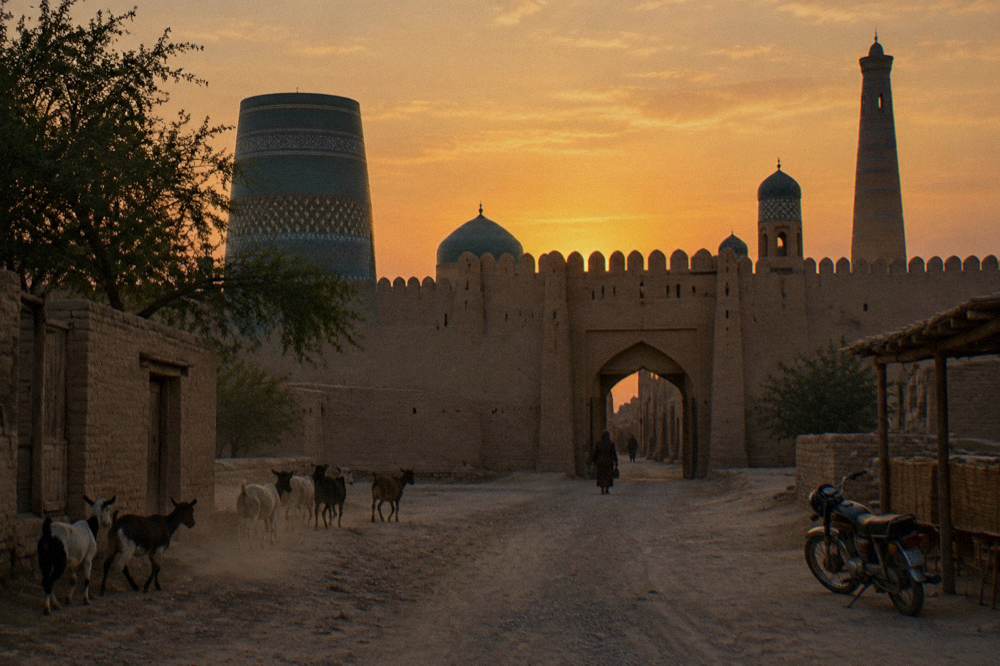
Khiva is safe, small, and heavily geared to tourism, but the journey there deserves more planning than the destination. Whether you take the new train from Tashkent, launched in May 2026 by report, or a road transfer through the Kyzylkum fringe, the guidance is the same: travel in daylight, use booked transport, and carry cash, because card acceptance thins out west of Bukhara.
Khiva's Itchan Kala is a walled inner city where everyone walks. The risks are heat in summer, with July highs around 36 to 37 degrees Celsius per climate data for the Urgench area, and the entrance fee structure: a standard combined ticket runs about 150,000 som, with a fuller ticket at about 240,000 to 250,000 som, per secondary sources. Prices rise over time, so check on site. Inside the walls, the atmosphere is quiet and family-oriented, particularly in the evenings.
The wider region has two excursions worth a safety note. Day trips from Khiva to the ancient desert fortresses are routine with organized tours, from $84 per person with a meal listed on one listing rated 4.7 from 151 reviews. The Aral Sea trip is a different matter: it is a genuine overland expedition, two days on rough roads, sold as a 2-day package from $380 per person and rated 4.9 from 61 reviews. It is safe with a reputable operator and genuinely unpleasant to attempt independently without experience and a suitable vehicle.
For anyone assembling the full circuit, the practical safety argument for packages is strongest on exactly this western leg, where train days are limited and road options reward local knowledge. That is one reason the 6-day private circuit above is a sensible choice for a first visit.
What Are The Common Scams And Petty Risks?
The scam list for Uzbekistan is short and familiar: inflated taxi fares and souvenir price flexibility. None of these are violent, all of them are avoidable with habits you already own, and the ride-hailing apps plus a willingness to walk away defeat most of them.
Taxi overcharging is the number one complaint in traveler reports, and it is almost entirely self-inflicted by travelers who get in without a price. The fix is mechanical: use an app in Tashkent, and elsewhere state your destination and agree the fare before the door closes. If the driver quotes a number that feels high, counter calmly or find another car; supply is never short.
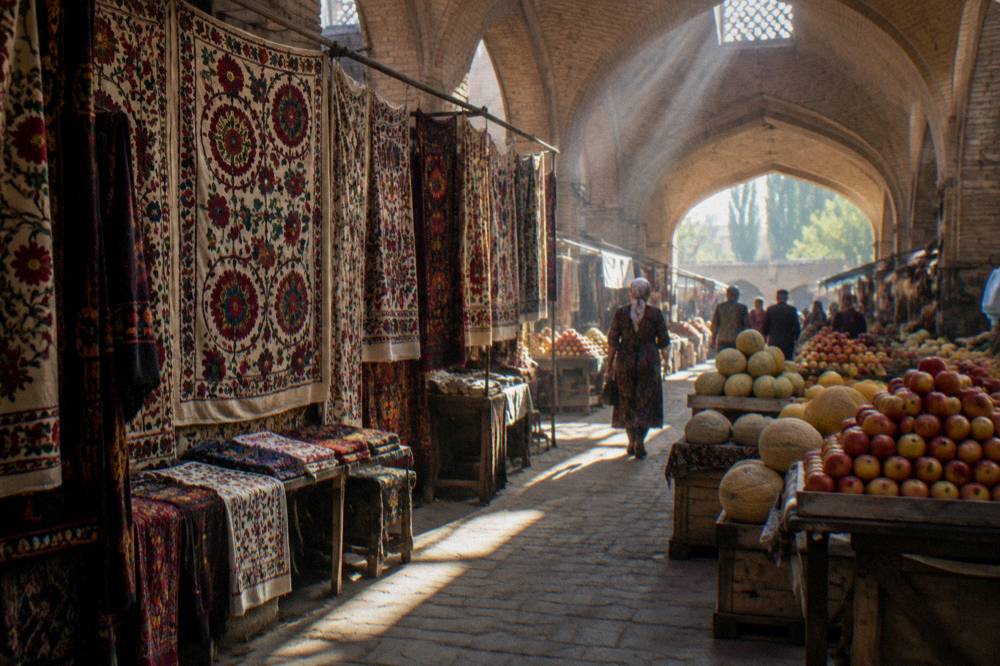
The bazaar and souvenir scene is a negotiation culture, and the first price quoted to a foreigner is usually not the transaction price. Decide what an item is worth to you, offer it, and stay cheerful. The only genuinely annoying pattern reported at the monuments is the unofficial "guide" who attaches himself and expects payment; a firm no thank you, repeated if needed, ends it. Genuine licensed guides identify themselves and their rates up front, and the difference is obvious within a minute of conversation.
Restaurant bills deserve a glance rather than an audit. Where a service charge is included, tipping beyond it is unnecessary; where it is not, 5 to 10 percent is the local norm. If a total looks wrong, querying it politely in front of the register usually resolves it. This is the same playbook as southern Europe, and it works the same way.
Is The Food And Water Safe?
The food is a highlight of the trip and is generally safe; the water from the tap is not for drinking. Eat at busy places, drink bottled or filtered water, and apply the usual caution with raw produce washed in local water. Plov, samsa, shashlik, and the breads are cooked at high heat, which is your friend.
Street food in Uzbekistan is mostly freshly cooked at high temperatures in front of you, which puts it in a lower risk category than pre-prepared items anywhere. Choose stalls with a fast turnover and a local crowd, watch the plov being stirred from the morning batch, and let very hot food cool rather than seeking lukewarm items. Fresh bread from a tandyr oven is about as safe as food gets.
The tap water is the one firm "no." Bottled water is cheap and everywhere, and most hotels supply it. Travelers with sensitive stomachs should skip raw salads and unpeeled fruit for the first days, a standard precaution across the region, not a specific warning about Uzbek hygiene. Wash hands as you would at home, and carry the usual remedies in case a day of adjustment is needed.
Alcohol is available but not central to the culture; tea is. Accepting tea when offered is a small gesture that opens doors, and the tea houses are among the safest, most family-friendly spaces in the country.
Is Uzbekistan Safe For Solo Travelers And Women?
Solo travel and solo female travel in Uzbekistan are widely reported as comfortable, with the caveats that apply across the region: modest dress reduces friction, unwanted attention is usually verbal and best met with indifference, and nights are quieter in the old towns than in Western capitals. Our research record supports no statistics either way, so we report conditions, not numbers.
Cultural norms run more conservative than the dress codes of Western Europe, and dressing with that in mind is less about safety than about smooth interactions. Shoulders and knees covered at religious monuments, and modest street wear elsewhere, keeps everything easy. For a fuller discussion, see our piece on what to wear in Uzbekistan as a woman.
Solo travelers of any gender report that the main challenge is not safety but logistics: limited English outside the tourist bubbles, cash-only corners, and train tickets that reward advance booking. Booking opens about 30 to 45 days ahead on the railway's e-ticket site, and international cards work with varying success, so a plan B of cash helps. Every one of these frictions disappears inside a guided structure, which is why solo visitors make up a large share of package bookings.
Families travel comfortably too. The distances are the main strain with children, not anything threatening, and the day-trip infrastructure from every base city is mature.
Do Guided Tours Make Uzbekistan Safer?
Honestly, yes, in the boring and valuable sense: a good guided package removes the risk vectors that actually bother travelers, unbooked taxis, fare negotiation, ticket queues, arriving after dark, while adding a licensed local who can resolve any problem in the local language. Nothing about Uzbekistan requires a guide for safety, but a guide compresses the learning curve.
The comparison is straightforward when laid side by side:
| Travel task | Independent | With a private package |
|---|---|---|
| Airport and station transfers | Negotiate or app, varies by city | Pickup listed in the package |
| Intercity trains | Book yourself, 30 to 45 days ahead | Operator books and confirms |
| Evening arrivals in a new city | Manageable but fiddly | Timed to daylight where possible |
| Language at pharmacies, police, clinics | English is limited outside tourism | Guide translates |
| Monument tickets and photo fees | Pay and negotiate yourself | Handled by the guide |
| If something goes wrong | Your problem | Operator's problem |
The roster on this site illustrates the price band. The Silk Road Secrets tour, a 5-day circuit from $856 per person with pickup and meals listed, sits mid-range; the 6-day private no-meals option from $765 is the bare-bones entry; and a premium 7-day version runs from $1,450. All three list free cancellation, which matters for safety-adjacent peace of mind: you are not locked in if plans shift.
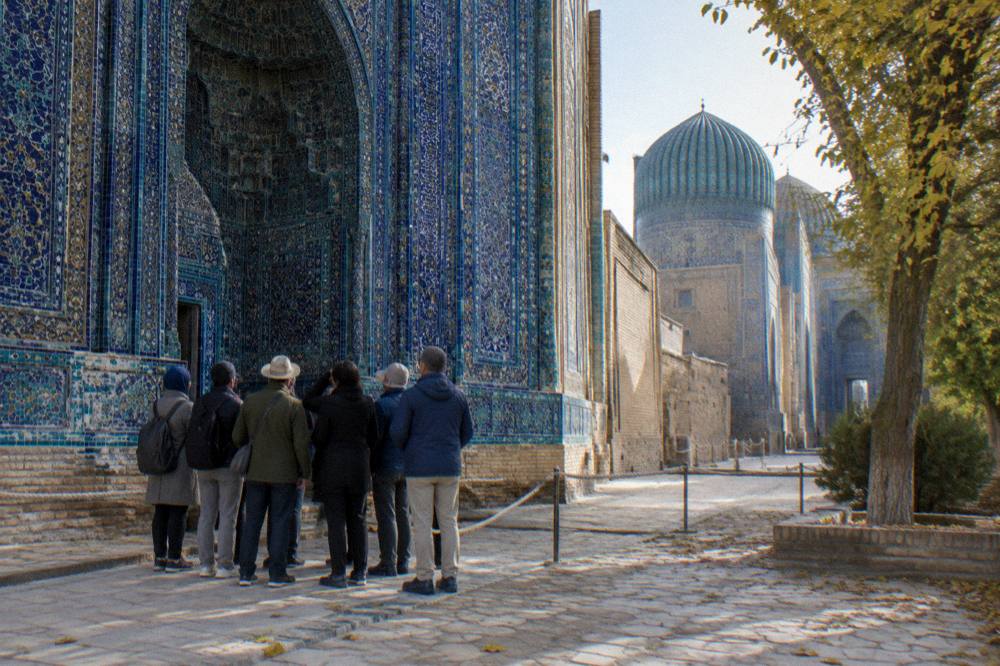
Guides also carry institutional knowledge that no app supplies: which border checkpoint paperwork matters, which mountain road closes in weather, which pharmacy is reliable at night. None of this is dramatic until the day it is, and then it is worth every dollar of the guide's fee.
What Should You Do In An Emergency?
Prepare three things before departure: travel insurance that covers medical evacuation, a copy of your passport stored separately from the passport, and the contact details for your embassy. The US Embassy in Tashkent is the standing point of contact for American citizens, and hotels register you automatically on arrival, which keeps your stay fully in order.
That registration point is worth expanding, because it is the one administrative requirement travelers overlook. Hotels and licensed accommodations register foreign guests automatically, per the US Embassy's own guidance; the burden falls on the property, not on you. Keep the registration slips your hotels give you until departure, in case any exit check asks for them, and see the embassy's registration guidance for the details.
For medical issues, pharmacies are widespread in the cities and cash is king, at about 11,900 som per US dollar in October 2026, so carry a modest float of small notes. Serious incidents are rare, but insurance that includes evacuation is non-negotiable for anywhere in Central Asia. Enroll in the State Department's traveler program for alerts, and note that the advisory itself, Level 1 as of January 2026, is reissued as conditions change.
One last habit ties the whole file together: share your itinerary with someone at home, whether that is a booked package's day-by-day plan or your own route. It is the same advice for Lisbon and for Samarkand, which is rather the point of this entire guide.
Before the final questions, here are three listings worth a look if this article has settled the safety question and moved you on to planning:
Common Questions About Safety In Uzbekistan
Is Uzbekistan safe for tourists in 2026?
Yes, by the standard measures. The US State Department's advisory stood at Level 1, Exercise Normal Precautions, as of January 2026, its lowest tier. US citizens may also enter visa free for up to 30 days from January 1, 2026. Normal city precautions around taxis, crowds, and cash apply.
Is Uzbekistan safe for US citizens?
Yes, and entry is simpler than it has ever been: US citizens may enter visa free for up to 30 days under a decree in force from January 1, 2026, as confirmed on the official government tourism portal. Check the current entry rules before you book, and enroll in the State Department's traveler program for updates.
What is the riskiest part of Uzbekistan for tourists?
The southern border zone with Afghanistan, which is closed and should be excluded from any itinerary. Everywhere on the classic circuit, Tashkent, Samarkand, Bukhara, Khiva, and the Chimgan mountains, is ordinary tourist territory where the main risks are taxi overcharging and heat.
Is it safe to drink tap water in Uzbekistan?
No. Drink bottled or filtered water throughout the country; it is cheap and available everywhere, and most hotels supply it. Freshly cooked food at busy stalls and tea houses is generally safe and is one of the best parts of the trip.
Is Uzbekistan safe for solo female travelers?
Solo female travelers report comfortable trips, with the regional caveats: modest dress reduces friction, unwanted attention is typically verbal and best ignored, and conservative norms apply at religious monuments. Our research record supports no statistics, so treat this as reported conditions rather than a guarantee.
Do I need a guide to be safe in Uzbekistan?
No, a guide is not required for safety anywhere on the main circuit. A guided package does remove the most common annoyances, unbooked taxis, ticket queues, late arrivals, and adds a local speaker for anything unexpected. Prices start around $765 for a private 6-day circuit.