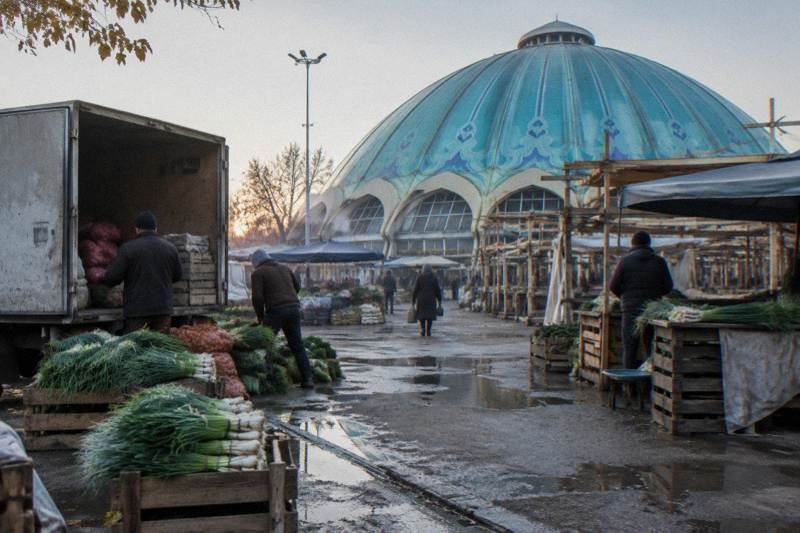
Uzbekistan Visa For US Citizens: Visa Free For 30 Days Since 2026
The single biggest barrier to an Uzbekistan trip for Americans disappeared at the start of 2026. A presidential decree now lets US citizens enter visa free for up to 30 days, with nothing to apply for and nothing to pay.
Short answer
US citizens can enter Uzbekistan without a visa for up to 30 days for tourism or short business, effective 1 January 2026, under a presidential decree published on the official government portal. A valid passport is enough. Hotels register you automatically. Check the current entry rules before you book.
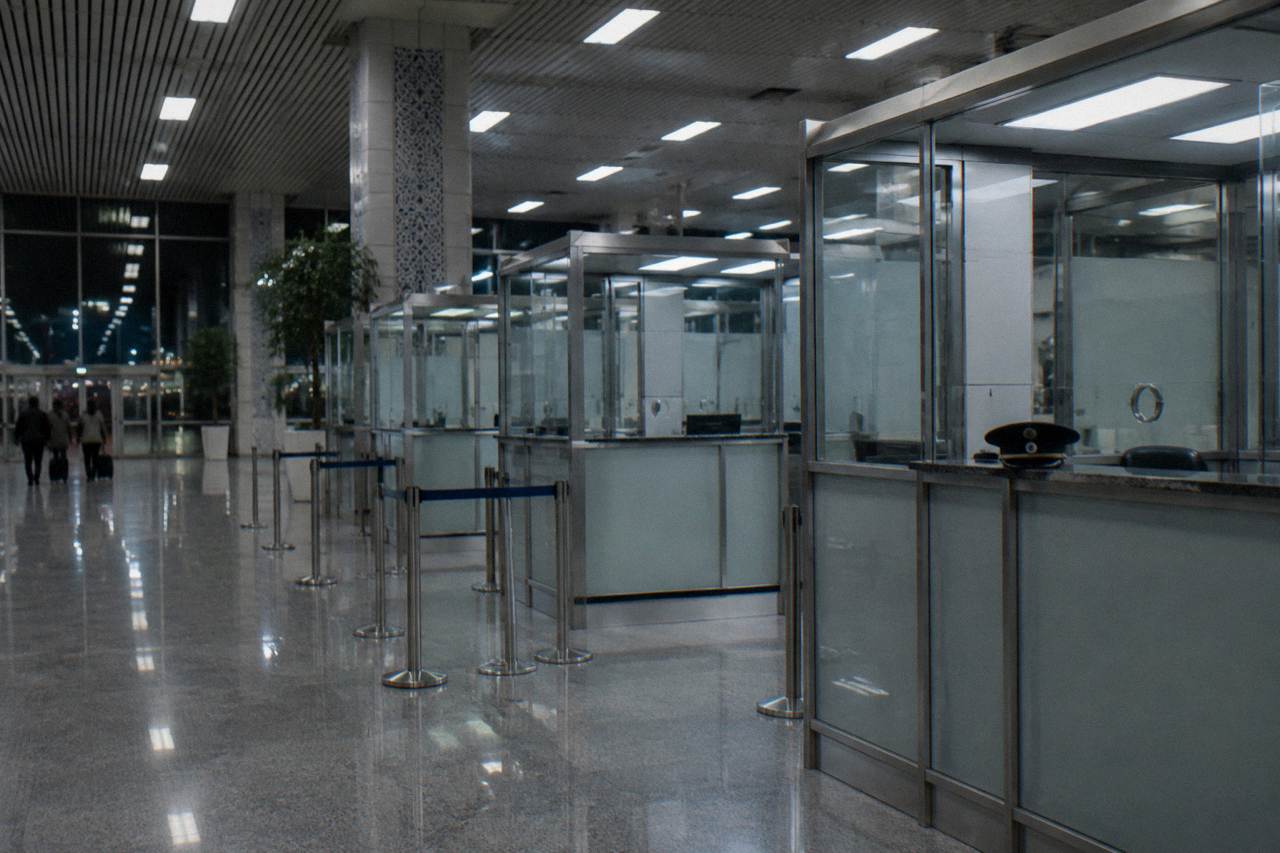
The single biggest piece of paperwork for an American trip to Uzbekistan stopped existing at the start of 2026. Under a presidential decree signed in November 2025, citizens of the United States may now enter Uzbekistan without a visa for stays of up to 30 days, for tourism or short business, with nothing to apply for and nothing to pay. The Ministry of Tourism announced the change on the official government portal, and it replaced an older system in which most US citizens under 55 had to obtain an e-visa before flying.
That shift turns Uzbekistan from a trip that needed advance administration into one you can decide on fairly late, the way you might decide on Portugal or Japan. It also removes a step that used to trip people up: the old e-visa portal, the photo uploads, the processing window. None of that applies to an American passport holder anymore. What remains is a handful of practical rules about registration, passports and money that are easy to handle but worth understanding before you commit to flights and a tour.
This guide walks through the official entry position, how the registration system works when hotels do it for you, what to verify before you book, and the safety picture the US government itself paints. Where a rule is not settled, this site says so rather than guessing, because a few popular numbers floating around the internet are either outdated or disputed between sources.
What Changed For US Citizens Visiting Uzbekistan In 2026?
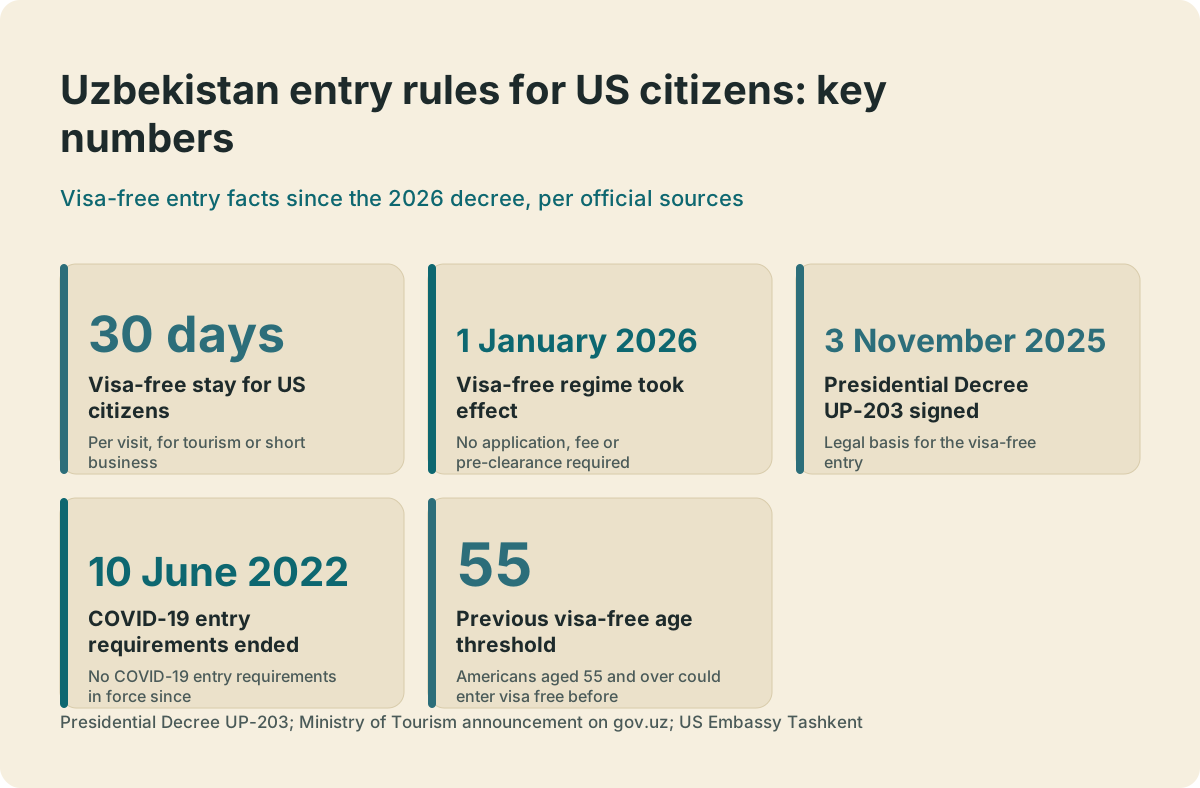
On 1 January 2026 a visa-free regime for US citizens took effect, allowing stays of up to 30 days for tourism or short business with a valid passport alone. It was created by Presidential Decree UP-203, signed on 3 November 2025, and announced through the Ministry of Tourism's official channel. No application, fee or pre-clearance is part of the process.
Before the decree, the rules were uneven. Americans aged 55 and over could already enter visa free, while most younger travelers needed an electronic visa obtained in advance through the national e-visa portal. That system still exists, but only for nationalities that still require one, and it is no longer part of the American travel path. The decree removed the age split entirely: every US citizen now qualifies for the same 30-day visa-free window.
Thirty days is generous for a country whose classic circuit, Tashkent to Samarkand to Bukhara to Khiva, fits comfortably inside a week or ten days. Even the longest itinerary most travelers consider, a two-week route that adds the Aral Sea or the Fergana Valley, uses barely half the allowance. The limit applies per entry, and the decree language covers tourism or short business stays, so anyone planning to work, study or stay longer should check the current rules for the relevant category rather than assuming the tourist window stretches.
One practical note on timing: the change is recent. Airlines, guidebooks and third-party visa-service websites are still catching up, and some pages still describe the old e-visa requirement as if it were current. The authoritative statement is the government's own announcement, published at gov.uz, the official state portal. If a visa service tries to sell you an Uzbekistan visa as an American in 2026, that is a signal to close the tab.
Do US Citizens Need A Visa For Uzbekistan?
No. Since 1 January 2026, US citizens do not need any visa for Uzbekistan for stays of up to 30 days, arriving with a valid US passport alone. The rule comes directly from the presidential decree and the Ministry of Tourism's announcement, and it applies to tourism and short business trips. Longer stays still need the proper visa category.
Here is the official entry picture in one table, restricted to what the primary sources actually state:
| Entry fact | Official position | Source tier |
|---|---|---|
| Visa requirement for US citizens | None for stays up to 30 days, tourism or short business | Official, gov.uz |
| Effective date | 1 January 2026 | Official, gov.uz |
| Legal basis | Presidential Decree UP-203, signed 3 November 2025 | Government announcement |
| Application or fee | None for the visa-free entry | Official, gov.uz |
| Hotel registration | Hotels register you automatically | Official, US Embassy Tashkent |
| COVID-19 entry requirements | None since 10 June 2022 | Verified research record |
The 30-day window is per visit. Travelers who want to stay longer, or whose trip is something other than tourism, fall outside what the decree covers, and the right answer for them starts with the current rules on the government's own channels rather than a forum thread. For a typical tourist arriving on a nonstop from New York, though, the process at the border is now as simple as it is for most of Europe: passport, stamp, through.
It is worth being precise about what "visa free" does not mean. It does not guarantee entry; border officers everywhere retain discretion. It does not remove the registration system described below. And it does not cover the mountain of adjacent questions travelers ask, from passport validity to customs limits, where this site deliberately prints no number because the sources disagree or the figure is not verified. The habit to build is simple: check the current entry rules before you book, then again before you fly.
For travelers whose next question is "so what do I actually do with my 30 days," the classic answer is the Silk Road circuit, and the market now offers it at genuinely different price points. The trio below spans a budget private six-day package, a premium seven-day private itinerary and a compact three-day bullet-train sampler, all departing Tashkent.
How Does Hotel Registration Work In Uzbekistan?
Foreign visitors in Uzbekistan must be registered with the local authorities, and the good news for tourists is that hotels and licensed accommodations handle it automatically when you check in. The US Embassy in Tashkent confirms this. Keep your registration confirmation, because border officers can ask for it when you leave the country.
Registration exists so the state knows where foreign visitors are staying. In practice, a tourist who sleeps in hotels never deals with it directly: the front desk records your passport details, submits them, and the matter is closed before you have unpacked. The place travelers get caught is private accommodation. If you stay with friends, in an unlicensed rental or anywhere that is not a registered hotel or guesthouse, the obligation falls on you and your host, and the mechanism for that, an online portal with host involvement, exists for exactly this case.
This site deliberately does not print a deadline in days for private-stay registration, because the sources conflict: one reading of the rules points to registration on arrival, another to a short working-day window. What is safe to say, and what the embassy's own guidance supports, is that private stays should be sorted immediately on arrival, not a few days in. The embassy's page on the subject is public at uz.usembassy.gov, registration in Uzbekistan, and it is the right page to read if your trip includes any night outside licensed accommodation.
| Where you stay | Who registers you | What you should do |
|---|---|---|
| Hotel or licensed guesthouse | The accommodation, automatically | Keep the confirmation slip or printout |
| Private home or unlicensed rental | You, with your host, via the online system or local office | Arrange it on arrival, not days later |
| A booked multi-day tour with hotels | Each hotel as the tour moves cities | Hold on to slips from every city |
Tour travelers have the easiest version of this. A package that moves you from Tashkent to Khiva to Bukhara to Samarkand, checking into a different hotel every night or two, generates a paper trail of registration confirmations without you lifting a finger. The only habit worth forming is not throwing those slips away mid-trip, because the exit check is where they occasionally matter.
A reader who has just confirmed that entry is frictionless is usually past the researching phase and into the booking phase. If that is you, the budget six-day private tour from Tashkent is the natural first candidate: it covers the full four-city circuit, it lists free cancellation, and it is the kind of thing you can reserve while your flights are still in progress. You can see the six-day private tour's full listing alongside the other Silk Road options.
What Should US Travelers Check Before Booking A Tour?
Check three things before paying for a tour: that your passport is in good standing against the current entry rules, that the tour's start date fits inside your 30-day visa-free window with buffer to spare, and that the listing states what you assume it states, including pickup, cancellation and meals. Where a rule is disputed, verify on official channels rather than a booking page.
The first check costs nothing. Entry rules change, and the visa-free regime is young enough that reprinting a summary from memory, yours or a blogger's, is how people get caught out. The habit this site recommends everywhere, including in its guide to what a multi-day tour actually includes, is to read the current official position before any non-refundable payment. That applies to passport validity too: sources give differing advice on how much validity you need beyond your stay, so the only defensible instruction is to check your passport against the current rules rather than trust a number copied from an old forum post.
The second check is arithmetic. A 30-day allowance sounds infinite until you remember it includes every day you are in the country, not just touring days. An eleven-day package plus two buffer days either side barely dents it, but an open-ended stay with a "we'll see" return date is how people overstay by accident. Overstays in Uzbekistan carry fines, and they are entirely avoidable with a calendar.
The third check is reading listings literally. Operators describe inclusions differently, and the same city pair can be sold with meals, without meals, with pickup, or without. Six-day private tours run from $632, with the Tashkent, Khiva, Bukhara and Samarkand circuit from $800. per person that lists meals and pickup, and a same-length private tour from $765 per person that lists pickup and free cancellation but no meal line: neither is hiding anything, they are simply different products, as the site's comparison of private and small-group formats explains in depth.
| Pre-booking check | Why it matters | Where to verify |
|---|---|---|
| Passport standing against current entry rules | Validity advice varies between sources; do not rely on a copied number | Official government guidance |
| Trip length versus the 30-day window | Overstays carry fines, and buffer days count | Your own calendar |
| Tour inclusions: pickup, meals, cancellation | Listings differ even on identical routes | The operator's live listing |
| Registration coverage | Hotels register you; private stays do not | US Embassy registration page |
| Advisory status | Level 1 as of January 2026, but check for updates | US State Department advisory |
None of this is heavy lifting. A US traveler who spends twenty minutes on these five lines before booking is, in practical terms, finished with Uzbekistan's bureaucracy for the whole trip. The remaining work is choosing a route, which is the enjoyable part.
Is Uzbekistan Safe For American Tourists?
The US State Department rates Uzbekistan at Level 1, Exercise Normal Precautions, as of January 2026, which is the lowest advisory level and the same rating given to most of Western Europe. There are no widespread embassy alerts for tourists. The standard guidance applies: avoid the closed southern border area with Afghanistan and take ordinary city precautions. For more on common scams, transport safety, and how Uzbekistan compares with its Central Asian neighbors, see our detailed safety guide for tourists in Uzbekistan.
Level 1 is the calmest language the State Department uses. It does not mean risk-free, no country is, but it means the department sees nothing beyond ordinary travel common sense for the country as a whole. The advisory is public at travel.state.gov, the Uzbekistan travel advisory, and checking it before a trip is a two-minute task worth doing regardless of what any tour site, including this one, says about safety.
For Americans specifically, the reception is a friendly one. Uzbekistan opened to Western tourism comparatively recently, and US visitors are still novel enough outside the main cities to be greeted with curiosity rather than indifference. The site's longer piece on the question, is Uzbekistan friendly to Americans, covers the social texture in detail. The short version: the visa change was widely reported in the local press as a welcome sign, and travelers consistently describe warm interactions in bazaars, train stations and family-run guesthouses.
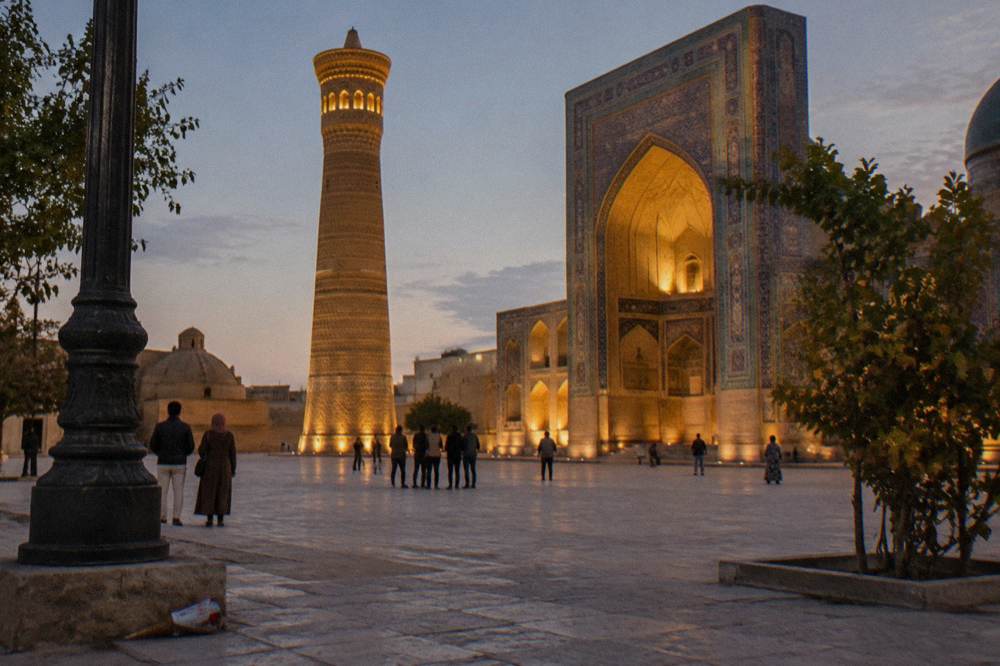
The ordinary precautions are genuinely ordinary. Watch belongings on crowded trains and at bazaar stalls, agree taxi fares before getting in or use a ride app, and keep your hotel registration slips. The one geographic note that appears in official guidance is the southern border area with Afghanistan, which is closed and should stay off your itinerary; no classic Silk Road route goes near it. The mountains north of Tashkent, the desert fortresses around Khiva and the whole Tashkent-Samarkand-Bukhara corridor are all ordinary tourist territory.
Health-wise there are no vaccination requirements for entry, and there have been none since mid-2022. Standard travel clinic advice about routine vaccinations applies the same way it does for any international trip, and travelers with specific health questions should ask a clinic rather than a tour operator.
How Does Arrival In Tashkent Actually Work?
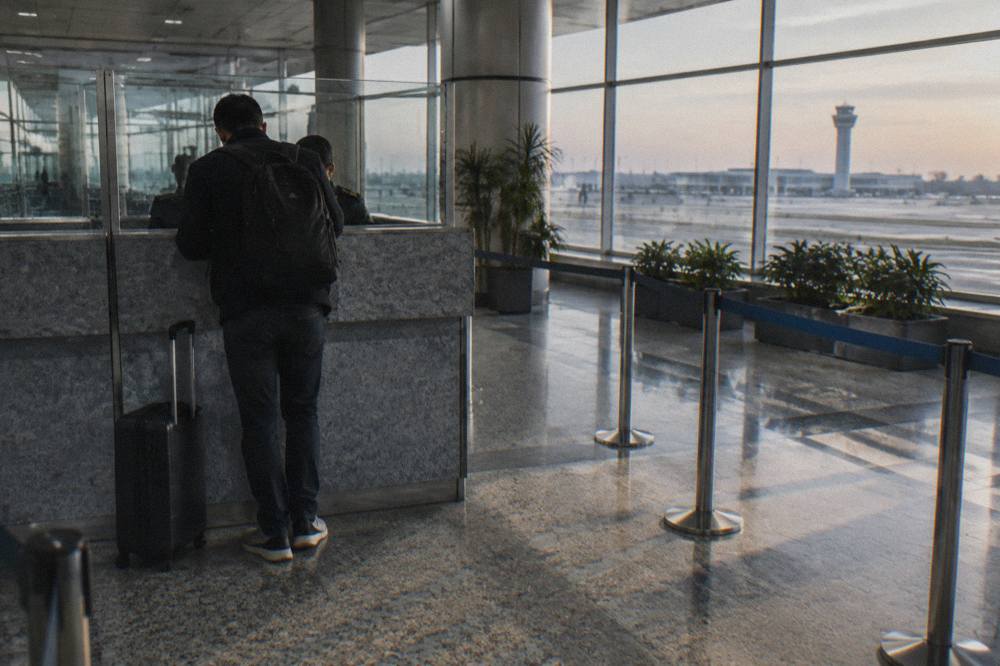
Arrival is now a standard border crossing: present your US passport, receive an entry stamp, collect bags and pass through customs, with no visa paperwork, no fee and no form specific to Americans. Tashkent International Airport is the main gateway, served by nonstop flights from New York in about twelve hours, and the city center is a short ride away.
The nonstop from New York is the headline logistics fact for East Coast travelers: Uzbekistan Airways flies JFK to Tashkent several times a week, which turns a trip that once required a connection through Istanbul or Moscow into something closer to a transatlantic hop. From Europe, Frankfurt and Istanbul both offer direct options. Once landed, the arrivals process reflects the new reality: the officer scans the passport, checks the stamp and waves you through, in the manner Americans are used to from visa-free destinations.
Customs is the one place where this site declines to print numbers. There is a cash declaration threshold above which you must declare currency on the way in, and sources disagree on the exact figure in som, so the honest instruction is to declare anything substantial or simply carry modest cash and withdraw locally. Cards work at mid-range and upper hotels, malls and many tourist restaurants in Tashkent, Samarkand, Bukhara and Khiva, while guesthouses, bazaars, taxis and monument ticket desks run on cash, so plan for both. In October 2026, the exchange rate ran about 11,900 som per US dollar.
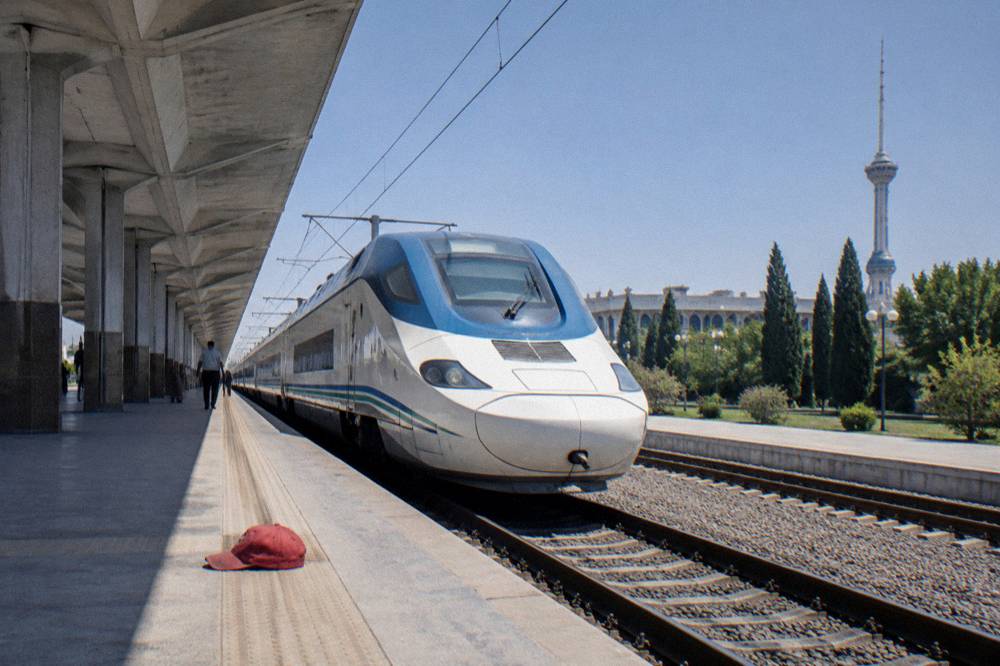
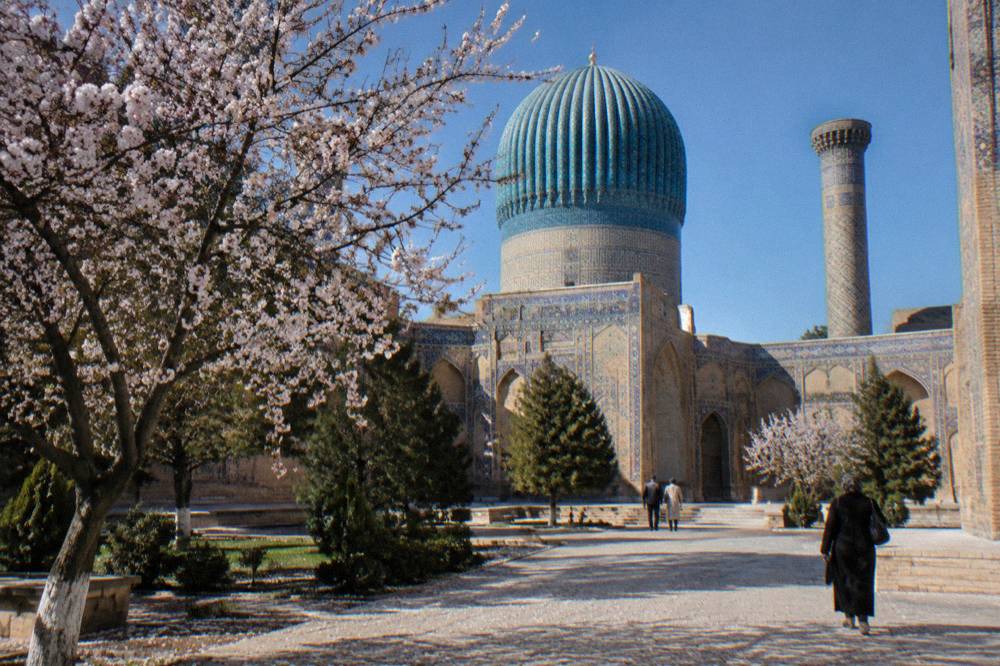
Most multi-day tours start in Tashkent precisely because of this arrival simplicity, and many list pickup, so the transition from stamp to hotel can be a single transfer. If your tour begins the next morning, Tashkent rewards an early evening: the metro stations are among the most decorated anywhere, and the Hazrati Imam complex near the new Islamic Civilisation Centre is an easy first taste of the tiled architecture that defines the rest of the route.
What If You Are Not A US Citizen Or Want To Stay Longer?
The 30-day visa-free rule is specific to US passport holders. Other nationalities face different rules, and some still need an e-visa through the national portal, while stays beyond 30 days, or for work or study, need the proper visa category in every case. Travelers should confirm their own country's position on the official channels before booking anything non-refundable.
The e-visa portal remains active and is the route for nationalities that still require one. It is worth saying clearly that the old fee Americans used to pay is no longer part of the US process, and this site does not reprint it as a current number because it simply is not one anymore; the portal's own pages carry the current fees for the nationalities that still need them. A mixed-nationality couple, a green-card holder traveling on another passport or a traveler adding Uzbekistan to a longer Central Asia trip should each check their own status rather than assume the American rule generalizes.
Staying longer than 30 days is the other common edge case. The decree covers tourism and short business; it is not a residency scheme or a work permit. A traveler who falls in love with Khiva and wants a second month needs the correct visa arranged in advance, not an extension requested hopefully at the border. The same logic applies to journalists, volunteers and anyone whose trip is not, strictly, tourism: those categories have their own rules, and guessing at them is how trips end badly.
For the standard case, though, a US traveler on a one- or two-week holiday, every one of these edge cases is irrelevant. You arrive, the stamp goes in, the hotels register you and the trip unfolds. The planning energy that used to go into visa forms now goes into choosing between routes, which is a far better problem.
How Do Entry Rules Affect When And What To Book?
Book your tour once dates are firm and the entry checks above are done, because the visa obstacle no longer forces early paperwork; free cancellation listings let you lock a itinerary before flights are final, and the 30-day window is roomy enough that a 6, 7 or 8 day package never pressures it. Spring and autumn are the comfortable seasons, so dates matter more for weather than for bureaucracy.
Timing used to be partly dictated by the visa calendar: apply, wait, then book. With that gone, the sequencing flips. Flights and tour dates can be chosen purely on merit, and the practical constraint becomes seasonal: April, May, September and October bring the mild weather that makes Samarkand's open plazas and Bukhara's walking streets pleasant, while July and August push temperatures across the region above 35 degrees. The site's month-by-month guide to visiting Uzbekistan breaks the calendar down city by city.
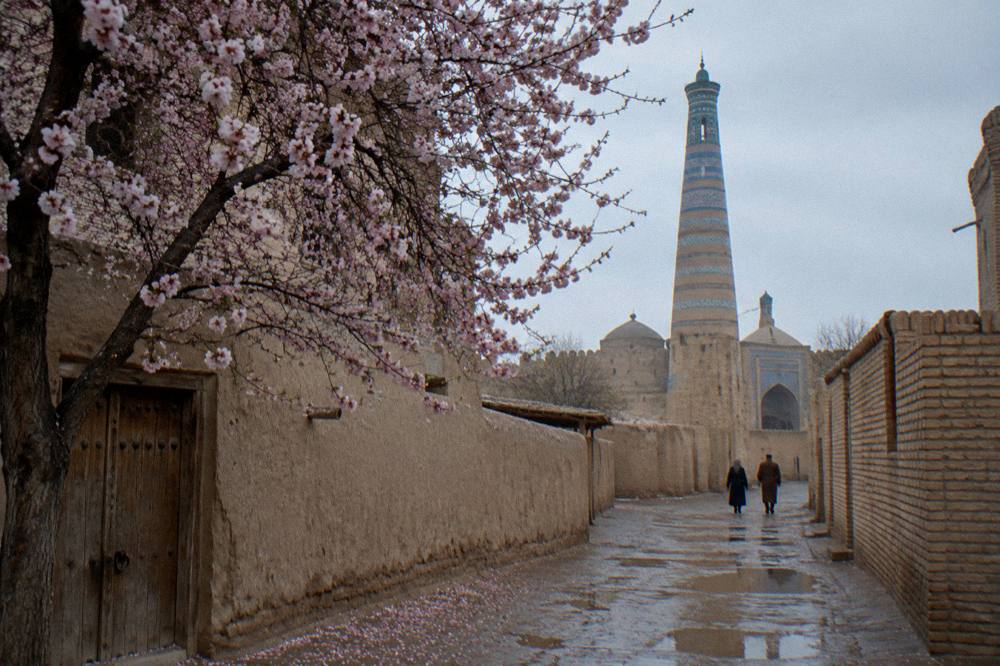
What to book follows your days available. The three-day private bullet-train tour from $505 per person suits a long weekend plus a day, hitting Tashkent, Bukhara and Samarkand at pace. Six or seven days buys the full circuit including Khiva, and the premium seven-day private itinerary from $1,450 per person covers all four cities with the longer stays that let you wander in the evenings rather than only in guided blocks. Eleven days exists too, from $1,600 per person, for travelers who want the circuit without any hurry at all.
| Tour length | Route covered | From (per person) | Best fit |
|---|---|---|---|
| 3 days | Tashkent, Bukhara, Samarkand by train | $505 | Short trip, fast pace |
| 6 days | Tashkent, Khiva, Bukhara, Samarkand | $632 | First visit, full circuit |
| 7 days | Tashkent, Samarkand, Bukhara, Khiva | $1,450 | Comfortable private pace |
| 8 days | Tashkent, Urgench, Bukhara, Samarkand | $1,035 | Train-based classic |
| 11 days | Magical cities of the Silk Road | $1,600 | Unhurried full circuit |
Every listing above shows prices that vary by group size for the private options, and all of them list free cancellation, which matters for a trip still in the assembly stage. The full cost picture, including what you will spend on the ground for meals, monuments and trains beyond the package price, is laid out in the site's breakdown of Uzbekistan trip costs.
For the compact option, the three-day private bullet-train tour is worth a close look: it is rated 4.7 from 29 reviews, lists meals and pickup, and turns the two flagship cities into a feasible add-on even to a business trip.
And for the traveler who wants the whole circuit with the premium touches, the seven-day private itinerary stands at the top of the private range on this site's roster, from $1,450 per person with price varying by group size, pickup listed and free cancellation listed.
Common Questions About Uzbekistan Entry For US Citizens
Do US citizens need a visa for Uzbekistan?
No. Since 1 January 2026, US citizens may enter Uzbekistan visa free for up to 30 days for tourism or short business, under Presidential Decree UP-203. A valid passport is all you need.
How long can Americans stay in Uzbekistan without a visa?
Up to 30 days per entry. The window covers tourism and short business stays, and a typical Silk Road itinerary of one to two weeks uses well under half of it.
Do I need to register with the authorities when staying in hotels?
Hotels and licensed accommodations register foreign guests automatically at check-in, as the US Embassy in Tashkent confirms. Keep the confirmation slips, since they can be requested at departure.
What if I stay in a private apartment or with friends?
Private stays are not auto-registered, so you and your host must arrange registration yourselves through the official online system or local office. Do it on arrival, not days into the stay, and confirm current requirements on the embassy's registration page.
Is Uzbekistan safe for American tourists?
The US State Department advisory stands at Level 1, Exercise Normal Precautions, as of January 2026, the lowest level. Standard precautions apply, and the closed southern border area with Afghanistan should be avoided.
Should I still check entry rules before booking a trip?
Yes. The visa-free regime is new, rules can change, and some third-party sites still describe the old e-visa requirement. Check the official government position before any non-refundable payment, and again before you fly.
Entry to Uzbekistan stopped being a project for Americans the day the decree took effect. A valid passport, hotels that register you without being asked, and a 30-day window wide enough for any sensible itinerary: that is the whole picture. The remaining decisions, which cities, how many days, and which tour, are the ones this site exists to help with, and Uzbekistan Tour Packages breaks each of them down route by route. The band below gathers the three packages this article has referenced, so you can compare them side by side before you go.