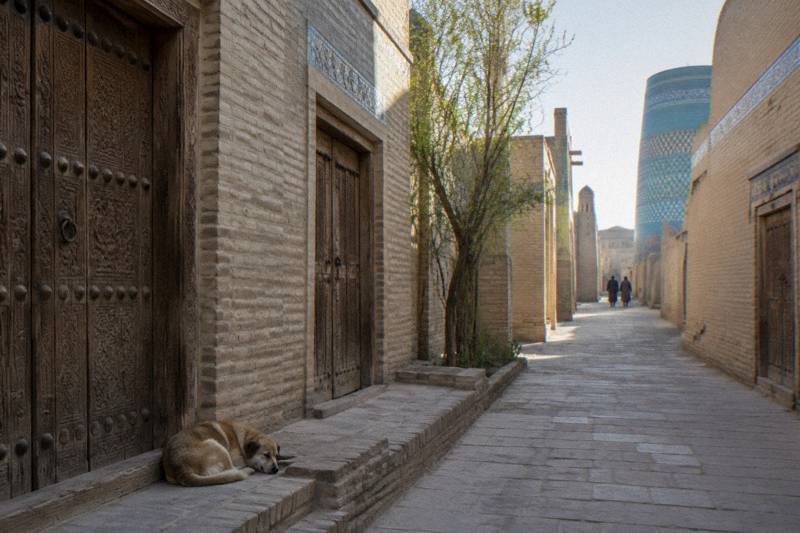
Which Is Better, Khiva Or Bukhara?
A head-to-head comparison of Khiva and Bukhara: scale, atmosphere, time needed, access by train and road, tour prices, and which city fits which traveler.
Which Is Better, Khiva Or Bukhara?
Neither city is better outright: Khiva is the more complete and atmospheric walled city, a compact open-air museum you can walk across in an afternoon, while Bukhara is the larger, livelier one, with more monuments, more working bazaars and more days of things to do. If your trip has time for only one, Khiva wins on spectacle and Bukhara wins on depth, and the honest answer depends on how many nights you have.
Both cities sit on the western arm of the classic Silk Road route that runs Tashkent, Samarkand, Bukhara, Khiva, and both are UNESCO World Heritage sites. That is where the similarity ends. Khiva is a single enclosed fortress town, Itchan Kala, whose walls survive almost whole, so the experience is of stepping inside one enormous monument. Bukhara is a living city of roughly a quarter million people whose historic center is scattered across several square kilometers of streets, pools, minarets and covered bazaars, most of it still used by locals every day.
Travelers who visit both tend to describe the difference the same way. Khiva feels like a stage set, breathtaking and slightly curated, with artisan workshops and terracotta facades packed into a space you can cross on foot in twenty minutes. Bukhara feels like a city that happened, layer on layer, where a trading dome still sells suzani embroidery and a madrasah courtyard still serves tea. Neither description is a criticism. They are simply different products, and the question of which one deserves your limited nights is really a question about what kind of trip you are taking.
There is also a practical dimension that most comparisons skip. The two cities are not equally easy to reach, and the road or rail journey between them is long enough that it shapes the itinerary itself. This guide compares the two cities on scale, atmosphere, time needed, access and cost, and points to the specific tours on this site that serve each one, so the choice you make on paper matches the trip you actually take.
How Do The Two Cities Compare On Scale And Feel?
Khiva is small and unified: Itchan Kala encloses roughly 26 hectares behind walls about 2 kilometers around, so every sight sits within a five-minute walk of every other. Bukhara's protected historic center is several times that footprint, spread across some 200 monuments including the Ark fortress, the Poi Kalon complex and a chain of trading domes, which means real walking days and a looser, more urban rhythm.
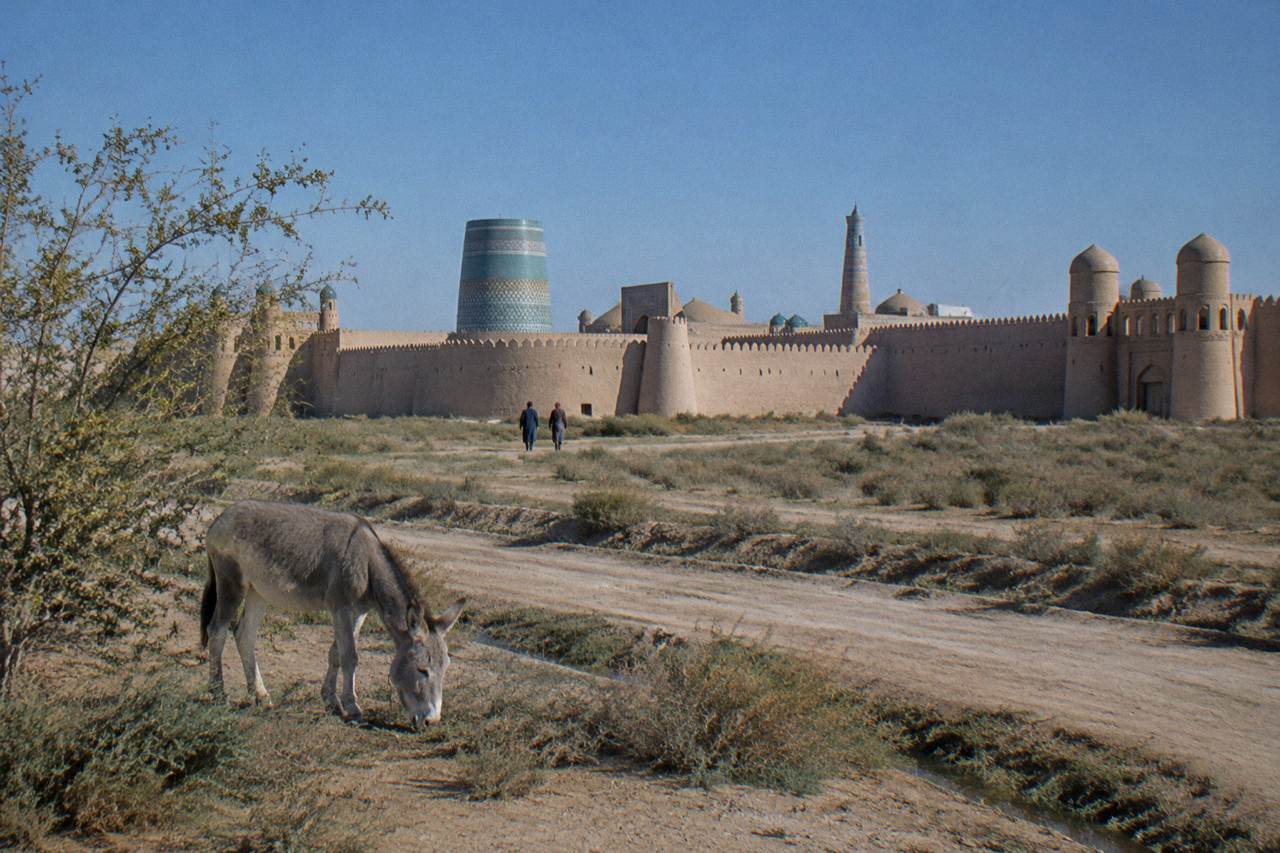
The numbers matter less than the feeling they produce. In Khiva you enter through one gate, and the whole town unrolls in front of you: the Kalta Minor minaret, its turquoise bands unfinished at 26 meters; the Kunya Ark citadel; the Juma Mosque with its forest of carved wooden columns. You can see the walls from almost any point inside, which gives the place a coherence few ancient cities retain. It also means one full day, walked slowly, covers Khiva well, with a second morning for the palaces and museums you skipped.
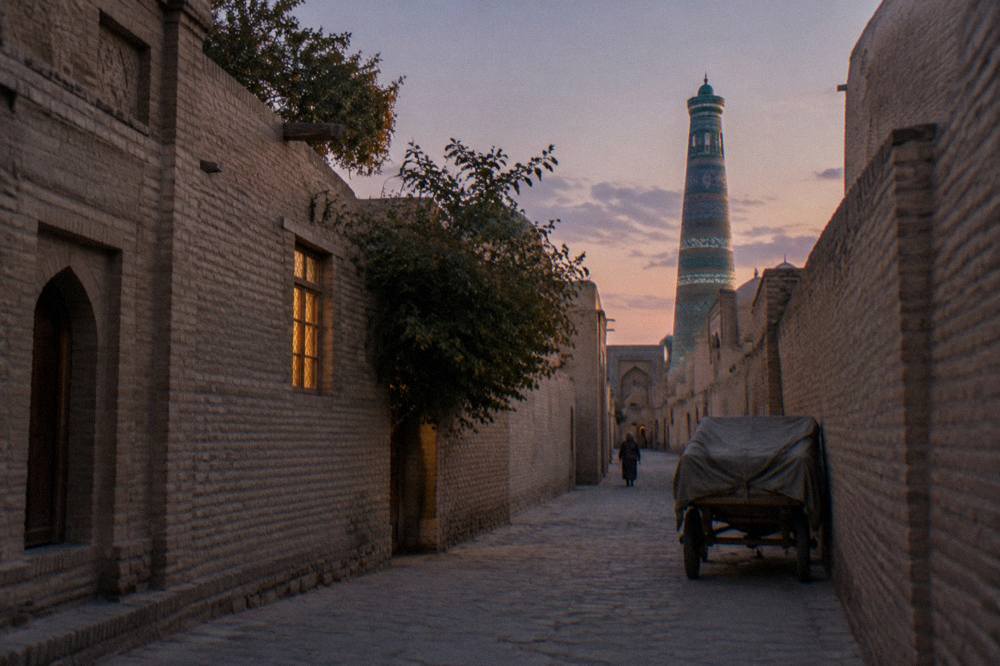
Bukhara rewards the opposite approach. The sights are clustered but not contained: the Lyabi-Hauz pool square, the restored Ark, the Samanid Mausoleum on its edge, the Char Minar in a residential lane a fifteen-minute walk from the center. A single frantic day will tick the highlights, but the city opens up on the second and third days, when you wander the trading domes, watch metalworkers and block-printers at their benches, and eat plov at lunch spots that have nothing to do with tourism. Readers deciding how long to linger may want our piece on whether two days in Bukhara is enough, which breaks the timing down night by night.
The atmospheres diverge at dusk. Khiva's old town empties of day-trippers in the late afternoon and becomes almost silent, lit along its walls, with a handful of boutique hotels inside the walls themselves. Bukhara's center stays warm and social into the evening, families strolling around Lyabi-Hauz, tea houses full, wedding parties photographing by the Nadir Divan-Begi madrasah. If you want a place that feels suspended in time, choose Khiva. If you want a place that feels alive, choose Bukhara.
The compactness question also decides your hotel strategy. In Khiva, the small hotels inside Itchan Kala put you inside the monument after hours, which many travelers rank as the single best experience of their Uzbekistan trip, but they fill first and charge accordingly. In Bukhara the best-located guesthouses sit in restored merchant houses around the old town's edge, quieter and often better value, since supply is larger. Both cities' licensed hotels register you automatically with the local authorities, the standard practice across Uzbekistan, so a stay in either requires no extra paperwork.
For tour shoppers, the difference shows up in the listings themselves. Khiva's tours are short and dense: the Khiva Historical City Highlights Guided Walking Tour covers the main monuments in about 4 hours, is rated 4.6 from 326 reviews and costs from $15 per person. Bukhara's equivalents lean on storytelling over distance: the Small-Group Bukhara Ancient City Guided Walking Tour runs 3.5 to 4 hours, rated 4.9 from 633 reviews, from $23 per person. The review pools tell the story: Khiva's visitors condense their praise into a shorter product, Bukhara's spread it across a city you could walk for days.
Those three cards frame the real choice: a walking tour of Khiva's walls, a walking tour of Bukhara's old town, and the private transfer that links the two cities in a single, sight-filled day. Plenty of travelers end up booking all three, because the cities are close enough that seeing both is normal on a six to eight day route, and the transfer between them doubles as the region's best fortress excursion.
How Much Time Do You Need In Each City?
Khiva needs one full day and ideally one night inside the walls; two nights if you want the surrounding desert fortresses. Bukhara needs two full days as a working minimum and repays a third, because its monuments are scattered, its bazaars deserve unhurried time, and its best restaurants and workshops reveal themselves on day two. On a tight itinerary, one night in Khiva and two in Bukhara is the standard split.
The reasoning behind that split is the scale difference from the previous section, played out over a calendar. Khiva's Itchan Kala combined ticket, about 150,000 som for the standard version with a fuller ticket at about 240,000 to 250,000 som, covers a cluster of sites that sit within a few minutes' walk of one another, so a motivated visitor can see the core in a long half-day and use the rest of the day for the viewing platforms and quieter lanes. Staying the night is less about coverage than about atmosphere: the old town after the day buses leave is the reason people fall for Khiva at all.
Bukhara's ticketing is the opposite structure. There is no single combined ticket covering everything; the major sites are paid individually, with the Ark at about 60,000 som for foreign adults, and many open areas, pools and bazaar lanes free to wander. That pay-as-you-go structure mirrors the city itself: you assemble your own route from scattered pieces, and assembling it well takes time. A rushed single day produces a checklist; a second day produces the trip you remember. For a fuller monument-by-monument route, our Bukhara tour guide to the Ark, Poi Kalyan and the old town walks the whole thing in order.
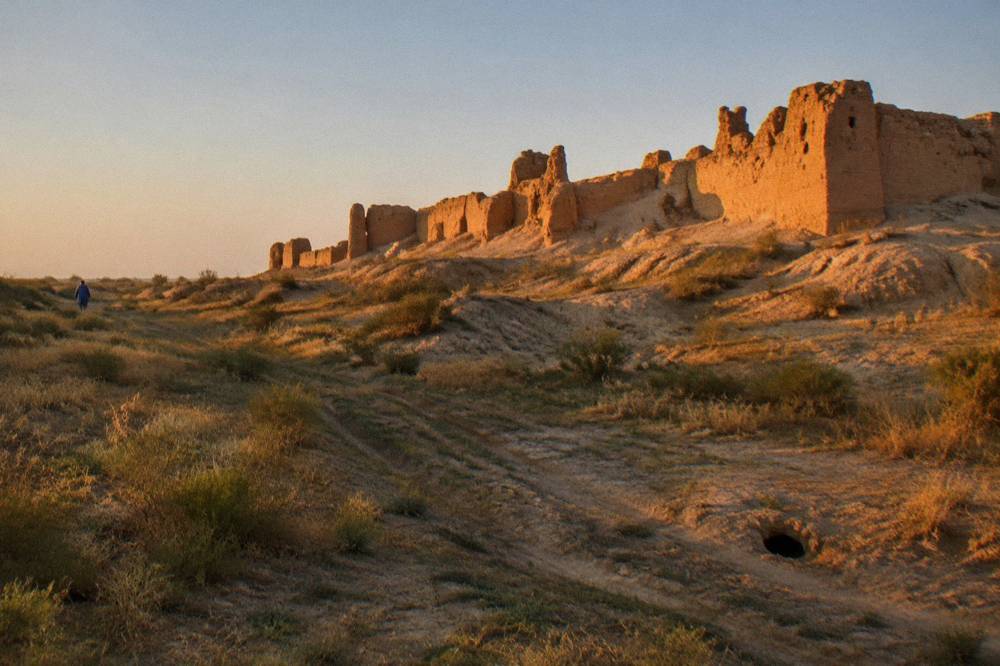
The fortress question adds a day to the Khiva side for some travelers. The ancient fortresses of Khorezm, Ayaz Kala and its neighbors, lie out in the desert between Khiva and Bukhara, and the private Khiva to Bukhara transfer with the top 5 fortresses and Akchakul Lake, rated 5.0 from 111 reviews and priced from $220 per person, turns what would be a long empty drive into the excursion itself. Travelers who take that option effectively see Khiva's hinterland without adding a night. Those with more time can instead base in Khiva and take a day trip: the Daytrip to Three Ancient Fortresses from Khiva runs about 6 hours, is rated 4.7 from 151 reviews, costs from $84 per person and includes a meal.
A sample allocation makes the comparison concrete:
| Trip length | Khiva nights | Bukhara nights | What you gain or lose |
|---|---|---|---|
| 4 nights west | 1 | 2 | The standard split; both cities at a workable pace |
| 5 nights west | 2 | 3 | A fortress day plus unhurried Bukhara bazaars |
| 3 nights west | 1 | 2, Khiva as a day stop | Workable only with the direct transfer or flight |
| 2 nights west | 2 or 0 | 0 or 2 | Choose one city; do not split two nights across both |
The final row is the one that forces the headline question. With only two nights to give the west, you cannot do both cities justice, and the choice becomes the pure head-to-head: Khiva's concentrated wow or Bukhara's generous depth. Travelers connecting through Urgench often pick Khiva for exactly this reason, since the city sits thirty minutes from the region's airport, while those arriving overland from Samarkand by train land in Bukhara first and stay. The same dilemma plays out further east, and our Tashkent versus Samarkand showdown weighs the capital against the country's most famous monuments.
How Do You Get Between Khiva And Bukhara?
There is no fast direct rail link: the journey between the two cities takes about 5 to 6 hours by road, and the practical options are a private transfer, which can include the desert fortresses, a shared taxi routed through Urgench, or a slow combination of train and road. A new Tashkent to Khiva high-speed service was reported to have launched in May 2026, but it serves the capital to Khiva corridor, not Khiva to Bukhara.
The road is the honest answer. It runs southeast from Khiva through Urgench, crosses the Amu Darya, and climbs onto the Kyzylkum's scrubby plateau before dropping back down to Bukhara's oasis. For most of that distance there is little but steppe, which is precisely why the fortress-and-lake transfer has become the popular way to do it: rather than paying a driver to move you through emptiness, you pay for a route that stops at Ayaz Kala, Kyzyl Kala and the other Khorezm fortresses, breaks for lunch beside Akchakul Lake, and still delivers you to Bukhara the same evening. The listing describes a 10 to 12 hour day with hotel pickup, free cancellation and a 5.0 rating from 111 reviews, from $220 per person with the price varying by group size.
Travelers who skip the fortresses usually take a standard private car or a shared taxi. Shared options via Urgench are the budget route and cost a fraction of a private transfer, but they run on the driver's schedule, fill up, and stop where the driver wants. Private transfers bookable through tour operators cost more and go when you go, which matters in a region where summer heat makes a midday arrival unpleasant and winter fog can slow the plateau section. There is more on the trade-offs in our guide to trains and private transport in Uzbekistan.
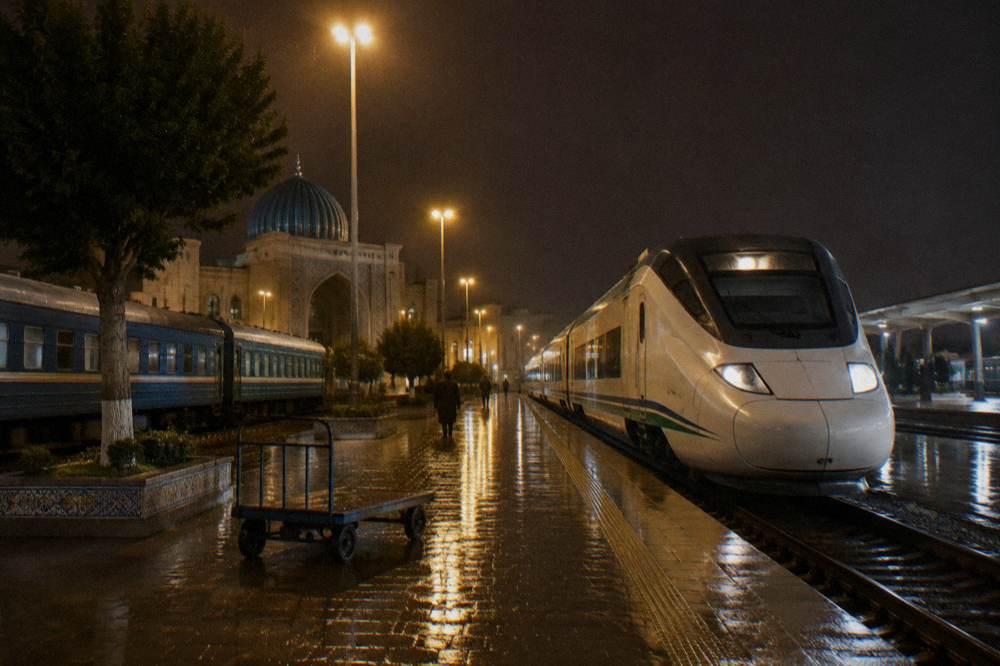
The rail picture around the two cities is asymmetric, and it affects which city you should book first. Bukhara sits on the main high-speed corridor: Afrosiyob trains cover Tashkent to Bukhara in about 3 hours 50 minutes to 4 hours 20 minutes, with more than five departures a day on the main segments, and economy fares from about EUR 60 on that route, roughly US$42 to $55 in agency-quoted ranges. Khiva's rail service was transformed in 2026: the Jaloliddin Manguberdi high-speed train, reported by tourism press to have launched in early May 2026, links Tashkent and Khiva in about 7.5 hours on a reported three days a week, with fares around 780,000 som, about $65. Those days and times should be confirmed on the operator's own booking site, the national railway e-ticket portal, before you build an itinerary around them, since new services settle their schedules in the first year.
| Option | Route | Time | Best for |
|---|---|---|---|
| Fortress transfer tour | Khiva to Bukhara via fortresses and Akchakul Lake | 10 to 12 hours | Turning the drive into the day's highlight |
| Private transfer | Khiva to Bukhara direct | About 5 to 6 hours | Speed and a set schedule |
| Shared taxi | Khiva to Urgench to Bukhara | 6 hours or more | Budget travelers with flexibility |
| Afrosiyob train | Tashkent to Bukhara | About 3h50 to 4h20 | Arriving in Bukhara from the capital |
| Jaloliddin Manguberdi train | Tashkent to Khiva | About 7.5 hours, reported | Arriving in Khiva without flying |
| Domestic flight | Tashkent to Urgench | About 1h30 | The fastest way to start in Khiva |
Two practical notes complete the picture. First, many packaged itineraries solve the problem by flying into Urgench and out through Samarkand, doing Khiva, then Bukhara, then Samarkand in a west-to-east sweep, which is why so many multi-day listings on this site depart from Tashkent but reach Urgench by air on day two. Second, whichever direction you run the route, the fortress transfer is the only option that adds sights instead of just consuming hours, which is why it anchors this article's trio.
Is a full day of driving between two cities worth it? The reviews suggest yes for travelers who like archaeology and open landscape, since the fortress stops break the journey into legs of ninety minutes or less, and the lake lunch lands mid-route. If your interest is purely urban, book the direct private transfer and spend the saved afternoon in Bukhara's trading domes instead.
What Does It Cost To Tour Each City?
On this site's roster, Khiva and Bukhara tours cost about the same to enter: Khiva's guided walking tours start from $15 per person and Bukhara's from $15 to $23. The biggest single expense in the region is the $220 per person fortress transfer that connects the cities, with entry tickets adding roughly $5 for Bukhara's Ark and about $11.50 for Khiva's standard Itchan Kala combined ticket.
The roster's own numbers make the point cleanly. On the Khiva side, the Historical City Highlights walking tour, 4 hours, is rated 4.6 from 326 reviews and starts at $15 per person. On the Bukhara side, the Small-Group Ancient City tour, 3.5 to 4 hours, is rated 4.9 from 633 reviews and starts at $23 per person, while the Old Town tour with 16 stops, rated 4.9 from 203 reviews, also starts at $15 per person. These are, by the standards of guided walking tours anywhere, small numbers, and the differences between them are about format and group size rather than quality.
| Listing | City | Duration | Rating | From (per person) |
|---|---|---|---|---|
| Khiva Highlights Walking Tour | Khiva | 4 hours | 4.6 from 326 reviews | $15 |
| Bukhara Ancient City, Small Group | Bukhara | 3.5 to 4 hours | 4.9 from 633 reviews | $23 |
| Bukhara Old Town, 16 Stops | Bukhara | 3 hours | 4.9 from 203 reviews | $15 |
| Three Ancient Fortresses Trip, with meal | Khiva region | 6 hours | 4.7 from 151 reviews | $84 |
| Khiva Woodcarving Masterclass | Khiva | 1.5 to 3 hours | 5.0 from 61 reviews | $20 |
| Khiva to Bukhara Fortress Transfer | Both | 10 to 12 hours | 5.0 from 111 reviews | $220 |
| 2-Day Aral Sea Trip | Khiva region | 2 days | 4.9 from 61 reviews | $380 |
Around the tours, the day-to-day costs are similarly modest and similar in both cities, matching the countrywide picture: budget travelers report managing on $25 to $50 a day across Uzbekistan excluding flights, and mid-range travelers on $60 to $120, with the western cities sitting at the cheaper end of that band because hotel and food prices trail Tashkent and Samarkand. Licensed city guides run from about $70 for a full day, though the group tours above undercut that by splitting the cost across participants. Tipping adds a little: $10 to $20 a day for a private guide or driver is the commonly cited range, and 5 to 10 percent in restaurants when no service charge appears on the bill.
Beyond the walking tours, the two cities spend their add-on money differently. Khiva's extras lean craft and excursion: the Art Woodcarving Masterclass with local craftsmen, rated 5.0 from 61 reviews, costs from $20 per person and puts a chisel in your hand in a workshop whose families have carved Khiva's doors for generations, while the Master Class in Uzbek Bread, rated 4.5 from 235 reviews, runs 50 minutes from $20. The Aral Sea extension, a 2-day trip from Khiva rated 4.9 from 61 reviews from $380 per person, is the region's big-ticket side journey and only makes sense if Khiva is your western base. Bukhara's extras lean food and fabric: cooking classes, suzani workshops and tea-house evenings fill the gap days.
Booking behavior differs too, and it is worth naming. Khiva's tours sell hardest in the shoulder seasons, April to May and September to October, when the desert day is walkable by mid-morning; midsummer walkers book early starts because temperatures in the region regularly pass 35 degrees. Bukhara shares those seasons but tolerates summer slightly better thanks to its pools, shade and evening life. Whichever city you pick, free cancellation is listed on every tour named in this article, so the usual advice is to lock the date you want and adjust later if your route shifts.
Which City Fits Which Kind Of Traveler?
Choose Khiva if you want maximum visual impact per hour, a walkable walled town, craft workshops and desert fortresses, and you have one to two nights. Choose Bukhara if you want a lived-in city, bazaars, restaurants, two to three nights of discovery, and easier connections onward to Samarkand by high-speed train. Photographers and short-trip travelers skew Khiva; food lovers, shoppers and anyone pacing a longer route skew Bukhara.
The photographer's case for Khiva is close to open and shut. The walls, the Kalta Minor's unfinished turquoise drum, the storks that nest on the bastions in spring: the city composes itself. Arrive in late afternoon light, stay the night inside the walls, shoot the empty lanes at dawn, and you have the definitive Uzbekistan portfolio in eighteen hours. Bukhara photographs well too, the Char Minar in its lane and the Lyabi-Hauz reflections especially, but it never hands you the single encompassing image that Khiva's west gate does at sunset.
The case for Bukhara is cumulative. The city was the commercial and religious heart of the region for centuries, and it shows in variety rather than intensity: a fortress, a working minaret you can climb, the ancient Samanid Mausoleum, three trading domes of jewelers and spice sellers, a bathhouse still steaming. A traveler curious about how the Silk Road actually functioned, caravans, contracts, crafts, finds the answer in Bukhara's bazaar economy rather than in Khiva's museum streets. Our longer treatment of the whole circuit, choosing which Silk Road cities to include, works through the same logic across all three major cities.
Practical travelers should weigh two tie-breakers. First, onward connections: from Bukhara the Afrosiyob line runs you to Samarkand in about 1 hour 12 minutes to 1 hour 50 minutes, making it the natural springboard for the rest of the route, while Khiva's exits run through Urgench by air or the new capital train. Second, the season: in the depths of winter, January nights in the Khiva region fall to around minus 6 degrees, colder than Bukhara's minus 2 to minus 3, and the desert fortress stops lose their charm in a biting wind, so a winter trip tilts toward Bukhara, whose domes and tea houses are indoor-warm. On safety, both cities share the country's standing picture, a US State Department advisory at Level 1, Exercise Normal Precautions, as of January 2026, with the same ordinary-caution advice that applies across the country; current guidance can be checked at the State Department's Uzbekistan travel advisory.
For American readers, the entry picture simplified at the start of 2026: US citizens may enter visa-free for stays up to 30 days, per the Ministry of Tourism's announcement, which removes the paperwork friction from adding a second or third western city on impulse. Hotels in both cities register you automatically, and there is no additional permit for either Itchan Kala or the Bukhara old town beyond the standard monument tickets. Readers planning the full circuit may also want our overview of what multi-day tours include, since most packages bundle both cities and the trains between them.
The editorial summary, after comparing the listings and the logistics: if this is a once-only, tightly scheduled trip, do both, one night in Khiva and two in Bukhara, linked by the fortress transfer, because the two cities answer different questions and the route between them is short enough. If you genuinely must drop one, drop Khiva when your trip is long and unhurried, since Bukhara rewards slowness and connects onward, and drop Bukhara when your trip is short and image-driven, since Khiva delivers more per hour than anywhere else on the Silk Road.
That logic, city choice as route choice, is really what Uzbekistan Tour Packages exists to help with: every listing on this site slots into a route, and the Khiva-or-Bukhara decision is the single choice that most shapes the western half of your itinerary.
Common Questions About Khiva Or Bukhara
Which Is Better, Khiva Or Bukhara?
Khiva is better for a short, spectacular stay inside intact walls; Bukhara is better for a longer, livelier stay with bazaars and easier onward trains. Most travelers with five or more nights in the west visit both, one night in Khiva and two in Bukhara, linked by the fortress transfer.
which is better, bukhara or samarkand?
Bukhara and Samarkand serve different roles: Samarkand holds the single most famous monuments, the Registan ensemble, while Bukhara spreads a larger, more atmospheric old town across two or three days. Travelers who pick only one usually choose Samarkand for the icons and Bukhara for the feel.
which is better, samarkand or bukhara?
For a short trip, Samarkand's Registan, Shah-i-Zinda and Bibi Khanym deliver the highest concentration of famous sights, and it sits on the fastest rail line. For atmosphere, bazaars and a walkable living center, Bukhara is the stronger pick, which is why most routes include both rather than choosing.
Can you visit both Khiva and Bukhara on one trip?
Yes, and most western Uzbekistan itineraries do. The cities sit about 5 to 6 hours apart by road, and the private fortress transfer covers the distance in a 10 to 12 hour day that includes the Khorezm desert fortresses and Akchakul Lake.
How many days do you need for Khiva and Bukhara together?
Four nights is the comfortable minimum: one night in Khiva, two in Bukhara, and the transfer day between them. Five nights adds a fortress day or a slower Bukhara pace.
Is there a train between Khiva and Bukhara?
No direct fast train links the two cities. The practical options are road transfer, shared taxi via Urgench, or backtracking by rail through the main corridor. The new high-speed service reported to have launched in May 2026 runs between Tashkent and Khiva, not Khiva and Bukhara.